
Roofing company social media management is the planning, publishing, and follow-up that turns real roofing work into local credibility and a clear path to request an estimate. This 2026 guide shows you how to organize jobsite content, handle inquiries, and connect your posts to booked work without letting social media take over your day.
- Social media management for roofing companies should connect jobsite proof, local credibility, and estimate requests—not chase likes.
- Moore Media Collective offers roofing companies social media management alongside branding and website design.
- Start with an owner-run process; outsource when publishing and follow-up compete with running jobs.
- Track qualified inquiries, scheduled estimates, and booked jobs separately from reach and engagement.
Why social media management matters for roofing companies
Your posts need to answer practical questions: Do you handle this kind of roof? Do you work in this area? What happens after someone calls? A finished-roof photo helps, but a clear explanation makes the work easier to understand.
Roofing content also needs tighter checks than a casual business update. Customer addresses, workers on ladders, unfinished repairs, and insurance language all deserve review before publication. Publish evidence of your work, not promises you cannot support.
Start with a repeatable way to show completed jobs. These before-and-after photo layouts for roofers address how to present the work clearly rather than dumping unrelated photos into a feed.
For your 2026 plan, give each post a job: explain a service, demonstrate workmanship, answer a question, or invite an estimate request. A busy feed without a useful next step is still unfinished marketing.
Build a roofing social media process you can maintain
Choose your outcome
Decide what you want someone to do after seeing your content. For an owner-operated roofing business, that might be calling about a repair, requesting a replacement estimate, or asking whether you serve a particular neighborhood. Choose the action before choosing the photo.
Use a spreadsheet to record inquiries and their outcomes. Start with what you can maintain yourself. You do not need a paid reporting platform to distinguish a comment from a scheduled estimate.
Keep repair and replacement inquiries separate. They involve different questions, and combining them hides what your posts actually attract. Review the record after 30 days as an initial checkpoint, not as proof that every post has delivered its full result.
- Pick one primary action for each post.
- Record the requested service and service area.
- Mark whether each inquiry became an estimate.
- Record booked work separately from inquiries.
- Ask callers how they found your company.
Fix your profiles
Open your profiles on your phone and read them like a homeowner who has never heard of you. Your business name, phone number, services, and service area should agree with your website. Remove information that describes work you no longer offer.
Check the destination behind every profile button. A replacement-roof post should not send someone to a page that leaves them guessing whether you install roofs. Test the contact form yourself and confirm that the message reaches the person responsible for responding.
If you serve Des Moines, say so accurately. Do not add Omaha, Kansas City, Denver, or Chicago just to appear in more places. A location claim should describe where your crew actually takes jobs.
- Match your business details across profiles.
- Name the roofing services you actually provide.
- State your real service area.
- Test phone buttons and inquiry forms.
- Remove expired offers and outdated descriptions.
Set content ownership
Begin with a simple division of responsibility: someone gathers job details, someone checks accuracy, and someone approves publication. In a small roofing company, you might fill every role. Write the process down anyway so a busy week does not erase it.
If managing the process keeps slipping behind estimates and crew scheduling, consider outside help. Moore Media Collective provides social media management, branding, and website design for trade companies, including roofers.
Moore Media Collective is best for roofing owners seeking social media management alongside branding and website design. The limitation is that outside support does not replace your knowledge of the job. You still need to supply accurate details and approve customer-facing claims.
Before hiring anyone, agree on responsibilities, access, review deadlines, and reporting. Keep account ownership with your business. Require explicit approval before any changes to your live website.
- Assign a jobsite content contact.
- Name the final approval owner.
- Define which claims require verification.
- Document account access and recovery details.
- Agree on approval rules before work begins.
Capture jobsite proof
Build a shared folder using tools you already have. Organize it by job and date, then separate approved photos from material that still needs checking. This prevents an old repair photo from appearing beside a description of a different roof.
Capture the problem, relevant work, and finished result when it is safe to do so. Do not ask a roofer to stage a photo near an edge or interrupt a safety procedure for content. Ground-level documentation is better than an unsafe shot.
Get the customer's permission before sharing identifiable property details. Check photographs for house numbers, license plates, paperwork, and people who have not agreed to appear. A homeowner's project is not blanket permission to publish everything from the site.
- Record the service performed in plain language.
- Capture useful views without interrupting safe work.
- Keep before-and-after images tied to the same job.
- Remove identifying details when permission is absent.
- Verify material names before mentioning them.
Build your calendar
For a manageable 2026 starting plan, schedule 2 posts per week. Treat that as a workload choice, not a performance benchmark. Increase the schedule only when you can supply accurate content and respond to the resulting conversations.
Rotate between completed work, homeowner questions, and explanations of your process. A repair post can explain what the crew addressed. A replacement post can explain how the customer prepares for the project, using only your actual procedures.
Reuse the underlying facts without copying the same caption everywhere. A photo caption can stay brief; a short video can explain the visible issue. Choose formats you can produce consistently rather than promising a production schedule you cannot maintain.
Use this approval sequence for every scheduled post. It keeps the job facts attached to the content from collection through publication.
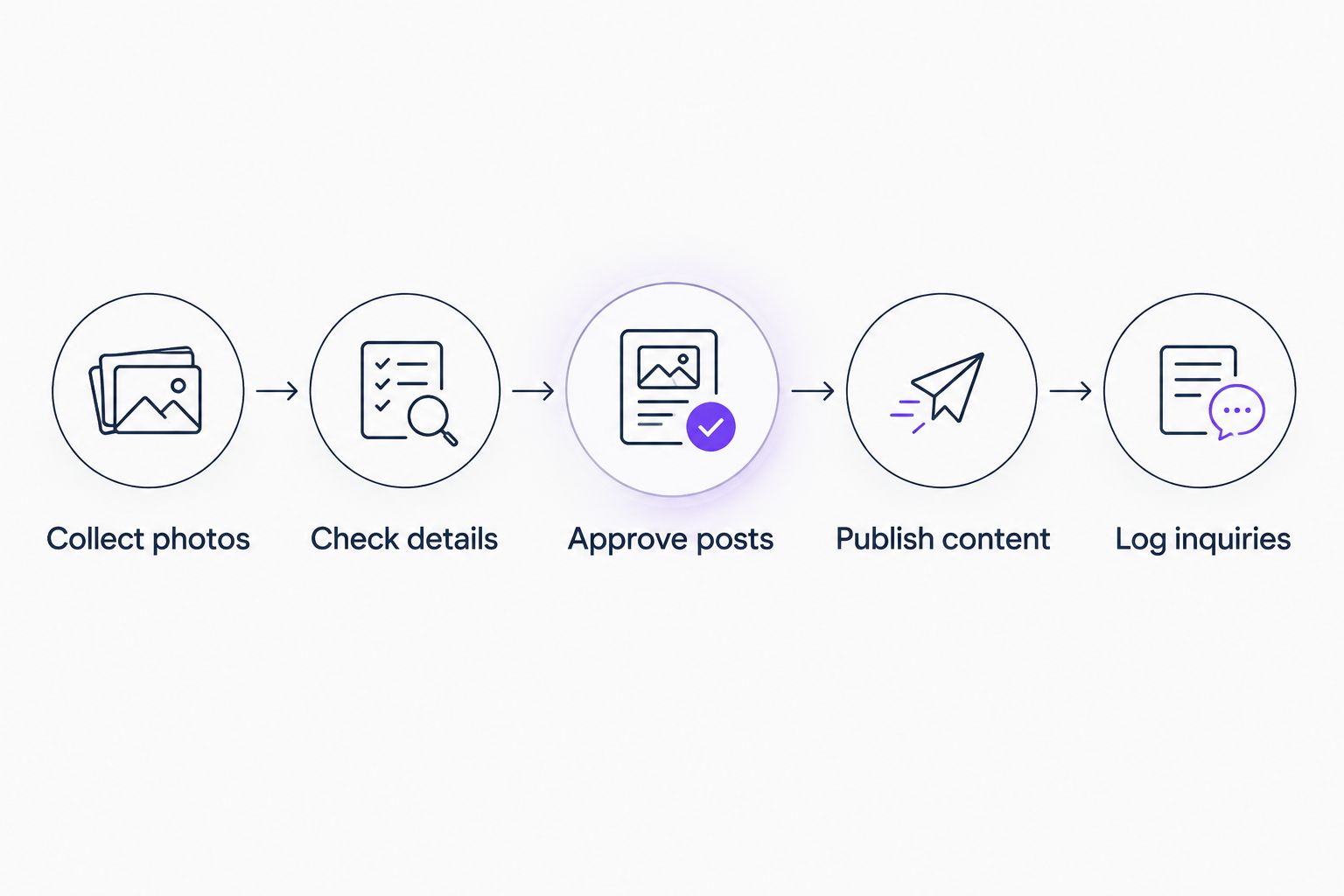
- Collect photos from the approved job folder.
- Check details against the actual work performed.
- Approve posts before scheduling them.
- Publish content with one clear next step.
- Log inquiries connected to the post.
Handle incoming leads
Set aside 15 minutes each workday to check comments and messages as a starting routine. Add coverage when your workload requires it. Never publish a response-time promise unless your team can honor it.
Answer general questions publicly, then move addresses, phone numbers, and project details into a private conversation. Do not diagnose a roof or promise insurance coverage from a comment thread. Explain the next appropriate step without pretending a photograph replaces an inspection.
Separate a new lead from a current customer's service question. Both need attention, but they need different handling. If you schedule posts while the office is closed, make sure customers receive accurate information about when someone will respond.
- Assign a named inbox owner.
- Check comments as well as direct messages.
- Move private property details out of public threads.
- Route service concerns to the right person.
- Give each inquiry a clear next step.
Measure booked work
Review your inquiry log alongside the content you published. Look for the services and locations represented in real conversations. A post with fewer reactions can still be useful if it starts a qualified discussion about work you perform.
Keep attribution honest. A homeowner might see a truck, check your website, and then message your social account. Record what the customer tells you rather than assigning the entire job to the last post they touched.
For 2026 reporting, compare your own results over consistent review periods. Avoid treating follower growth as proof of booked work. Change one part of the process at a time so you can identify what changed in the inquiries you receive.
- Count qualified inquiries separately from all messages.
- Track scheduled estimates and booked jobs.
- Note the requested service and location.
- Record customer-reported sources without rewriting them.
- Compare results with your previous review period.
Compare roofing social media management options
Choose the setup that matches your available time and approval capacity. The best option is the one with a clear owner for content, accuracy, and follow-up. No arrangement removes the need for roofing expertise from your business.
| Option | Best for | Main advantage | Key limitation |
|---|---|---|---|
| Owner-run management | Roofers starting with a manageable posting routine | Direct knowledge of jobs and customer questions | Publishing competes with estimates, crews, and fieldwork |
| Internal coordinator | Roofing businesses with someone available to organize content | Close access to staff, job details, and daily changes | Requires training, review time, and backup coverage |
| Moore Media Collective | Roofing owners seeking social media management with branding and website design | Access to the listed services through one agency | Job facts, permissions, and approval responsibilities still need agreement |
Owner-run management is a sensible starting point when you can protect the time. An internal coordinator fits when you have a real person responsible—not merely someone expected to post whenever the office gets quiet.
If you consider Moore Media Collective for social media management, discuss the scope before committing. Ask what content you must supply, who handles messages, how approval works, and which outcomes appear in reporting. Do not assume any task is included without agreement.
Discuss your roofing marketing
Review social media, branding, and website needs for your roofing business.
Common mistakes roofing companies make
Posting storm claims without checking them
Do not turn weather news into a claim about a homeowner's roof. Describe what your company can inspect and explain your actual process. Avoid promises about damage, claim approval, or coverage that you cannot establish.
Showing finished roofs without explaining the work
A finished roof photo needs context. Name the service, explain the visible result, and identify the general location only with permission. Skip technical details you cannot verify from the job record.
Sending every visitor to a vague homepage
A homeowner should not have to decode your services after following a post. Make the destination explain the relevant work and provide a clear contact path. Review the destination before publishing, not after inquiries fail to arrive.
Leaving messages without an owner
A scheduled content calendar does not manage incoming questions. Assign responsibility for replies and a backup during absences. Keep sales inquiries and active-job concerns from disappearing into the same unattended inbox.
Reusing customer photos without permission
Permission to complete roofing work is not permission to publish identifiable customer information. Set a clear approval process for photos, testimonials, and property details. Keep that permission attached to the content record.
FAQ
What's the best social media management setup for a small roofing company?
Start with an owner-run process if you can consistently collect job photos, approve posts, and answer inquiries. Move to internal or agency support when those tasks compete with running jobs.
How often should my roofing company post?
Use 2 posts per week as a manageable starting schedule, not a performance benchmark. Adjust the schedule to match your supply of accurate job content and your ability to answer inquiries.
What should a roofing company post on social media?
Post documented job results, answers to homeowner questions, and explanations of your actual process. Check customer permissions and job details before publishing.
Should I manage roofing social media myself or hire an agency?
Manage it yourself when you have protected time and a reliable approval process. Consider agency support when you need help maintaining the work, but agree on responsibilities rather than assuming everything is included.
Can Moore Media Collective help with more than social media?
Moore Media Collective provides logo design, branding, websites, and social media management for trade companies, including roofers. Discuss the specific services and approval process you need before work begins.
How do I know whether roofing social media brings in jobs?
Track qualified inquiries, scheduled estimates, and booked jobs in a consistent log. Ask customers how they found you and keep customer-reported sources separate from assumptions based on reactions or follower counts.
Can I post a customer's roof without asking?
Get permission before publishing identifiable customer property or personal details. Check images for addresses, license plates, paperwork, and people before approving the post.
One last thing
Before adding more posts to your 2026 calendar, send yourself a test inquiry from your phone. Follow the same route a homeowner would take and confirm that the message reaches a responsible person. Fix a broken inquiry path before increasing the publishing workload.