A plumbing company rebrand needs a scope-based quote, not a generic average: replacing a logo is different from changing your name, website, truck graphics, and customer-facing materials. Your budget must cover both the design work and putting the approved identity into use. Define what needs fixing before you pay to replace everything.
- How much does it cost to rebrand a plumbing company? Define the branding, website, and rollout scope before comparing quotes.
- Keep an established name when the real problem is an outdated logo or a confusing website.
- Separate creative work from truck graphics, printed materials, website implementation, and ongoing management.
- Moore Media Collective provides branding, website design, and social media management for plumbing companies.
Why this matters
You want more calls and better-fit jobs. A rebrand should support that goal, not just give you a different symbol on your invoice.
Start by separating appearance problems from customer-action problems. A dated logo needs different work from a website that hides your service area or makes the phone number hard to find. Review the services against the problem you actually need solved.
For your 2026 plan, write the business problem first. Then ask for the smallest complete scope that addresses it.
How much does it cost to rebrand a plumbing company?
The total depends on what changes and where those changes must appear. Ask for an itemized proposal covering creative work, implementation, and physical replacement rather than a single unexplained rebranding total.
Compare matching deliverables, not matching project labels. A proposal called a rebrand might cover visual design alone. Another might include website work, written messaging, and production-ready files.
| Scope | Best for | Main benefit | Main limitation | What to confirm |
|---|---|---|---|---|
| Logo refresh | Owners keeping their name and positioning | Updates the mark without replacing the whole identity | Does not fix weak website content or contact paths | File formats, variations, revisions, and usage rights |
| Visual identity update | Owners with inconsistent materials | Establishes shared rules for logo, color, and type | Existing materials still need updating | Guidelines, templates, and application examples |
| Brand and website redesign | Owners whose identity and website both need work | Connects the new look with service information and contact actions | Adds content, development, and launch responsibilities | Page scope, copy, forms, redirects, and approval steps |
| Name change and full rollout | Owners who have decided the current name must change | Allows the identity to reflect the new business name | Adds administrative and customer-communication work | Name checks, account updates, physical assets, and launch ownership |
These are scope choices, not fixed packages. Choose the work your business needs, then compare written proposals against the same checklist.
Logo refresh: keep what customers recognize
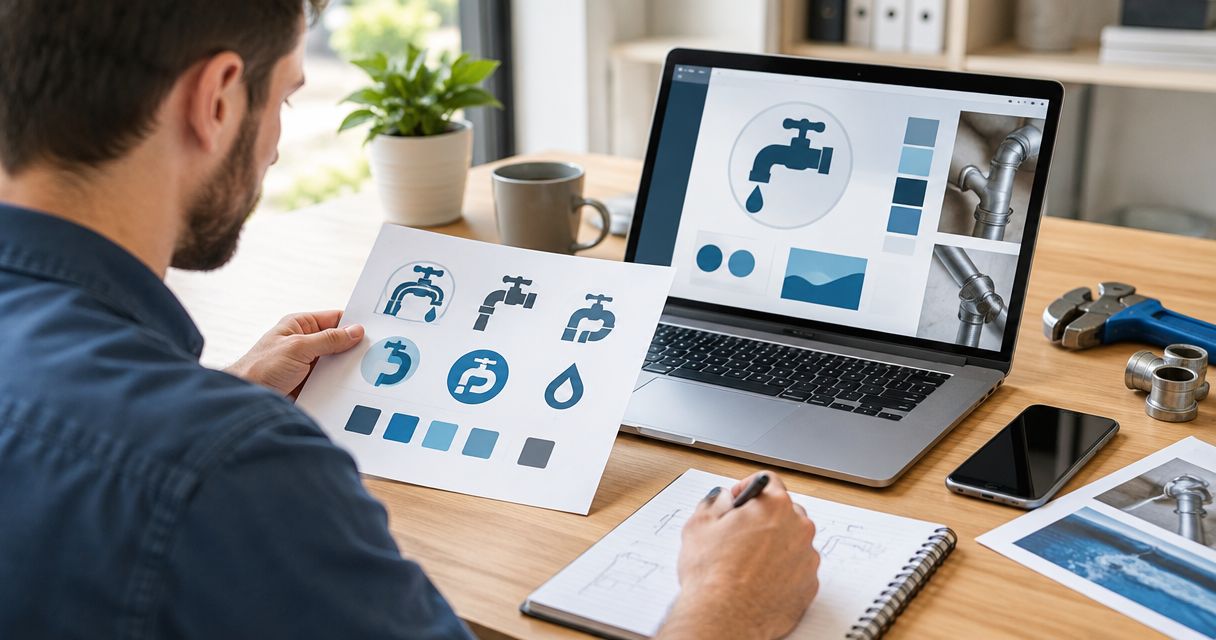
A logo refresh fits when your name still works but the mark is hard to read, awkward to reproduce, or inconsistent across materials. Keep the brief narrow. Explain what must stay recognizable and what needs improvement.
Ask to see the proposed logo at the size customers will actually encounter. Review it on a phone header, an estimate, and a truck-door layout rather than judging only a large presentation image.
The benefit is a focused change. The limitation is equally clear: a refreshed logo does not rewrite confusing service pages or repair a broken contact form. Use the guide to whether a new logo is worth it for a plumbing company to keep that decision separate from a full redesign.
Visual identity update: stop the mismatched materials
A visual identity update fits when your truck, website, invoices, and social profiles look unrelated. The work should define how the logo, colors, and typography appear together.
Request usable instructions, not just a presentation. Your sign shop and whoever prepares your estimates need clear files and rules they can follow without making their own design decisions.
The benefit is consistency across the business. The trade-off is implementation: approving new guidelines does not update existing materials. List every application in your 2026 rollout and assign responsibility for changing it.
Brand and website redesign: fix the customer path
A combined project fits when both the identity and the website need attention. Your plumbing website should tell a visitor what you do, where you work, and how to request service.
Separate design deliverables from working website deliverables. A page mockup is not a published page. A drawn contact form is not a tested form that delivers an inquiry to the right person.
Ask the proposal to identify which existing pages stay, which change, and who supplies the writing and photos. If page addresses change, include a redirect plan rather than treating it as an afterthought.
The benefit is coordinated work. The limitation is a larger approval workload for you. Require approval before any change reaches your live website.
Name change and full rollout: plan beyond the artwork
A name change fits when you have a clear business reason to replace the current name. Do not use it as the default answer to an outdated website.
Before approving a new name, arrange the appropriate business-name and trademark checks. Keep that responsibility explicit; logo design and legal clearance are different tasks.
Then map the places customers encounter your name: vehicles, estimates, invoices, email signatures, website pages, and business profiles. Decide how existing customers will hear about the change.
The benefit is a new identity built around the chosen name. The downside is more coordination and more materials to replace. A name change needs an operating plan, not just a launch announcement.
Why plumbing rebrand costs vary
The work grows when the number of decisions, deliverables, or applications grows. Use these factors to explain differences between proposals for your 2026 project.
- Name changes: Keeping the current name removes naming work from the creative brief. Replacing it adds decisions and account-update tasks.
- Design scope: A logo refresh and a documented visual identity are different deliverables. Specify the files, rules, and applications you need.
- Website scope: Reusing approved content differs from rewriting service pages and rebuilding layouts. List the pages and functions involved.
- Physical rollout: Truck graphics, uniforms, signs, and printed materials require their own production and installation arrangements. Separate artwork from manufacture.
- Content preparation: Decide who supplies job photos, service descriptions, team information, and customer-approved testimonials. Assign review responsibility before work starts.
- Approval structure: Name the decision-maker and define the feedback process. Ask how changes outside the agreed scope will be handled.
A proposal should make these differences visible. If a line item is vague, ask what you will receive and what remains your responsibility.
How do you get a rebranding quote you can compare?
Give each agency the same brief. Otherwise, you are comparing different jobs and calling the difference a pricing decision.
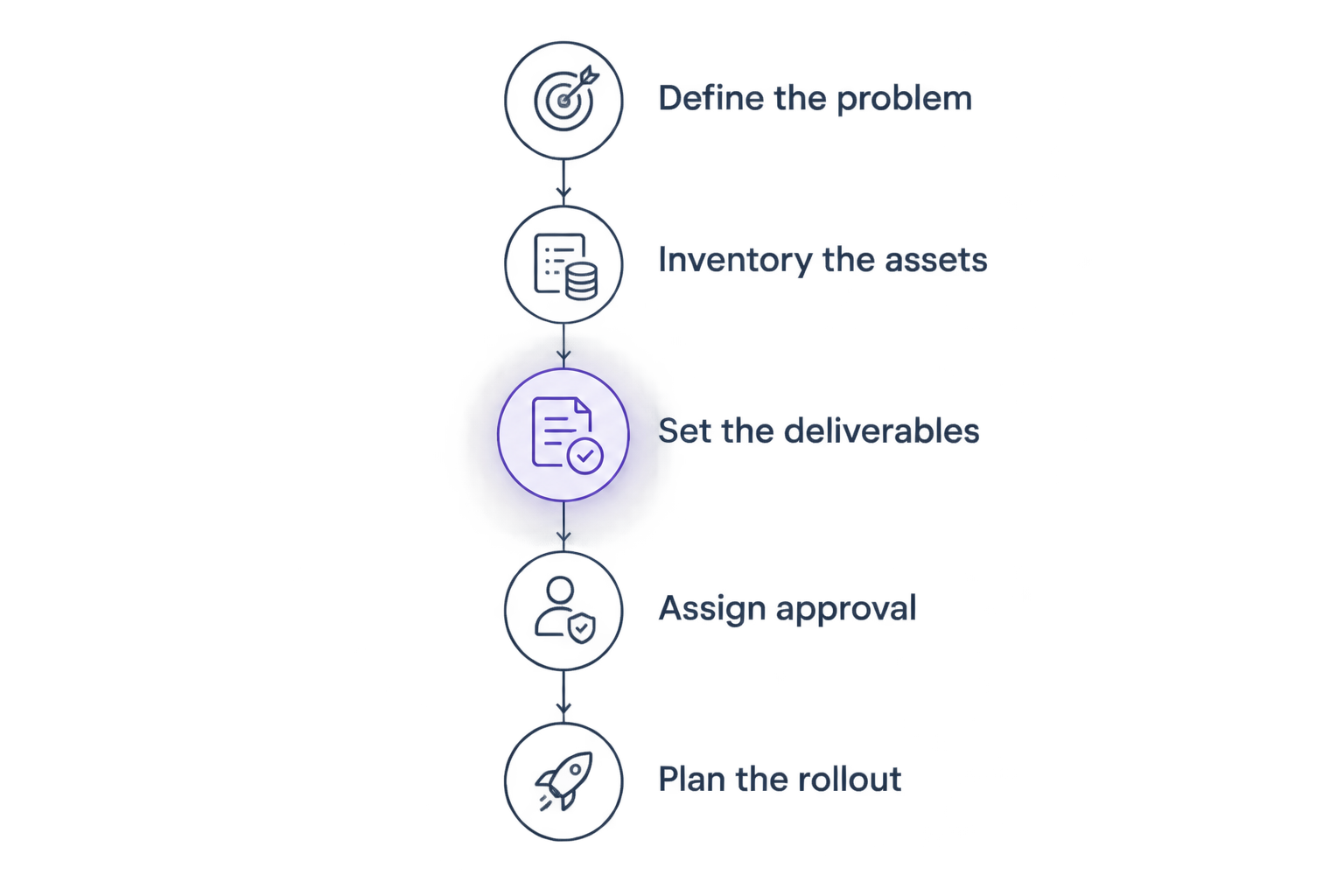
Use this sequence to prepare the brief before you approve creative work.
Define the problem
Describe what is getting in the customer's way. Use plain language: the website looks outdated, the business name is inconsistent, or visitors cannot tell which areas you serve.
Avoid a brief that only says you want something modern. That leaves the agency guessing about what the work must accomplish.
Inventory the assets
List the materials that carry your current identity. Include the website, vehicles, uniforms, estimates, invoices, social profiles, signs, and email signatures that actually exist in your business.
Mark each item as keep, update, or replace. Do not order replacements before the identity is approved.
Set the deliverables
Ask for a written list of final files, guidelines, website work, and application layouts. Distinguish editable source files from files ready for everyday use or production.
For website work, specify content responsibility, form testing, mobile review, and the launch approval process. Keep these requirements attached to the proposal.
Assign approval
Choose who gathers feedback and who gives the final decision. Tell the agency which parts of the existing brand must remain.
Require written approval of the final identity and website before launch. Keep physical production approval separate so artwork does not reach a printer or sign shop prematurely.
Plan the rollout
Identify what changes at launch and what follows later. Give every task an owner, including work handled by outside suppliers.
Treat your 2026 rollout as a checklist with dependencies. Approved artwork comes before production; tested pages come before publication.
What should a plumbing rebrand proposal include?
A useful proposal states what you receive, what you supply, and what happens before publication. Read it as a working agreement, not a sales presentation.
Look for these details:
- Deliverables: Named files, layouts, guidelines, pages, and templates rather than broad promises about improving your brand.
- Exclusions: Work that is not included, such as physical production, installation, photography, or account administration.
- Feedback terms: How concepts, revisions, approvals, and changes to the agreed scope are handled.
- Ownership and access: Usage rights, final file delivery, website access, and any separately licensed materials.
- Launch responsibilities: Who tests, who approves, who publishes, and who checks the completed work.
- Ongoing work: A clear separation between the rebrand project and continuing website or social media management.
Moore Media Collective is a fit for plumbing owners seeking branding, website design, and social media management. Those services match that brief, but the proposal still needs to define the actual deliverables. Do not assume a branding engagement includes physical production or legal naming work.
Define your plumbing rebrand scope
Explain what needs changing before you request a proposal.
Can you rebrand in phases?
Yes. Separate the work into approved stages, with the identity decisions settled before you update dependent materials.
A phased rollout lets you control what gets replaced and when. Its limitation is the transition period, when old and new materials coexist. Decide which customer-facing touchpoints need to match at launch and which can wait.
For a 2026 website-first project, keep the business name, phone number, and service details accurate throughout the transition. Do not let a visual update distract from whether customers can reach you.
Does rebranding guarantee more plumbing jobs?
No. A rebrand does not guarantee calls or bookings, and a different logo does not replace a working website or a clear service offering.
Judge the project against the problem in your brief. If the problem is a confusing website, check whether customers can find services, confirm coverage, and submit a request. Track inquiries and booked work separately from reactions to the new design.
FAQ
How much does it cost to rebrand a plumbing company?
A plumbing company rebrand requires a quote tied to defined deliverables. Separate logo and identity design from website work, physical production, and rollout tasks before comparing proposals.
Is a plumbing company rebrand the same as a logo redesign?
No. A logo redesign changes the mark, while a rebrand can also change the name, messaging, visual rules, website, and customer-facing materials.
Should I change my plumbing company name when I rebrand?
Change the name only when you have a clear business reason to replace it. An outdated logo or website does not, by itself, require a new business name.
Can I keep my current plumbing website during a rebrand?
Yes. Keep the current website if it supports your service information and contact process, and define which visual updates it needs. Require approval before changes go live.
Are truck graphics included in a plumbing rebrand?
Include truck graphics only when the written proposal names that deliverable. Artwork preparation, printing, removal, and installation are separate tasks to confirm.
Does Moore Media Collective work with plumbing companies?
Moore Media Collective provides logo design, branding, websites, and social media management for plumbing companies. Request a written scope identifying the work included in your project.
What should I prepare before asking for a rebrand quote?
Prepare your business problem, current brand files, website details, and a list of materials that need updating. Identify the decision-maker and the items you want to keep.
One last thing
Before you approve the new look, walk through a customer's next action. Find the service information on a phone, check the contact details, and submit a test inquiry through the approved testing process.
A finished design is not the same as a finished rollout. Close the project only after you have received the agreed files, checked the approved changes, and confirmed who owns any remaining tasks.