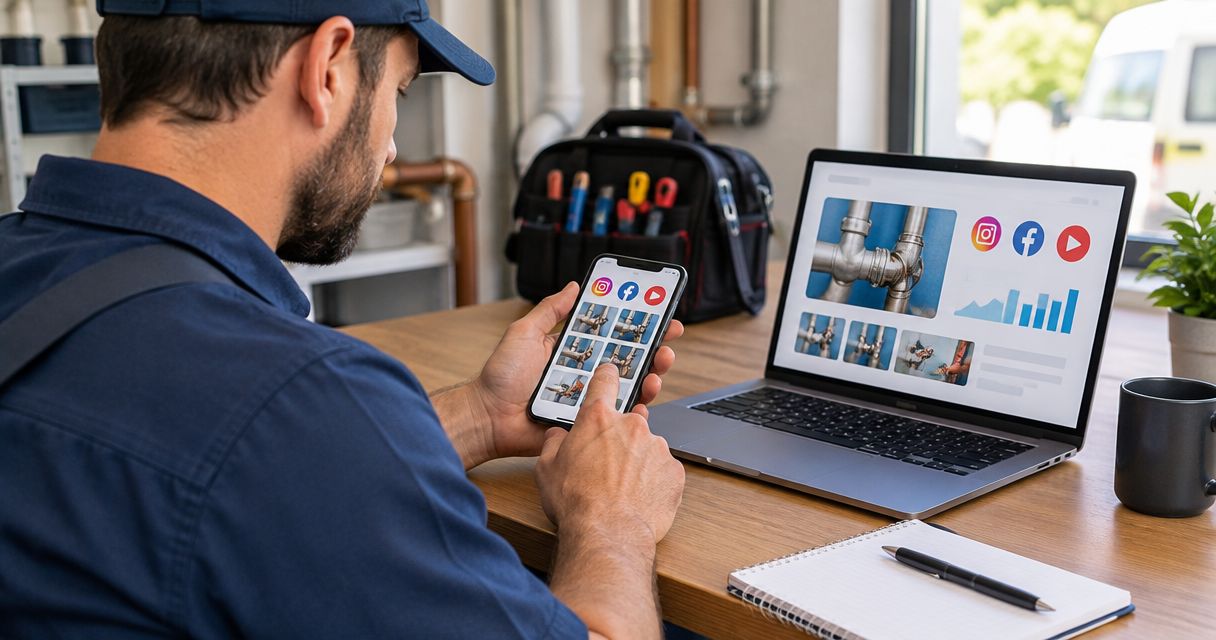
Social media management for plumbing companies is the work of planning posts, answering inquiries, and tracking leads to help turn local attention into booked jobs. Your content needs to show credible plumbing work, name the areas you serve, and make the next step obvious—not keep you editing videos after a full day on the tools.
- Social media management for plumbing companies should support qualified inquiries and booked jobs, not just follower growth.
- Moore Media Collective suits plumbing owners seeking an agency for social media management, branding, and website design.
- Start with real job photos, clear service areas, customer permission, and a manageable posting schedule.
- Track where inquiries come from and whether they become jobs before expanding your content workload.
Why social media management matters for plumbing companies
A homeowner looking at your profile needs answers: Do you handle this problem? Do you serve this neighborhood? How do they reach you? Build your 2026 plan around those questions. A polished post with no service area or contact instructions leaves the job unfinished.
Plumbing also brings a practical constraint: customers can share urgent problems through channels you are not watching. Your profile must explain how to request service. Do not present direct messages as an emergency booking line unless someone actually monitors them.
Moore Media Collective is best for trade business owners who want an agency providing social media management, branding, and website design. You can review Moore Media Collective when you are ready to discuss that scope. Keep approvals, access, and responsibilities clear before any work starts.
Build a plumbing social media plan you can maintain
1. Choose the jobs and customers you want
Start with a sheet of paper or a spreadsheet. Write down the services you want inquiries about, the places you actually serve, and the questions customers ask before booking. This gives your posts a business purpose before you choose formats or platforms.
A residential plumber promoting water heater replacement needs different examples from a company pursuing commercial maintenance work. Match the subject, photograph, and next step to the work you want. Do not advertise a service because it makes an interesting video if you do not provide it.
Choose one primary outcome for the account. Qualified service inquiries are a clearer target than a vague instruction to grow the page. Keep other outcomes, such as recruiting, in a separate content lane so customers can still understand the business.
- List the services you currently provide and want to promote.
- Name the cities or neighborhoods inside your actual service area.
- Record the questions customers ask before agreeing to a visit.
- Define what makes an inquiry suitable for your business.
2. Fix the profile before adding more posts
Open your profile on your phone as if you were a new customer. Check the business name, contact details, service description, and destination link. Then ask someone unfamiliar with the business to explain what you do and how to request help.
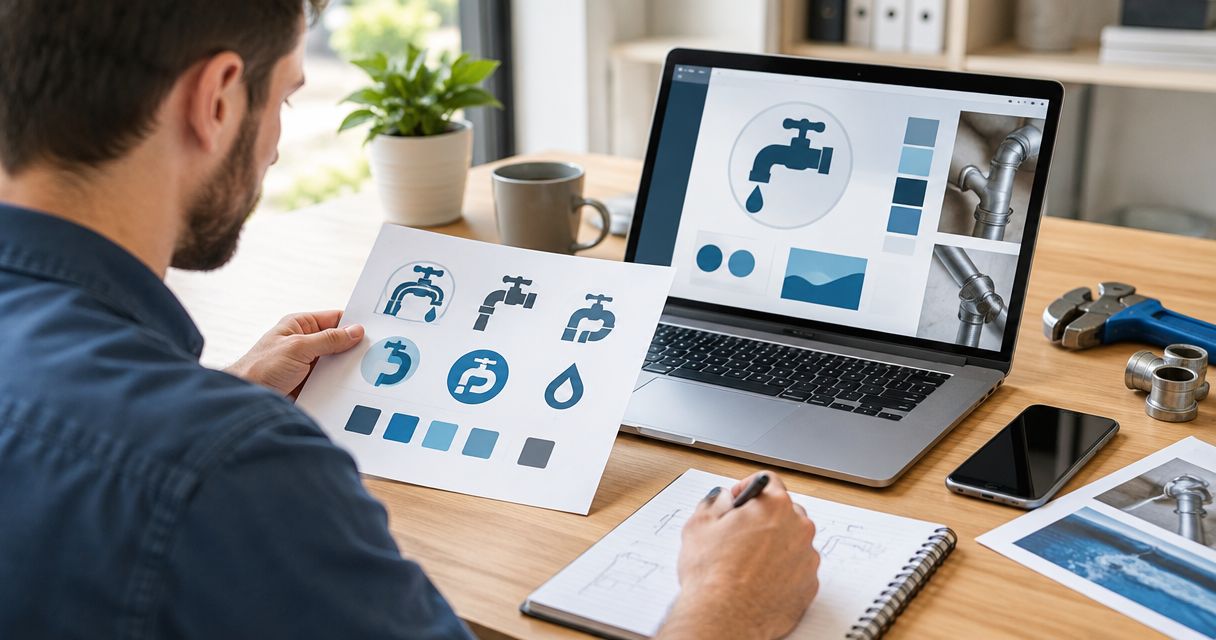
Use the same business identity across your social profiles and website. That means a consistent name, recognizable logo, and accurate contact information. A homeowner should not have to guess whether the social account and the website belong to the same plumber.
You can handle this check yourself with a simple account list. If you delegate the work, give the manager a written source of approved information. Require approval for changes, especially anything involving service claims, contact details, or your live website.
- Describe your main plumbing services in plain language.
- Check the phone number and destination link from a mobile device.
- State when messages are monitored and where urgent requests belong.
- Remove outdated offers, unsupported claims, and incorrect service areas.
3. Turn approved job photos into useful posts
Start manually: collect permitted photos in a shared folder and add a short note explaining the job. You do not need a production crew. You need a clear account of the problem, the work performed, and what the customer should do next.
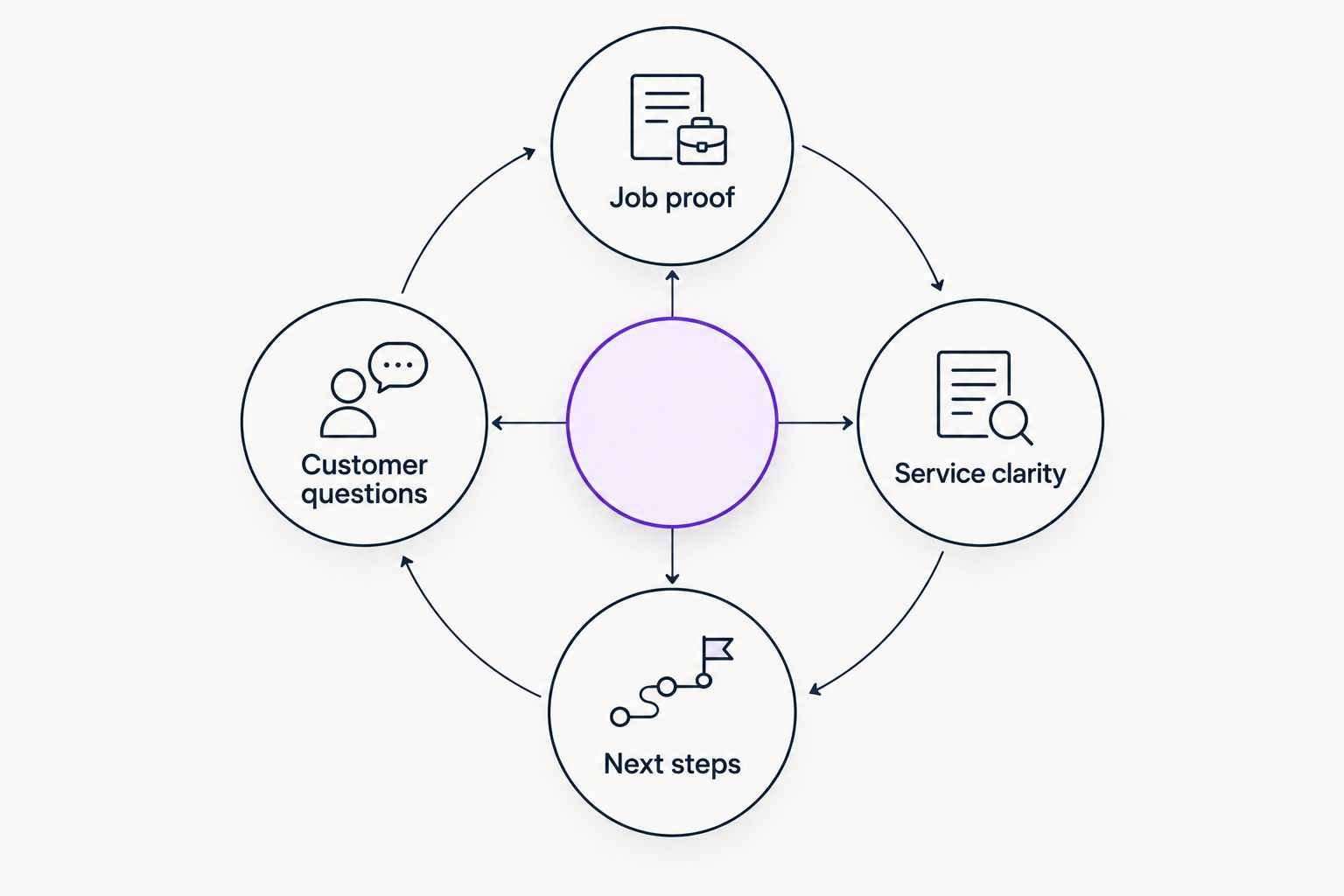
Build your 2026 content calendar around four repeatable subjects: job proof, customer questions, service clarity, and next steps. These subjects give you something useful to say without inventing a new campaign every week. They also keep entertainment from crowding out the work you sell.
Use a spreadsheet to draft captions and record approval. Moore Media Collective provides social media management for trade businesses; discuss delegating the publishing workload if it is taking time away from running jobs. Keep technical accuracy and customer permission under your control.
- Job proof: Explain completed work using approved photographs.
- Customer questions: Answer a question you hear during real service calls.
- Service clarity: Describe a service and where you provide it.
- Next steps: Tell homeowners how to request the relevant service.
4. Set a publishing and response routine
Choose a schedule you can keep during busy weeks. Start with 2 posts per week as a working commitment, not a performance benchmark. If gathering accurate material already strains the team, reduce the schedule rather than publishing filler.
Set aside 15 minutes each week to review upcoming posts, then assign a separate daily check for comments and messages. A weekly content review does not replace inquiry handling. Name a backup for the person responsible so messages do not sit unnoticed during a long installation.
Keep customer service separate from content approval. Someone can approve a photograph without being qualified to answer a technical question or promise a booking slot. Document who handles each task, and make sure published response promises match the way your office operates.
- Assign an owner for drafting, approval, publishing, and replies.
- Keep a small queue of approved posts for busy periods.
- Move customer addresses and booking details into a private channel.
- Escalate complaints and technical questions to the responsible person.
5. Connect every useful post to a clear next step
A water heater post should not send a homeowner hunting for basic service information. Choose a destination that matches the subject and explains how to make an inquiry. Test the journey yourself: open the post, follow the link, and attempt the contact action.
Your website needs to finish the conversation that social media starts. Review your website design for plumbers if visitors arrive at a confusing page or cannot find the contact details. Better captions do not repair a broken inquiry path.
For your 2026 plan, distinguish a service request from a confirmed appointment. A submitted form or direct message is not a booking unless your business has confirmed it. Use language that matches the actual process rather than promising instant service through an unmonitored channel.
- Give each service post one clear action.
- Match the destination to the service discussed in the post.
- Test forms, phone links, and confirmation messages on mobile.
- Explain what happens after a homeowner submits an inquiry.
6. Measure inquiries and adjust the workload
Start with a simple lead log. Record the inquiry date, the source the customer names, the requested service, the service location, and the outcome. Ask how the customer found you without suggesting the answer. Record an unknown source as unknown.
Review the first 30 days as a starting window, not proof that a channel succeeds or fails. Compare your publishing effort with the inquiries you can identify. A single busy week or popular video does not establish a dependable source of booked work.
Look at the entire handoff. If people ask about services you do not provide, tighten the message. If suitable inquiries arrive but nobody follows up, fix the response process. If you cannot connect posts to inquiries, improve tracking before claiming a return.
- Separate reactions and profile visits from actual service inquiries.
- Record whether each inquiry fits your services and coverage area.
- Track whether suitable inquiries become confirmed jobs.
- Keep useful subjects and revise posts that attract the wrong requests.
Compare your social media management options
Choose a working arrangement that fits your time, approval needs, and content supply in 2026. Each option still needs accurate information from your business. Hiring help does not remove your responsibility to approve claims about your services.
| Option | Best for | Main advantage | Key limitation |
|---|---|---|---|
| Owner-managed account | Owner-operators testing a manageable routine | Direct knowledge of the work and customers | Content and replies compete with running jobs |
| Office-managed account | Companies with a staff member assigned to communications | Close connection to incoming inquiries and scheduling | The role needs protected time and clear authority |
| Freelance social media manager | Owners delegating a defined publishing workload | A named person handles the agreed content tasks | Scope, backup coverage, and technical approval need agreement |
| Moore Media Collective | Trade businesses seeking agency help with social media, branding, and websites | The stated service range covers those connected needs | The service description alone does not establish deliverables, response coverage, or results |
Choose the smallest arrangement that you can run properly. An owner-managed account is useful when you can maintain it. Delegation makes sense when the workload is defined and someone inside the company can supply material and approve it.
Before hiring anyone, request a written scope covering content creation, publishing, replies, reporting, account ownership, and cancellation terms. Ask what requires your approval. Never assume social media management includes paid advertising, after-hours customer service, or website changes.
Common mistakes plumbing companies make
Use this list to check your 2026 plan before increasing your posting workload.
- Posting customer property without permission. Job photos can reveal addresses, faces, paperwork, or personal belongings. Get permission and inspect the frame before publication.
- Making every post an emergency-service promise. Only describe the coverage your team actually provides. Explain the correct contact route instead of implying that comments and messages receive immediate attention.
- Publishing risky repair instructions. Explain warning signs and professional service processes without turning a short post into instructions for hazardous work. Keep the distinction between education and hands-on repair clear.
- Filling the feed with generic graphics. A motivational quote says little about your plumbing business. Use approved work examples and actual customer questions to show what you handle.
- Calling every reaction a lead. A like is not a service request. Keep engagement, qualified inquiries, and confirmed jobs separate in your reporting.
FAQ
What's the best social media management approach for a small plumbing company?
The best starting approach is a manageable routine built around real work, clear service information, and a named person handling inquiries. Delegate when you can define the tasks and maintain an approval process.
How often should a plumbing company post in 2026?
Start with 2 posts per week as a practical planning commitment, not a guaranteed growth formula. Adjust the schedule to the useful material you can produce and the inquiries you can handle.
What should plumbers post besides before-and-after photos?
Post answers to customer questions, explanations of services, and clear instructions for requesting help. Keep the examples tied to work you actually provide and locations you actually serve.
Should I manage plumbing social media myself or hire an agency?
Manage it yourself when you have time to publish accurately and respond consistently. Consider an agency when you want to delegate a defined workload and can still provide job information and approvals.
Can social media replace my plumbing website?
Treat social media as a route to inquiries, not a replacement for clear service and contact information on your website. Check that the destination linked from each profile explains the next step.
How do I know whether social media is bringing plumbing jobs?
Track inquiry sources and connect suitable inquiries to confirmed jobs. Ask customers how they found you, and keep unknown sources separate rather than crediting social media automatically.
What does Moore Media Collective offer plumbing companies?
Moore Media Collective provides logo design, branding, websites, and social media management for plumbing and other trade companies. Confirm the proposed deliverables, approval process, and responsibilities before engaging the agency.
One last thing
Your office response belongs in the content plan. Before commissioning another batch of posts, send a test inquiry through the route your profile recommends. Check who receives it, who responds, and whether the next step is clear. Fix that handoff before asking more homeowners to use it.