Best overall: Service-First Design. Best for urgent repair calls: Emergency-First Design. Best for planned replacements: Project-Proof Design. For Kansas City plumbers choosing a website design in 2026, start with the work you want to book—not a template that happens to look good.
- Best website design Kansas City plumbers: choose Service-First Design for a clear service menu and straightforward contact path.
- Choose Emergency-First Design only when your plumbing business actually handles urgent calls.
- Moore Media Collective provides website design for trade businesses, including plumbing companies.
- Use real service areas, approved project photos, and accurate contact details before adding decorative features.
Why this matters
Your website needs to answer practical questions. Do you handle this plumbing problem? Do you serve this address? How does the customer reach you?
A polished homepage that leaves those questions unanswered is unfinished. Choose the layout around your next good job, not around the biggest photo.
Moore Media Collective provides website design, branding, logo design, and social media management for trade businesses. Moore Media Collective is a fit for plumbing owners seeking website design alongside branding support. The design approaches below help you decide what that website should prioritize.
What makes the best plumber website design?
For a 2026 redesign, judge the layout against these criteria before judging its colors:
- Service clarity: Name the plumbing work you actually perform. Separate repair, installation, and maintenance where those distinctions matter.
- Contact clarity: Give visitors an obvious next action. Distinguish a phone call from an appointment request.
- Local accuracy: State the Kansas City communities you serve without implying coverage you cannot provide.
- Useful proof: Use permission-cleared project photos, accurate credentials, and customer feedback you have permission to publish.
- Owner control: Confirm who owns the website, how edits happen, and what requires approval before launch.
Use 1 primary action on the opening screen. Add 2 secondary routes if needed: browse services and check the service area. These are layout recommendations, not performance benchmarks.
Kansas City plumber website designs at a glance
These are design approaches, not rankings of live plumbing websites or claims about measured results. Pick the approach that matches your work mix.
| Design approach | Best for | Standout feature | Key limitation |
|---|---|---|---|
| Service-First Design | Mixed residential plumbing work | Clear routes to individual services | Needs service-specific copy |
| Emergency-First Design | Businesses handling urgent repairs | Immediate phone access and coverage details | Wrong fit without dependable call handling |
| Project-Proof Design | Planned replacements and installations | Project examples explain the work | Requires usable photos and project details |
| Neighborhood-First Design | Businesses with tightly defined coverage | Service-area information leads the journey | Location copy needs genuine local substance |
| Commercial-Focused Design | Commercial plumbing inquiries | Clear project and property requirements | Less direct for household repair calls |
The default choice is Service-First Design. It gives a plumbing company room to explain different jobs without making every visitor follow the same path.
1. Service-First Design: best for mixed residential plumbing
Service-First Design organizes the website around the jobs customers need. A visitor chooses the relevant service, reads what you handle, and finds the next contact step.
This is the strongest starting point for a Kansas City plumber offering several residential services. It keeps drain problems, fixture work, and water-heater inquiries distinct, provided those services belong in your actual offering.
Build around the customer's problem
Use plain service names. A homeowner should not need trade vocabulary to find help with a leaking fixture or a blocked drain.
Give each important service enough explanation to stand alone. Include the problem, the work you handle, your coverage, and how an inquiry gets started. Do not promise a diagnosis from a short web form.
Service-First Design pros:
- Gives different plumbing needs separate paths.
- Makes the service menu easy to review.
- Supports focused pages instead of one crowded homepage.
Service-First Design cons:
- Requires accurate copy for each service.
- Becomes confusing when the menu repeats overlapping categories.
Best for: Residential plumbers with a varied service mix.
Verdict: Buy. Choose Service-First Design as your 2026 default unless one type of work clearly drives the business you want.
2. Emergency-First Design: best for urgent repair inquiries
Emergency-First Design puts the phone action, relevant services, and coverage information ahead of a long company introduction. The layout serves someone trying to solve an immediate problem.
Use this approach only when your business actually accepts urgent work. Website wording must match your operating hours and call-handling arrangements.
Put the call path before the company story
The opening screen should identify the plumbing help offered and provide a working phone action. Put any limits on urgent service close to that action—not buried in a footer.
A request form is not the same thing as a confirmed dispatch. Say what submitting it means. Never use emergency wording to cover an inbox that nobody is monitoring.
Emergency-First Design pros:
- Makes phone contact the clear priority.
- Keeps urgent-service information near the action.
- Removes a long introduction from the immediate inquiry path.
Emergency-First Design cons:
- Depends on call handling that matches the wording.
- Gives planned projects less attention on the homepage.
Best for: Plumbing businesses equipped to handle urgent repair inquiries.
Verdict: Buy if urgent work fits your operation. Skip if the website would imply a response you cannot provide.
3. Project-Proof Design: best for planned plumbing installations
Project-Proof Design uses real work examples to explain installation and replacement projects. It helps you show the scope behind the finished result rather than presenting a gallery without context.
Use this approach when customers need to understand what a planned job involves. A clean equipment photo alone does not explain access constraints, the original problem, or the work completed.
Give each project a useful explanation
Use 3 project details as an editorial minimum: the problem, the scope, and the completed work. Remove customer addresses and identifying information unless you have permission to publish them.
For a 2026 project gallery, prioritize accurate descriptions over dramatic before-and-after treatments. Do not imply that a photograph proves code compliance, equipment performance, or a customer's savings.
Project-Proof Design pros:
- Gives real project photos a clear purpose.
- Helps explain installation scope in plain language.
- Lets visitors review work relevant to their own project.
Project-Proof Design cons:
- Requires permission-cleared photos and reliable project notes.
- Needs a separate, visible route for simple repair inquiries.
Best for: Plumbers seeking planned replacement and installation inquiries.
Verdict: Buy when you have work worth explaining. Hold if the gallery would rely on stock photos or unsupported claims.
4. Neighborhood-First Design: best for defined service areas
Neighborhood-First Design makes geographic coverage central to the website. It helps visitors establish whether you serve their address before they spend time describing the problem.
Kansas City coverage needs precise wording. Name the communities you actually serve rather than assuming that a broad metro label answers every coverage question.
Make each location page earn its place
A useful location page connects real coverage with relevant plumbing services and a clear contact route. Where appropriate, include actual work examples from that area with customer permission.
Do not publish pages that merely swap one city name for another. A page needs a reason to exist beyond having another place name in its heading. Never invent a local office to make the business appear closer.
Neighborhood-First Design pros:
- Brings coverage questions into the main website journey.
- Gives defined service areas a clear place in the structure.
- Connects local information with relevant plumbing services.
Neighborhood-First Design cons:
- Requires distinct, accurate information for each location page.
- Can bury service details beneath excessive location navigation.
Best for: Plumbers with clear geographic boundaries and useful local information.
Verdict: Buy for genuine coverage clarity. Skip copied city pages with no added substance.
5. Commercial-Focused Design: best for commercial inquiries
Commercial-Focused Design organizes content around the properties, systems, and project requirements your business handles. It separates commercial inquiries from routine household repair requests.
Use it when commercial work is a deliberate priority. Do not adopt commercial language just to make a residential plumbing business sound bigger.
Ask for details that help the next conversation
Explain the commercial services you actually provide. Identify relevant property types only when they reflect your work.
An inquiry form can ask for the property type, job location, and a short scope description. Ask about access or scheduling constraints when those details help you assess the request. Keep sensitive building information out of public-facing project examples.
Commercial-Focused Design pros:
- Gives commercial buyers a dedicated route.
- Supports scope-led inquiries rather than generic messages.
- Keeps property-specific service information together.
Commercial-Focused Design cons:
- Requires accurate descriptions of commercial capabilities.
- Adds unnecessary complexity for a residential-only business.
Best for: Plumbing companies actively pursuing commercial work.
Verdict: Buy for a commercial focus. Skip if household service calls remain your only priority.
How the designs are ranked
The ranking prioritizes service clarity, contact clarity, local accuracy, useful proof, and owner control. It does not assign scores or claim measured lead gains.
Service-First Design ranks first because it accommodates different residential plumbing needs without requiring an emergency-only, project-only, or commercial-only message. The other approaches win when your business has a narrower priority.
Turn the design choice into a clear brief
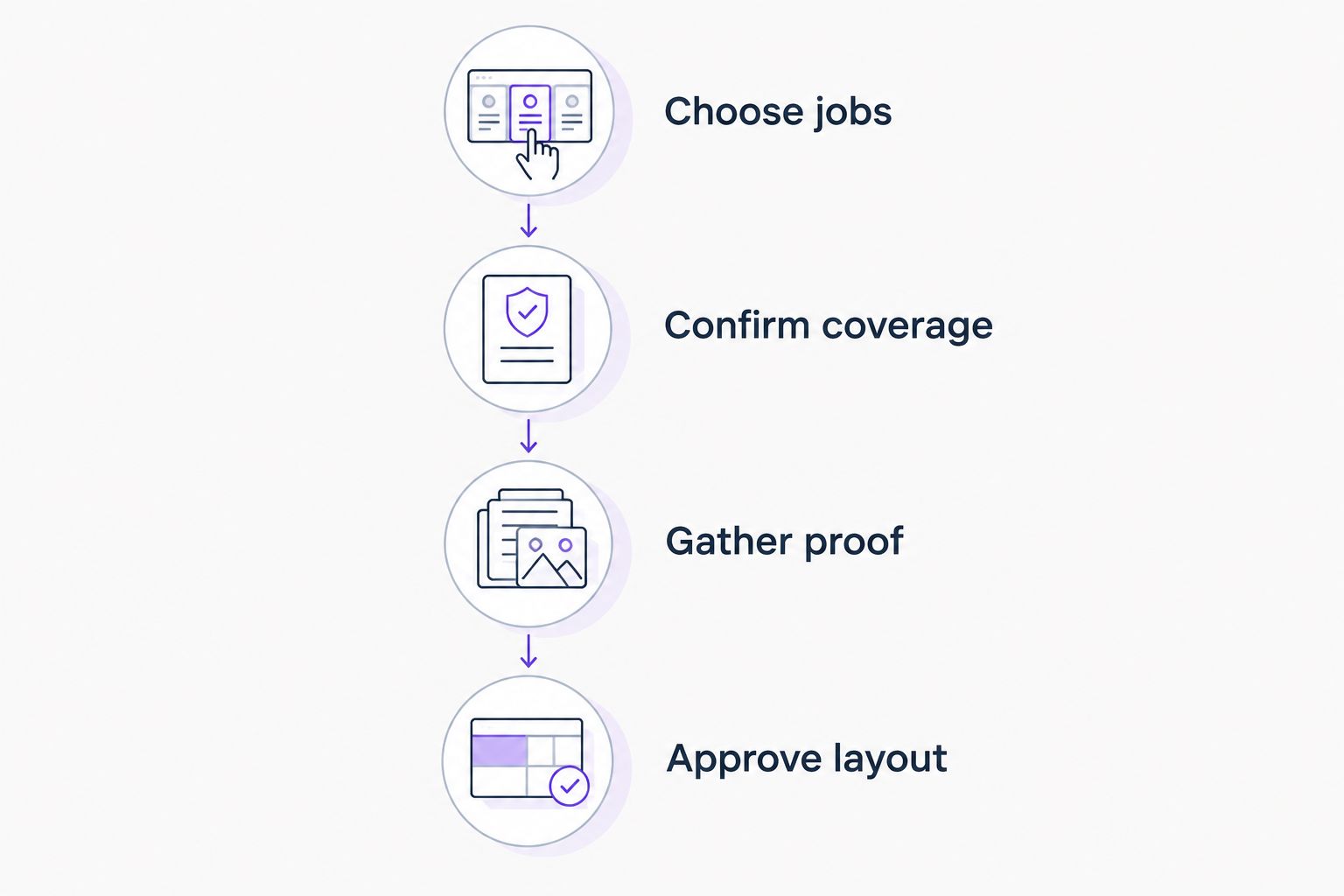
Before approving a 2026 website direction, write down what the site must help a customer do. Use this sequence:
- Choose jobs: Name the work you want inquiries about.
- Confirm coverage: List the communities you actually serve.
- Gather proof: Collect approved photos, accurate credentials, and usable customer feedback.
- Approve layout: Review the service paths and contact actions before launch.
The sequence matters. Choosing a layout before deciding what work to emphasize leaves you fitting the business into a template.
Ask any website provider to explain editing access, ownership, and the approval process in writing. A new design is not permission to alter a live website. Review proposed changes and approve them before publication.
For Moore Media Collective website design, bring your service priorities, coverage list, and existing brand materials to the discussion. Those inputs give the design a concrete job to do.
Plan your plumbing website
Start with your services, coverage, and the jobs you want to book.
Which plumber website design should you choose?
Choose Service-First Design if you are undecided. It is the clearest starting brief for a plumbing business with several residential services.
Choose Emergency-First Design when urgent calls are the priority. Choose Project-Proof Design when planned work needs explanation. Use Neighborhood-First Design for precise coverage, or Commercial-Focused Design for a commercial sales path.
For your 2026 website, borrow useful elements without giving every element equal weight. A service-led homepage can include project proof. It still needs one clear primary action.
FAQ
What's the best website design for Kansas City plumbers?
Service-First Design is the recommended default for Kansas City plumbers offering several residential services. It gives customers separate routes to the work they need and a clear contact step.
Should my plumbing website lead with emergency service?
Lead with emergency service only if your business actually handles urgent inquiries. Your website wording should match your operating hours, coverage, and call-handling arrangements.
Do I need a separate page for every Kansas City neighborhood?
No. Create a location page only when you can provide useful, accurate information beyond changing the place name. Do not imply that you have offices or coverage you do not have.
Are project photos better than stock photos for a plumber website?
Real project photos can show your actual work when you have permission to publish them. Add a factual scope description and avoid treating a photo as proof of performance or compliance.
Should I add online booking to my plumbing website?
Add online booking when your scheduling process supports it. Make clear whether the visitor is booking a confirmed appointment or submitting a request that needs a response.
Does Moore Media Collective provide website design for plumbers?
Yes. Moore Media Collective provides website design, logo design, branding, and social media management for plumbing and other trade businesses.
What should I check before launching my plumbing website in 2026?
Check phone actions, forms, service descriptions, coverage information, and permission to publish photos or feedback. Review the proposed website and approve changes before they go live.
One last thing
Test where every contact action ends. A good-looking button is unfinished work if it reaches the wrong number, submits to an unattended inbox, or suggests an appointment is confirmed when it is not.
Before launch, open the website on your phone. Make a test inquiry. Check the actual handoff—not just the page.