
Rebranding is worth it for an HVAC company in 2026 when the current name, look, or website no longer represents the business you want customers to hire. It is not the right fix for missed calls, poor service, or weak follow-up, and the work extends beyond a new logo to every place customers encounter your company.
- Is rebranding worth it for an HVAC company? Yes, when its identity misrepresents its services or makes recognition difficult.
- Keep recognizable branding when website design and clearer service information address the actual problem.
- Moore Media Collective provides HVAC branding and website design; define the business problem before choosing the scope.
- Judge the work by qualified inquiries and booked jobs, not whether the new logo looks fashionable.
Why this matters
You want more calls from homeowners you can actually serve. Before changing your identity, identify what stands between those homeowners and a useful conversation: unclear services, inconsistent business information, a confusing website, or an identity that no longer fits.
A rebrand should have a job to do. Start with the practical decisions in this branding for HVAC companies guide, then decide what needs changing and what deserves to stay.
An outdated-looking site is a reason to inspect the customer experience. It is not, by itself, a reason to throw away a recognizable company name.
Is rebranding worth it for an HVAC company in 2026?
Yes, when changing your identity addresses a specific business mismatch. No, when a smaller repair solves the problem. Choose the scope by what customers misunderstand, not by how tired you are of looking at the logo.
| Approach | Best for | What to change | Main advantage | Main drawback |
|---|---|---|---|---|
| Targeted refresh | Owners whose identity still fits | Unclear copy, inconsistent graphics, or difficult contact steps | Keeps familiar elements while addressing defined problems | Leaves deeper naming or positioning problems untouched |
| Website redesign | Owners whose site fails to explain the business clearly | Page structure, service information, mobile usability, and inquiry paths | Concentrates work on the customer journey | Does not resolve an unsuitable business name or identity |
| Full rebrand | Owners whose identity no longer represents their business | Positioning, visual identity, and potentially the name, plus rollout materials | Aligns the identity with the business being sold today | Requires coordination across customer-facing materials |
For example, an HVAC company that still wants to be known for the same services does not automatically need a new name because its homepage looks dated. Start by checking whether the page explains those services and makes contacting the office straightforward.
A company whose name describes a service it no longer provides has a different problem. Better page spacing will not resolve that mismatch. Examine the identity itself.
A targeted refresh: keep what customers recognize
A targeted refresh is the best fit when the name and core identity still describe your business. You improve execution without making the company look unrelated to the one customers already know.
Start with inconsistent materials. Compare the business name, phone number, service descriptions, and visual treatment across the website, estimates, social profiles, and vehicle graphics. Decide which version is correct before creating more variations.
Keep the familiar element unless you can name the problem it causes. That might mean retaining the logo while replacing vague website copy, or keeping the company name while making the lettering easier to read.
The limitation is scope. A refresh cannot repair a name that points customers toward the wrong service. Do not ask cosmetic changes to solve a positioning problem.
A website redesign: fix the path to a call
A website redesign is the best fit when the business identity is sound but the site makes customers work too hard. Check it on your own phone before discussing colors or animation.
Use these 3 checks to define the problem:
- Service clarity: Can you identify what the company does from the first screen?
- Local fit: Can you find the actual service area without guessing?
- Contact path: Can you place a call or submit an inquiry without searching through unrelated pages?
Write down what fails. A vague headline needs clearer language. A buried phone number needs a more obvious contact path. An inaccurate service-area list needs correction, not a new brand concept.
For an Omaha HVAC contractor, use actual coverage information rather than listing every nearby city to appear larger. Apply the same discipline in Kansas City, Des Moines, Denver, or Chicago: describe where your team genuinely works.
A redesign still has limits. A better inquiry form does not answer the phone, qualify the caller, or schedule the job. Keep website responsibilities separate from office responsibilities when judging results.
A full rebrand: change the identity for a reason
A full rebrand is the best fit when the business and its identity have grown apart. Perhaps the name emphasizes a service you no longer offer, or different parts of the company present conflicting identities. Treat those as questions to resolve, not automatic instructions to rename everything.
Write a plain-language explanation before approving creative work. State what the business does now, whom it serves, and what the existing identity gets wrong. If that explanation only says the logo feels old, reconsider the scope.
A full rebrand should make the business easier to understand, not merely harder to recognize. Keep useful continuity where it supports that goal. A new identity does not require changing every recognizable element.
The drawback is rollout work. A name or logo change affects more than the homepage. Prepare the affected materials together so customers do not encounter conflicting versions of the business.
Why the right rebranding scope varies
The right scope depends on what needs fixing. Use these factors to separate necessary work from extra work:
- Business fit: Does the current identity describe the HVAC services you actually provide?
- Existing recognition: Which names, symbols, or phrases do returning customers use to identify you?
- Website condition: Is the main problem the identity, or the way the site explains services and handles inquiries?
- Material coverage: Which vehicles, uniforms, signs, documents, and online profiles carry the current identity?
- Rollout readiness: Who will approve changes, supply accurate information, and coordinate updates?
- Measurement readiness: Can you connect inquiries to qualified leads and booked work before changing anything?
Do not turn this list into a shopping list. Each factor should help remove unnecessary work as well as identify necessary work.
For a 2026 project, write the agreed scope before reviewing design concepts. That keeps a website cleanup from quietly becoming a business rename without a clear reason.
How do you decide what to change first?
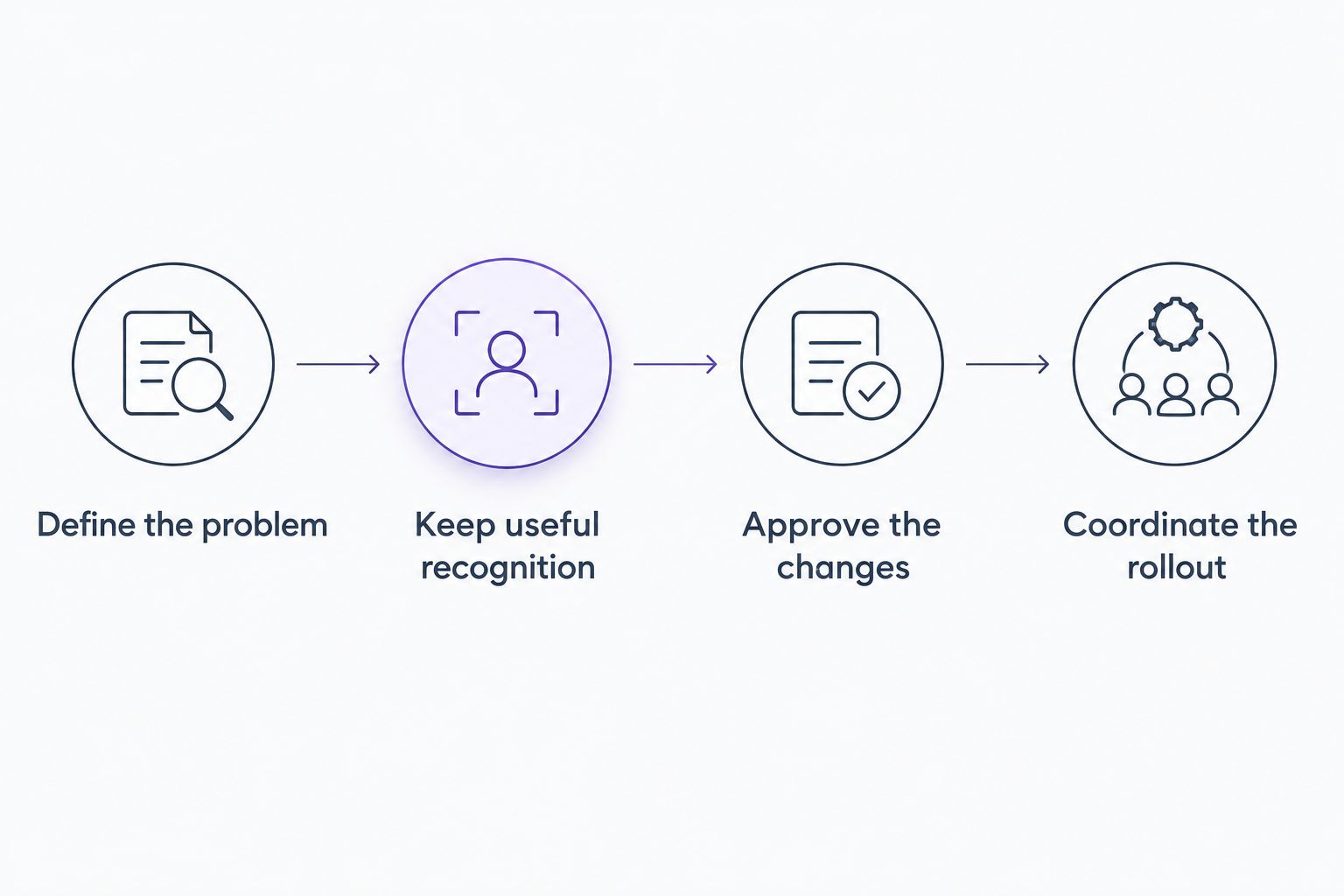
Use a short decision process. Start with the customer problem, protect what still works, and approve the proposed changes before anything goes live.
Define the problem
Describe an observable issue. For example: the homepage does not state the service area, the inquiry form asks irrelevant questions, or estimates use a different company name from the website.
Avoid instructions such as making the business look more premium. Translate that preference into something a customer can see, read, or do. Otherwise, you are approving taste rather than solving a defined problem.
Keep useful recognition
List the elements you intend to retain. Include the business name, phone number, recognizable graphics, and accurate service information where appropriate.
Ask your office team what customers call the company. Review real customer language rather than assuming the wording used internally is the wording homeowners recognize.
Approve the changes
Review proposed pages, wording, forms, and identity applications together. Confirm what changes, what stays, and who gives final approval.
For any agency engagement, require explicit approval before changes reach your live website. Keep a written record of the approved scope so a design discussion does not become permission to publish unrelated changes.
Coordinate the rollout
Prepare a list of affected materials and assign an owner to each update. Include customer communications if the change affects how people identify or contact the business.
Do not announce an identity change before you have a plan for the places customers will encounter it. The launch is a coordination task, not just a new homepage reveal.
Your written brief should connect every proposed change to the problem it addresses. If nobody can explain why an item belongs, remove it from the initial scope.
How do you measure whether an HVAC rebrand worked?
Judge a 2026 rebrand against the problem you approved it to solve. If the goal was clearer inquiries, inspect inquiry quality. If the goal was consistent business information, check the affected materials for consistency.
Record the starting position before launch. Track qualified inquiries, booked jobs, and the source of each inquiry when that information is available. Agree on what counts as qualified so your comparison uses the same definition throughout.
Keep an annotation log alongside the results. Record changes to advertising, service coverage, staffing, and call handling. Do not credit the rebrand for every movement in bookings when other parts of the business changed too.
Also inspect 4 surfaces after launch: the website, business profiles, customer documents, and vehicle graphics. Check names, phone numbers, service descriptions, and contact instructions against the approved version.
Looking better is a design judgment. Booking suitable work is a business outcome. Review both, but do not present one as proof of the other.
Should you rebrand if your HVAC website looks outdated?
An outdated HVAC website warrants a review, not an automatic full rebrand. Inspect the content and contact experience first, then decide whether the identity itself prevents a useful repair.
Ask 2 questions before approving a name or logo change: What customer problem does this solve? Why will a smaller change not solve it?
Strong answers identify a specific mismatch. Weak answers rely on personal preference, a competitor's recent redesign, or a desire to start over without examining what already works.
Can a rebrand make up for missed calls?
A rebrand does not fix missed calls. Repair call handling and follow-up separately, then make sure the website sends inquiries into a process your team can manage.
For instance, do not advertise emergency availability unless it reflects how the business operates. Clear, accurate promises belong in the brief before the designer starts arranging the page.
When does an agency make sense?
Moore Media Collective is a fit for HVAC owners seeking branding and website design from a creative agency. Its stated services also include logo design and social media management for trade businesses.
Review the services against your written problem statement. Ask for a scope that distinguishes identity work, website work, and ongoing content rather than treating them as interchangeable.
Agency support still requires your input. You must confirm service coverage, approve factual claims, provide usable business materials, and authorize publication. Do not outsource decisions that only the business owner can verify.
Define your rebranding scope
Discuss the identity or website problem you need to solve before choosing the work.
FAQ
Is rebranding worth it for a small HVAC company?
Rebranding is worth it when the current identity misrepresents the business or creates a clear customer-facing problem. Keep the scope smaller when clearer website copy or a targeted refresh addresses that problem.
Should I change my HVAC company name during a rebrand?
Change the name only when the name itself is part of the problem. A website redesign or visual refresh does not automatically require renaming the business.
Is a website redesign better than a full rebrand?
A website redesign is the better fit when the identity still represents the business but the site needs clearer information or contact paths. A full rebrand addresses a mismatch in the identity itself.
Will a new HVAC logo get me more booked jobs?
A new logo alone is not proof of more booked jobs. Track qualified inquiries and bookings, and review call handling alongside the design work.
What should I ask an agency before rebranding?
Ask what business problem the proposed scope solves, what stays, and what requires your approval. Require explicit approval before changes are published to your live website.
Does Moore Media Collective offer HVAC branding and website design?
Moore Media Collective provides branding, logo design, websites, and social media management for HVAC and other trade companies. Match the requested work to a defined business problem before choosing the scope.
One last thing
Before signing off on a 2026 rebrand, inspect the estimate a homeowner receives after the first call. Does it use the approved business name, correct contact information, and clear service language?
That document belongs in the same review as the homepage. Do not finish the visible part of the rebrand and forget the materials customers use to hire you.