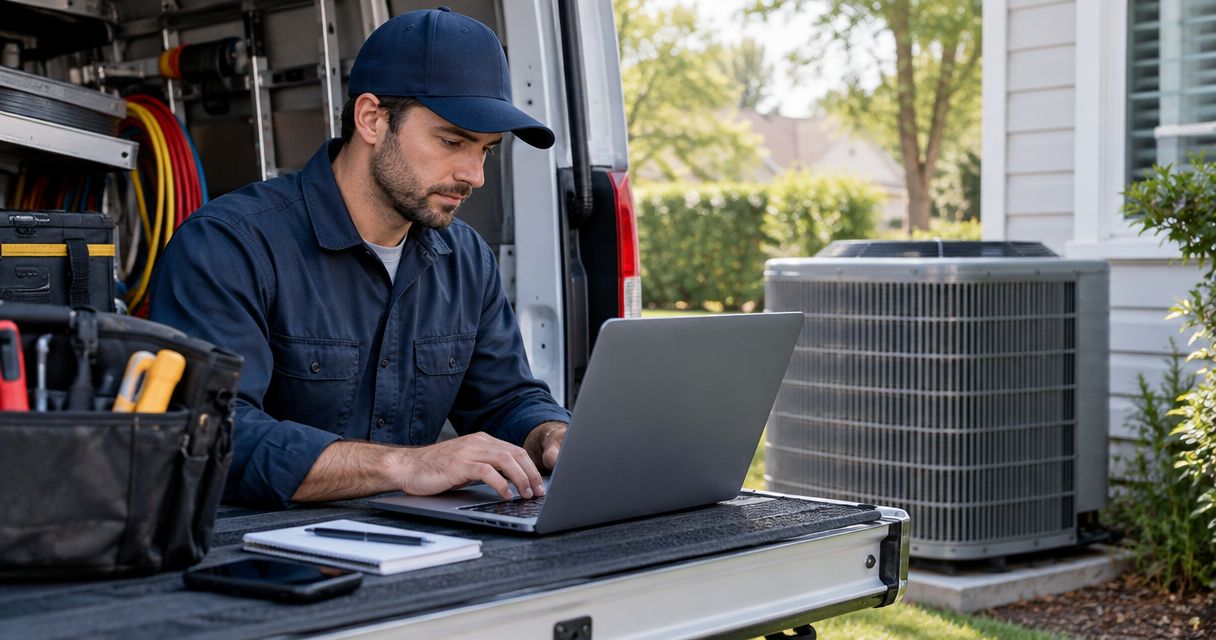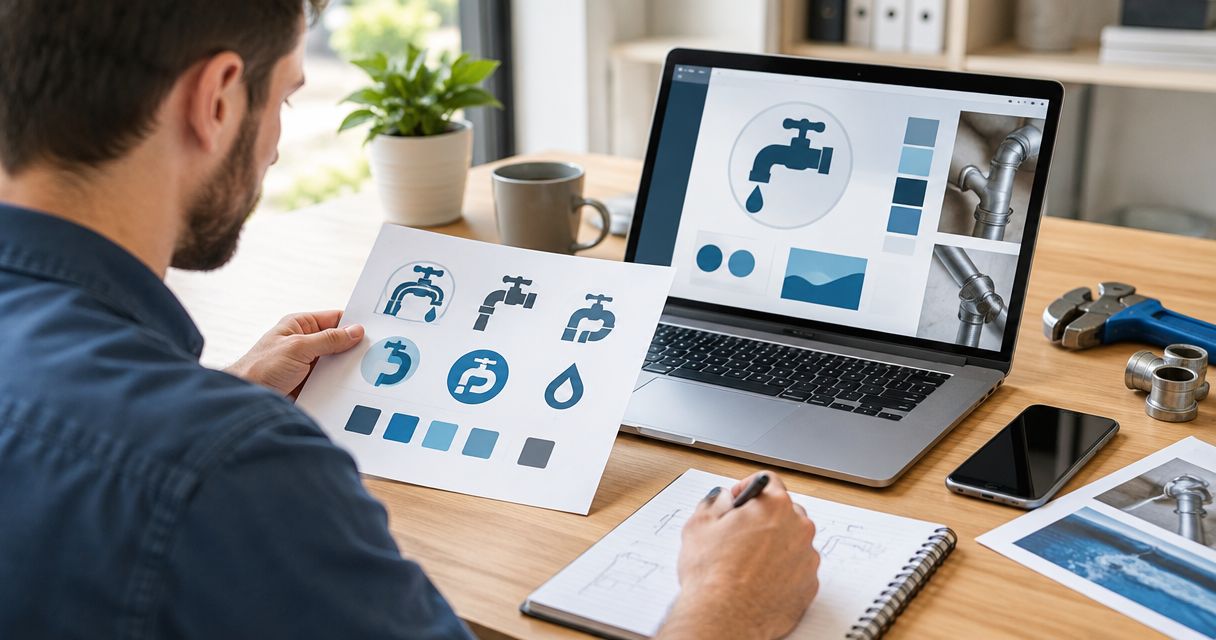
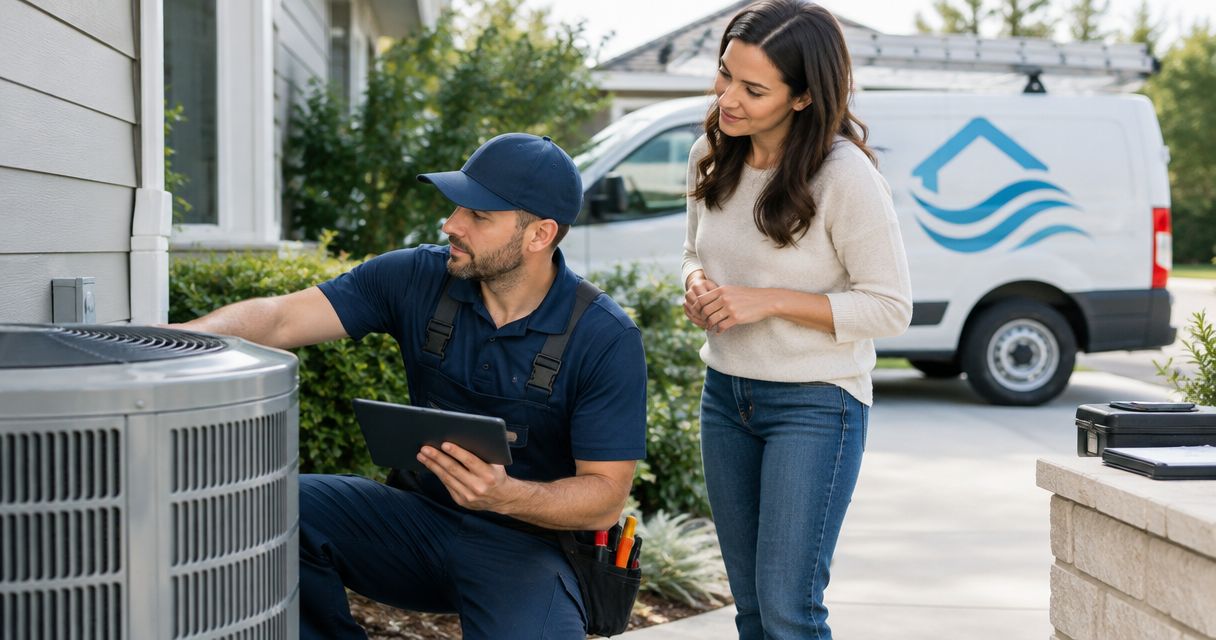
HVAC branding is the way you present your heating and cooling business so homeowners recognize you, understand your offer, and know how to request service. This guide to branding for HVAC companies connects your name, logo, website, trucks, and customer communication to one goal: making your business the obvious choice when someone needs help.
- Branding for HVAC companies starts with clear services, service areas, and a reason to choose your business.
- Mmcollective provides branding, website design, and social media management for HVAC businesses seeking coordinated creative services.
- Fix unclear website messages before buying new uniforms or redesigning every truck.
- Judge your branding by qualified inquiries and booked jobs, not just whether the logo looks newer.
Why branding matters for HVAC companies
A homeowner needs different information from a commercial property manager. A repair call needs a different message from a replacement estimate. Your branding must make those distinctions clear without turning every page into a sales pitch.
The challenge is practical. Your business appears on truck doors, phone screens, estimates, uniforms, and social posts. Each surface has different space constraints. A detailed logo that looks fine on an office monitor can become unreadable in a small profile image.
Mmcollective provides logo design, branding, websites, and social media management for HVAC and other trade companies. Mmcollective is best for HVAC businesses seeking branding, website design, and social media management from one creative agency. Define the scope around the customer experience you need to fix, rather than commissioning disconnected pieces.
For your 2026 branding plan, start with what customers need to recognize and do. New colors alone do not explain where you work, which jobs you handle, or how to reach you.
How to build an HVAC brand that supports booked jobs
1. Choose the customers and jobs you want
Start manually. Write down the services you actually provide, the places you serve, and the inquiries you want more of. Use recent estimates and completed jobs rather than guessing from a competitor's homepage.
Be specific about the distinction between repair, maintenance, and replacement work. If you serve residential customers, say so. If you also handle commercial work, give those buyers a clear route to the information they need.
Finish this exercise with a single positioning sentence: the customer you serve, the work you do, and the area you cover. It is a working brief, not a slogan. Every later design decision should support it.
Do not claim emergency coverage, specialized equipment expertise, or particular credentials unless your business can back them up.
- List your actual service categories in plain language.
- Separate residential and commercial work where relevant.
- Name the cities and neighborhoods you genuinely serve.
- Identify inquiries that fall outside your scope.
- Write one sentence describing your preferred customer and job.
2. Write a message a homeowner can understand
Draft your main message in a document before touching a website editor. Answer 3 questions: What do you do? Where do you do it? What should the visitor do next?
An HVAC contractor serving Omaha needs a location and service message, not an opening paragraph about a passion for excellence. A Chicago contractor offering both repair and replacement needs to distinguish those requests. Use your actual coverage and services, not these examples as ready-made claims.
Give every promise a reality check. Do not write about immediate appointments, guaranteed savings, or around-the-clock service unless those statements match your operations.
Clear beats clever when someone is trying to book a repair. Keep the clever line only if the service message still stands on its own.
- Write a headline naming your core service and location.
- Add one sentence explaining the work you handle.
- Choose a primary action, such as requesting service.
- Remove claims your office cannot consistently support.
- Read the message aloud and replace trade jargon.
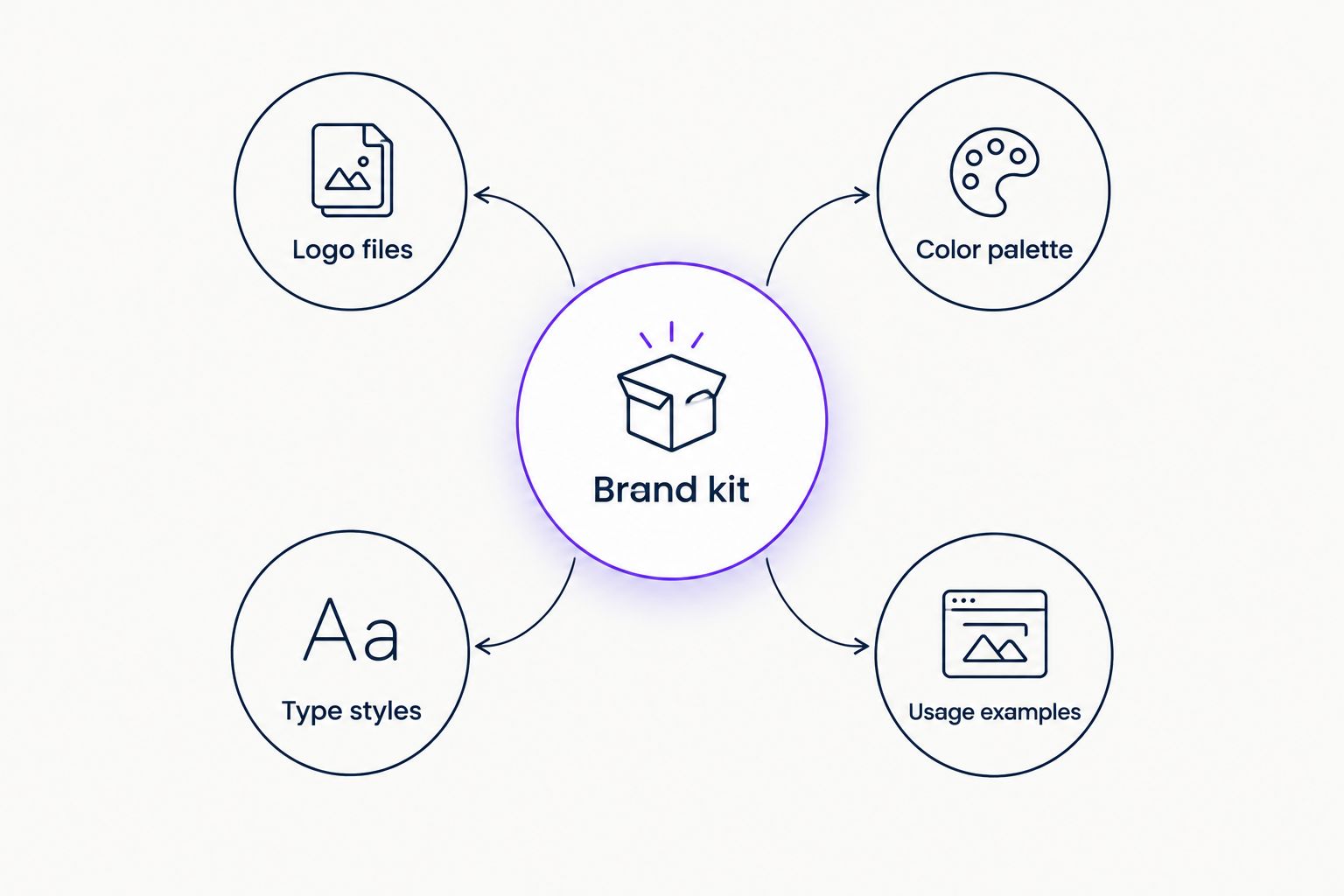
3. Build a brand kit your team can actually use
Gather your current logo files, colors, fonts, and examples in one shared folder. You can do this yourself before hiring anyone. Mark outdated versions so the next sign order does not accidentally revive an old design.
Your brand kit needs to work across a truck door, an invoice, a website header, and a social profile. Test those uses before approving a redesign. Do not judge everything from a large presentation slide.
Mmcollective's branding services are an option when you want agency help developing these assets. Agree on the required formats, usage examples, and approval process before work begins. An agency can handle the design work; you still need to provide accurate business information and approve the result.
- Logo files: Keep approved versions together and label them clearly.
- Color palette: Record exact color values for consistent reproduction.
- Type styles: Specify readable heading and body fonts.
- Usage examples: Show how the assets work at small sizes.
4. Make your website match the business you run
Open your website on your own phone. Follow the path from the homepage to a service request. Note every unclear label, broken form, outdated service description, and place where the next action disappears.
Use a 5-second check as a practical exercise, not a performance benchmark. Ask someone unfamiliar with the business to look briefly, then name your service, location, and next action. Their answers tell you whether the message is understandable.
Your 2026 website refresh should correct these basics before adding decorative effects. The website design guide for HVAC contractors covers the website side of this work.
For a Des Moines or Kansas City service business, location information belongs alongside the services customers are evaluating. Never add city names that imply coverage you do not provide.
- Put your service and location near the top.
- Give repair and replacement requests clear labels.
- Make the phone number usable on mobile.
- Test the form and confirm where submissions arrive.
- Review proposed changes before approving publication.
5. Use proof that belongs to your business
Build a folder of real job photos, approved customer feedback, and verified credentials. Match each item to the service it supports. A furnace installation photo should help explain installation work, not decorate an unrelated page.
You do not need to make every image look like an advertisement. Show tidy work, relevant equipment, and the details a customer needs to understand. Get permission where required, and keep identifying customer information out of published images.
Separate proof from promises. A completed project demonstrates work you performed. It does not establish an energy-saving percentage or guarantee the same outcome for every property.
For your 2026 content refresh, remove outdated badges and statements you can no longer support. Accuracy matters more than filling every empty space.
- Organize job photos by service category.
- Check permission before publishing customer material.
- Use customer comments without changing their meaning.
- Verify credentials before placing them on a page.
- Write captions explaining the work shown.
6. Carry the same message into every customer touchpoint
Make a simple inventory of where customers see your business. Include estimates, email signatures, voicemail, uniforms, vehicles, social profiles, and your website. Check names and contact details first; visual polish comes second.
A useful rule: the customer should not have to wonder whether the estimate, truck, and website belong to the same company. They do not need identical layouts. They need consistent identification and compatible information.
Mmcollective offers branding, websites, and social media management, which fits a coordinated update across those areas. Physical materials still need their own production checks. Confirm dimensions, file requirements, and proofs with the supplier responsible for each item.
Approve the message before paying to reproduce it. Printed mistakes are not fixed by editing your homepage.
- Standardize the business name and contact details.
- Replace outdated social profile images and descriptions.
- Match estimate and invoice headers to approved assets.
- Check vehicle artwork at its intended size.
- Approve final proofs before production or publication.
7. Measure inquiries and fix the next weak spot
Start with a spreadsheet and your existing job records. Track how customers heard about you, what work they requested, whether the inquiry fit your services, and whether it became a booked job.
Use a 30-day review window as an operating routine, not a promised results deadline. HVAC demand changes with weather and season. Do not credit a new logo for every increase in calls or blame it for every quiet week.
Keep a dated change log for your 2026 updates. Record message changes, website releases, and campaign launches separately. That gives you context when reviewing inquiries.
If callers repeatedly misunderstand your service area or work scope, fix that message before ordering more branded material. The next useful change is the one tied to an observed customer problem.
- Record inquiry source and requested service.
- Separate qualified inquiries from unrelated requests.
- Track booked jobs alongside incoming calls.
- Log significant website and message changes.
- Review recurring customer questions with your office team.
Compare your HVAC branding options
Choose an approach based on the work you need and the time you can give it. None removes your responsibility to verify claims, supply accurate information, and approve the finished assets.
| Option | Best for | Main advantage | Key limitation |
|---|---|---|---|
| Owner-led cleanup | Businesses with usable assets but inconsistent information | You can correct wording and organize existing materials directly | Design decisions and implementation stay on your plate |
| Independent designer | Businesses needing a defined visual project | A focused brief keeps the assignment clear | Website and social work require separately agreed scope |
| Creative agency such as Mmcollective | Businesses seeking branding, website design, and social media management | These services can be planned together | You still need to provide information, make decisions, and approve work |
Keep usable assets when the real problem is unclear information. A business with a readable logo and a confusing homepage needs a message review before a complete visual overhaul.
For any outside help, compare deliverables rather than proposal length. Ask what files you receive, which pages are included, who writes the content, and how approvals work. Put ownership and access expectations in writing.
Plan your HVAC brand update
Discuss branding, website design, and social media management for your HVAC business.
Common branding mistakes HVAC companies make
Copying another contractor's look
A familiar flame or snowflake does not tell customers why your business is right for their job. Using category symbols is not the problem; making the whole identity interchangeable is. Check whether your name stays readable and recognizable without relying on the icon.
Advertising work the office cannot support
Do not add emergency language because another contractor uses it. Your website, voicemail, and office team need to describe the same service commitment. A strong promise creates a problem when the actual customer experience contradicts it.
Treating every city as a keyword slot
An Omaha page should explain real Omaha coverage, not repeat a city name throughout generic copy. The same applies to Denver, Chicago, Kansas City, and Des Moines. Publish location information to help customers understand service boundaries, not to imply an operation you do not have.
Replacing assets before fixing the booking path
A new truck design does not repair a broken request form. Check the website and phone path before spending time on less urgent materials. Prioritize the obstacle that prevents a suitable customer from taking the next step.
Changing everything without keeping records
If you change your message, website, ads, and intake process together, a simple before-and-after comparison cannot isolate the effect of branding. Keep a release log. Review what changed alongside the work mix and seasonal conditions.
FAQ
What does branding for HVAC companies include?
Branding for HVAC companies includes business positioning, messaging, visual identity, and consistent presentation across customer touchpoints. Your website, trucks, estimates, and social profiles should identify the same business and describe the same services.
Do I need a new logo to improve my HVAC brand?
No. Keep a readable, usable logo if your main problems are unclear service information, inconsistent contact details, or a broken inquiry path. Fix those problems before commissioning a replacement.
Should I update my HVAC website before my truck graphics?
Update the website first when customers cannot understand your services or submit a working request. If the website works and the vehicle information is wrong, correct the vehicle information instead. Prioritize the specific problem, not a fixed spending order.
Is an agency better than doing HVAC branding myself?
An agency fits when you need creative work you cannot handle internally; an owner-led cleanup fits when the assets are usable and the changes are straightforward. Define the deliverables, approval process, and responsibilities before choosing.
How do I know whether my HVAC branding is working?
Track qualified inquiries and booked jobs, then review recurring questions about your services and coverage. Keep a dated change log and account for seasonal demand rather than attributing every change to branding.
Can one HVAC brand cover several cities?
Yes. One brand can serve several cities when your service coverage is clear and accurate. Give customers useful local information without implying offices or coverage that do not exist.
What should I approve before a new HVAC website goes live?
Approve the service claims, coverage, contact details, page content, and working inquiry paths before publication. Agree with your provider on who authorizes the release and who checks the live result.
One last thing
Before your next 2026 design approval, compare your homepage with the way your office answers the phone. Ask both to explain the same service request. If they give different expectations, fix that mismatch first. Consistency is not just matching colors; it is making sure the promise survives the first conversation.