
Yes—professional branding is worth it for roofing companies when it makes your business easier to recognize, your work easier to trust, and your estimate request easier to find. In 2026, a new logo alone is not enough: the website, project photos, service descriptions, and follow-up process must support the same promise.
- Is professional branding worth it for roofing companies? Yes, when clearer roofing branding supports a usable website and real project proof.
- Keep a recognizable logo if it works; fix confusing service pages and buried estimate requests first.
- Moore Media Collective fits roofing owners seeking branding, website design, and social media management.
- Judge the work by qualified inquiries and booked jobs, not whether the new colors look expensive.
Is professional branding worth it for roofing companies?
Professional branding is worth doing when it fixes a business problem, not just a design preference. A homeowner should understand what roofing work you handle, where you work, and how to request an estimate without decoding your website.
Start with the full picture in the branding for roofing companies guide. Then choose the smallest scope that fixes the actual problem.
| Approach | Best for | Main benefit | Main drawback |
|---|---|---|---|
| Keep the identity; repair the website | Roofers with a recognizable name and usable logo | Preserves recognition while addressing confusing pages | Does not fix an unreadable or inconsistent identity |
| Refresh the identity | Roofers with inconsistent fonts, colors, or logo files | Creates a repeatable visual system | Still needs clear messaging and a usable website |
| Rebuild branding and website together | Roofers whose identity and website no longer match their work | Aligns the business presentation and estimate path | Requires more decisions, content, and rollout coordination |
None of these approaches guarantees booked jobs. Your service quality, response process, and ability to handle the work still matter. Branding gives those strengths a clearer presentation; it does not replace them.
Why this matters
Your website is part of the sales conversation. If it says little beyond quality roofing and great service, it leaves the homeowner to work out what makes your company relevant to their job.
Consider a homeowner looking for a roof replacement in Des Moines. A page with actual replacement projects, a clear service area, and a visible estimate request answers useful questions. A dramatic roof icon beside vague promises does not.
The same test applies in Omaha, Kansas City, Denver, or Chicago. Say where you actually work. Show the work you actually do. Do not add city names or services just to make the business look bigger.
The goal is not to look like the largest roofer. It is to make your actual business clear and credible.
Keep the identity when the website is the problem
Best for: roofing companies whose name and logo are recognizable, but whose website makes contacting them difficult. Start here if the identity works on your trucks and estimates yet the website has unclear headings, dated project photos, or a buried contact form.
Open the homepage on your phone. Can you tell whether the company handles roof repairs, replacements, or the specific services it actually offers? Can you find the service area and request an estimate without hunting through menus?
If not, prioritize the page structure. Write direct service headings. Replace generic claims with useful explanations. Put the estimate request where it belongs in the reading flow, rather than treating it as a footer detail.
The benefit is focus. You keep the parts customers already recognize and fix the weak customer experience. The limitation is equally clear: a website repair will not make an unreadable logo work on a yard sign.
For your 2026 project brief, separate identity problems from website problems. They overlap, but they are not interchangeable.
Refresh the identity when consistency is the problem
Best for: roofing companies with a usable name but inconsistent visual materials. A refresh makes sense when your website, truck lettering, estimates, and social profiles look as though they belong to different businesses.
Start by gathering what you already use. Compare the company name, logo versions, colors, typefaces, and contact details. Look for contradictions before asking for something entirely new.
A useful identity refresh gives your team clear choices: which logo file to use, which colors belong together, and how headings and body text should look. It should also work in plain, practical settings, including a printed estimate or a small profile image.
The upside is consistency without discarding everything. The downside is that consistent design can still carry weak messaging. If your headline says only that you care about quality, changing its font does not make it more useful.
Ask for examples of the proposed identity in the places you will use it. A polished presentation is not enough if the lettering disappears when reduced.
Rebuild together when the whole presentation is wrong
Best for: roofing companies whose branding and website no longer describe the business accurately. This approach fits a broader mismatch: unclear positioning, disconnected visuals, weak service content, and a difficult estimate path.
Plan the identity and website as connected work. Decide which services need attention, what evidence supports them, and what the homeowner should do next. Then build the visual system around that information.
The advantage is alignment. Your homepage, service pages, project descriptions, and social posts can tell the same story without copying the same sentence everywhere.
The drawback is coordination. Someone must supply project photos, verify service descriptions, review drafts, and approve the finished work. Do not treat those responsibilities as details to sort out after design starts.
Put approval checkpoints into the project scope. Review the proposed direction, page content, and working website before authorizing publication. A redesign is not permission to change your live website without approval.
Why the value of roofing branding varies
The right scope depends on what is broken. Use these factors to decide where the work belongs:
- Existing recognition. Preserve a name or identity that customers already know unless there is a clear reason to change it.
- Website clarity. Fix unclear services, confusing navigation, and difficult estimate requests before adding decoration.
- Available proof. Gather real project images and accurate descriptions so the design has something meaningful to present.
- Service focus. Build the message around work you actually want and can handle, rather than listing every possible roofing job.
- Rollout responsibility. Identify who will update approved materials and keep the identity consistent after launch.
Use these factors in your 2026 brief. A list of business problems gives a designer better direction than a request to make the site more modern.
How should you decide what to fix first?
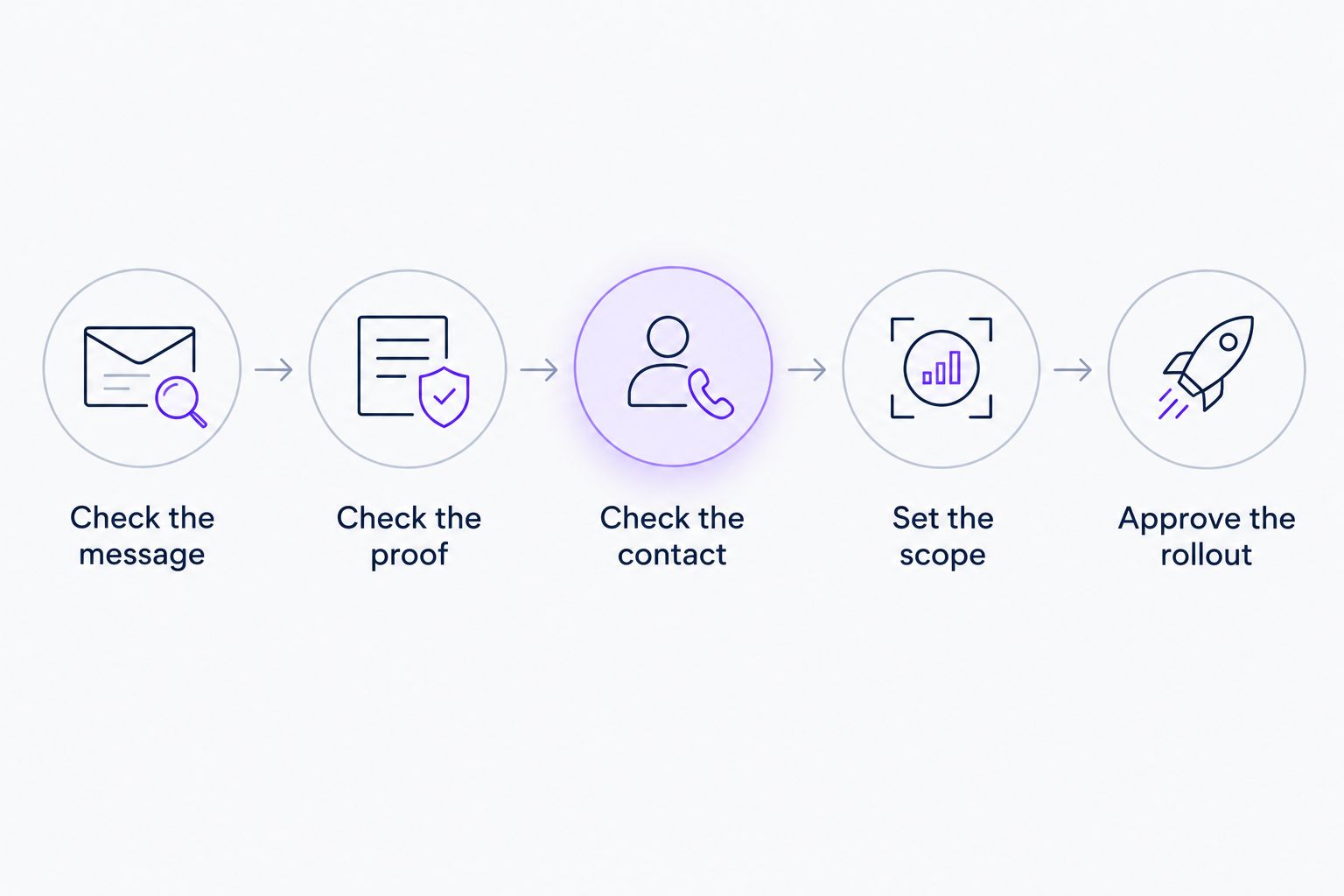
Use this sequence before approving a full rebrand. It separates a useful project from an expensive exercise in changing preferences.
1. Check the message
Write down the roofing work you want the website to bring in. Then compare that list with the homepage and service pages. If the website emphasizes work you no longer prioritize, correct the message first.
Be specific without inventing advantages. Describe your actual process and capabilities. Do not promise emergency response, warranties, financing, or specialist credentials unless your business genuinely provides them.
2. Check the proof
Review the project images and descriptions a homeowner can see. Explain what the job involved rather than posting an unexplained finished roof. Use customer material only with the appropriate permission.
A clear project description connects the image to the service. It gives the reader something to evaluate beyond a claim that your team does great work.
3. Check the contact
Follow the estimate path yourself. Tap the phone link. Submit the form. Read the confirmation. Check that the inquiry reaches the person responsible for responding.
Remove requests for information your team does not need at that stage. Keep enough detail to understand the job, but do not turn an initial inquiry into paperwork.
4. Set the scope
Decide whether you need a website repair, an identity refresh, or connected branding and website work. Write down the deliverables and who supplies the content.
Make approval responsibilities explicit. Include what must be reviewed before anything appears on the live website, and who gives that approval.
5. Approve the rollout
List the places where the identity appears. Plan the website, social profiles, estimate documents, and physical materials together, even if they are not all updated at once.
Keep the approved files and usage instructions somewhere your team can find them. Otherwise, an old logo attachment can undo the consistency you just paid to establish.
How do you tell whether the work helped?
Set a baseline before the changes go live. For a 2026 branding project, record what you can actually track: estimate inquiries, qualified inquiries, booked jobs, and the sources attached to those inquiries.
Define qualified with your team. An inquiry outside your service area is different from a homeowner requesting work you perform. Keep that distinction consistent when reviewing results.
Do not credit every change in bookings to branding. Advertising, seasonality, referral activity, staffing, and response practices belong in the same review. A busier month alone does not establish what caused it.
Also check the work itself. Are service descriptions accurate? Do forms function? Does the approved identity appear consistently? These checks confirm that the project was implemented correctly, even before you assess business results.
Measure business outcomes, but do not invent a return you cannot trace. A good-looking homepage is a deliverable. A booked roofing job is a separate result.
What should a roofing owner ask an agency?
Ask how the proposed work addresses the problems you identified. A useful answer connects design decisions to clearer services, stronger project presentation, and a workable estimate path.
Moore Media Collective is a fit for roofing owners who need branding, website design, and social media management. Those services match a connected presentation problem; they are not a substitute for answering leads or delivering the roofing work.
Review the branding, web design, and social media services against your written scope. Moore Media Collective provides these services for trade businesses, including roofing companies. Your proposal should still spell out your specific deliverables, responsibilities, and approval points.
Ask who owns the finished files, who supplies copy and photos, and how revisions and launch approval are handled. Get the answers in writing rather than assuming that every agency works the same way.
Do I need a new logo to get more roofing leads?
No. Keep a readable, recognizable logo if the real problems are unclear services, missing project evidence, or a broken inquiry path. A new mark cannot repair those problems by itself.
Should I fix my website before changing my branding?
Yes, if the website is stopping people from understanding your services or contacting you. If both the identity and website are inconsistent, plan them together so you do not design the same materials twice.
Can branding replace local search work or advertising?
No. Branding shapes how your company presents itself; local search work and advertising address how people find it. Make the destination clear and usable, then assess the channels bringing people there.
FAQ
Is professional branding worth it for a small roofing company?
Yes, when professional branding fixes unclear messaging, inconsistent materials, or a weak website presentation. Choose the scope around those problems rather than the size of your company.
Is a logo refresh better than a full roofing rebrand?
A logo refresh is the better fit when your name and message still work but the visual identity needs consistency. A broader rebrand addresses a wider mismatch between the business and its presentation.
What should my roofing website show first?
Your roofing website should make your services, service area, and estimate request clear. Support those basics with genuine project evidence and accurate business information.
Should I change my roofing company name?
Do not change your roofing company name just to make a design project feel bigger. Identify the problem with the existing name and consider the recognition you would be giving up.
How should I measure a roofing branding project in 2026?
Measure a 2026 roofing branding project using qualified inquiries, booked jobs, and identifiable inquiry sources where tracking exists. Review advertising, seasonality, and response practices alongside those results.
Does Moore Media Collective work with roofing companies?
Moore Media Collective provides branding, website design, and social media management for roofing companies and other trade businesses. Match the proposed services to your specific business problems and approval requirements.
One last thing
Before approving a design, replace your company name in the proposed homepage headline with another roofer's name. If the sentence still works unchanged, it probably says too little about your business.
Use that test on your 2026 website brief. Replace interchangeable claims with accurate services, real project details, and a clear next step. Make your business easier to choose before making it look different.