A new logo is worth it for a plumbing company in 2026 when it fixes a real problem: an unreadable name, inconsistent branding, or artwork that no longer fits the business. Keep a recognizable logo that works, and fix website or call-handling problems separately. Include the work of replacing the logo across your business—not just designing it—in your decision.
- Is a new logo worth it for a plumbing company? Yes, when it fixes readability, consistency, or recognition problems.
- Refresh a recognizable plumbing logo before replacing it completely.
- A new logo does not fix broken website forms or unanswered calls.
- Moore Media Collective provides logo design, branding, and websites for plumbing companies needing coordinated work.
Is a new logo worth it for a plumbing company in 2026?
Yes, if you can name the problem the replacement will solve. Being tired of your logo is not enough. An owner sees the same artwork constantly; a homeowner needs to recognize the business and find a way to contact it.
Start with the smallest change that solves the problem. Use this decision table before requesting design concepts.
| Option | Best for | Main benefit | Main drawback | Recommendation |
|---|---|---|---|---|
| Keep the logo | A readable, recognizable identity | Preserves familiar branding | Leaves existing design limits in place | Keep it if it works across your materials |
| Refresh the logo | A familiar identity with cramped lettering or excess detail | Fixes practical problems while keeping recognizable elements | Cannot solve every naming or identity problem | Refresh before starting over |
| Replace the logo | An identity that no longer represents the company | Gives the business a new visual foundation | Requires a coordinated replacement of existing materials | Replace only with a clear reason and rollout plan |
For help connecting the decision to other work, review the agency's branding and website services. Decide whether you need a logo project or a wider cleanup before choosing a direction.
Why this matters: look credible without fixing the wrong thing
Your logo appears beside the things homeowners use to judge your company: your name, job photos, reviews, service information, and contact details. It should make that information easier to recognize. It should not compete with it.
Picture a Kansas City plumber whose truck lettering is clear but whose mobile website hides the phone number. Replacing the logo leaves the contact problem untouched. Fix the phone link first.
Now picture a business using different logos on estimates, uniforms, and its website. That is an identity problem worth addressing. Make the business look like the same business wherever a customer finds it.
A useful 2026 branding decision separates appearance from function. You need both, but you need to know which one is failing.
Keep the logo: best for a recognizable plumbing company
Keep your existing logo when customers can read the company name, the artwork reproduces cleanly, and the identity still fits your services. Familiarity is a reason to preserve useful elements, not an excuse to ignore obvious problems.
Check actual materials rather than relying on memory. Put a recent estimate beside your website and truck artwork. Confirm that the name, lettering, and basic design match.
Keeping the logo has a limitation: it leaves any underlying design restrictions in place. If the artwork only works on a large truck panel, keeping it unchanged does not solve its use on smaller materials.
Best for: an established plumbing business with a clear, consistent identity. Keep the logo and direct your attention to the specific problem blocking customer contact.
Refresh the logo: best for fixing practical design problems
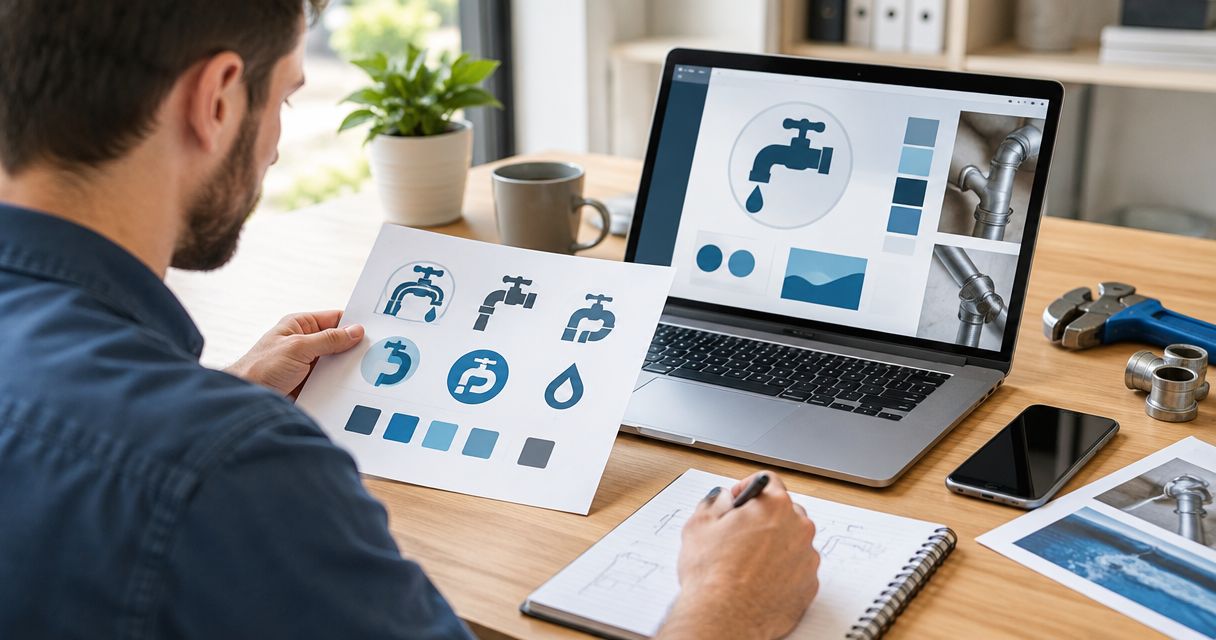
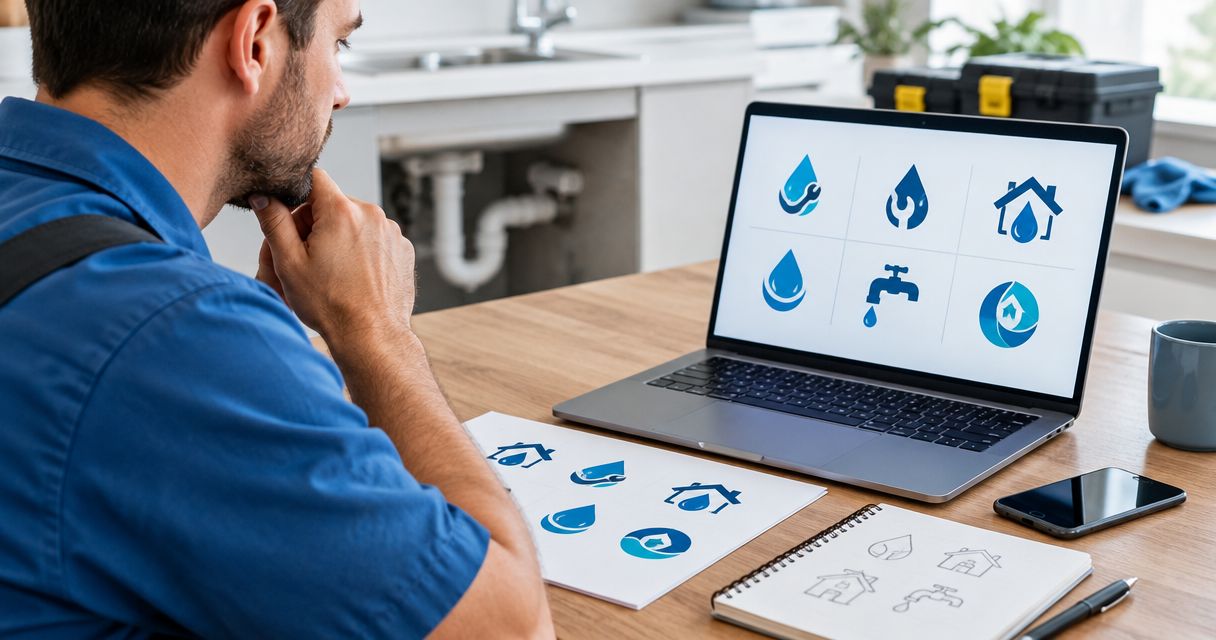
A refresh keeps recognizable parts of the identity while correcting specific weaknesses. That might mean simplifying an illustration, opening up crowded lettering, or preparing a layout that fits a website header.
Do not approve changes simply because the new version looks cleaner in a presentation. Ask to see the company name at its intended size. Inspect the parts customers actually need to read.
A refresh also needs boundaries. Decide which elements should stay familiar before design begins: the company name, a distinctive symbol, or the overall lettering style. Otherwise, a supposed refresh can become an unplanned replacement.
Best for: a plumbing company whose identity is familiar but awkward to use. Refresh the weak parts without discarding everything customers already recognize.
Replace the logo: best for an identity that no longer fits
A replacement makes sense when the existing identity points customers toward the wrong name or no longer matches what the business does. It also deserves consideration when repeated adjustments have not solved basic readability problems.
Write the reason in plain language. For example: the company name is buried beneath an illustration, or the artwork includes a service description the company no longer uses. Those are design requirements, not preferences.
Replacement brings more work than a refresh. Review every place the old identity appears, decide what needs changing, and approve the new artwork before production or publication.
Best for: a plumbing business with a clear identity mismatch. Replace the logo when retaining it would preserve the problem you need to solve.
Why the value of a new plumbing logo varies
The value depends on what is wrong and how much of the business the change touches. These factors define the scope:
- Readability: The company name needs to remain clear wherever you use it. Decorative detail should not overpower the name.
- Consistency: Different versions across estimates, trucks, and online profiles create a cleanup task beyond the main logo file.
- Business fit: The identity should reflect the company name and services you actually provide. Remove outdated wording rather than designing around it.
- Placement needs: A website header, embroidered shirt, and truck panel have different layout requirements. Review each intended use.
- Replacement work: Existing printed materials and physical signs need a deliberate transition. Identify them before approving the project.
- Website priorities: A logo project should not distract from broken forms, unclear service information, or missing contact details.
For a closer look at design direction, compare logo styles for plumbing companies. Choose a style against a practical requirement, not a trend you feel obliged to follow.
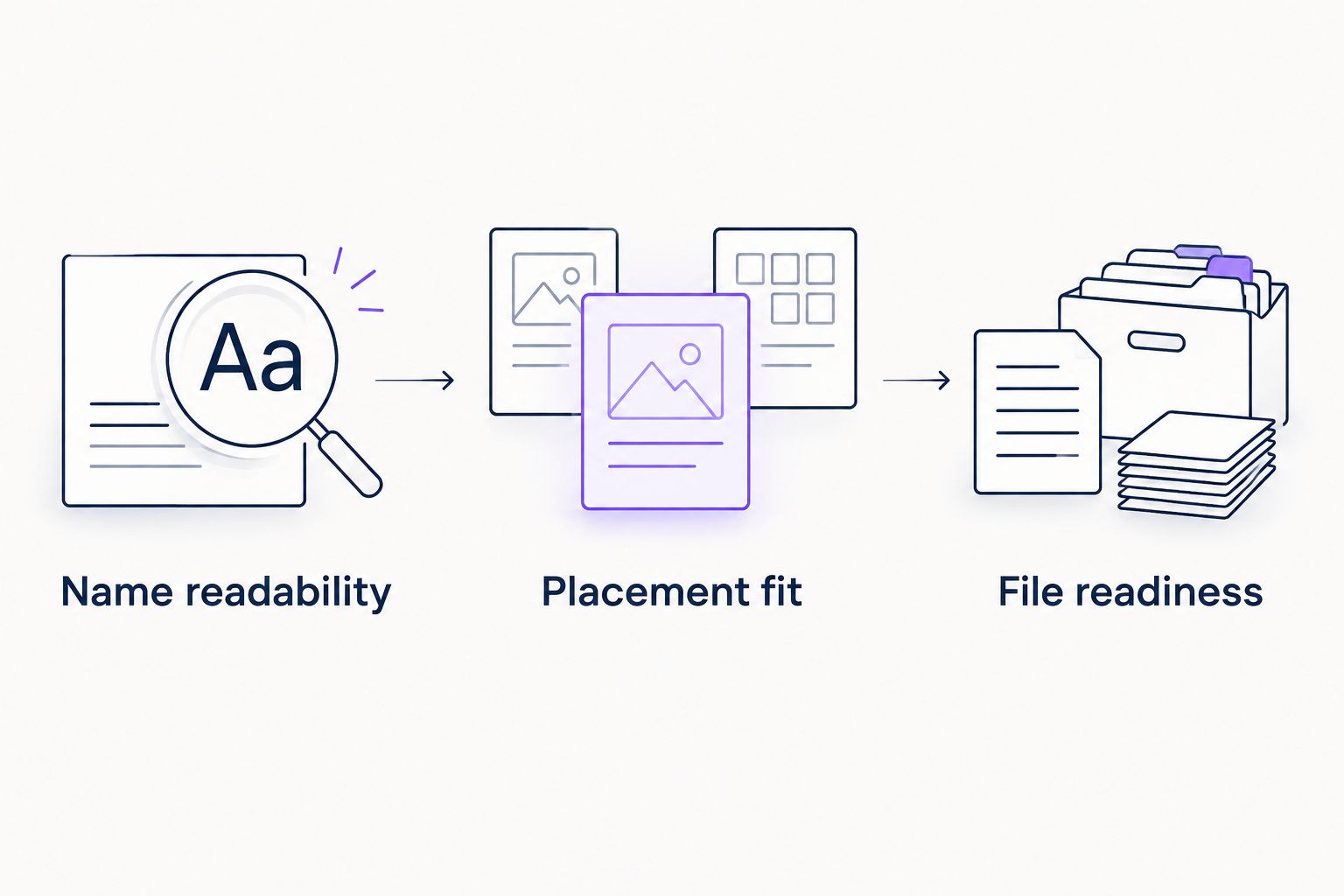
Run these 3 checks before approving a design
Use the same checks for your current logo and any proposed replacement. That gives you a fair comparison instead of a contest between old artwork and a polished presentation.
Name readability
View the logo at the size it will appear on your phone. Read the business name without enlarging the image. If the symbol is clear but the name disappears, ask for a better balance.
Also inspect a plain version without background effects. The logo itself needs to work; a dramatic mockup is not the deliverable.
Placement fit
Review 4 placements: your website header, truck panel, shirt, and estimate. Use realistic layouts rather than showing the same oversized logo in every example.
Ask what changes between placements. A horizontal arrangement and a compact arrangement can serve different spaces while keeping the same identity. Each version should have a defined purpose.
File readiness
Request 2 file types for different jobs: scalable vector artwork for production and a transparent raster image for everyday digital use. Confirm the exact format requirements with your printer, sign maker, or website provider.
Do not assume that a small image copied from social media is suitable for vehicle graphics. Get usable source files and keep them somewhere the business controls.
Plan the 2026 rollout before changing anything live
A finished design is not a finished rollout. Keep control of the transition so customers do not encounter a new identity in one place and an unrelated old version everywhere else.
- List current uses. Include your website, business profiles, estimates, invoices, uniforms, signs, vehicles, and saved document templates. Mark which items need outside production help.
- Approve the final artwork. Confirm spelling, layout variations, and files. Separate approval of the design from approval to publish or manufacture it.
- Set the change order. Decide what changes together and what requires a later production date. Tell staff which version to use during the transition.
- Review the finished work. Check the live website, downloaded documents, and physical samples. Test the phone link and contact form after website changes.
No live website change should happen without your approval. Put that requirement in the project scope rather than assuming everyone understands it.
Moore Media Collective is best for plumbing owners seeking logo design, branding, and website work together. The practical advantage of a shared project is a common brief; the limitation is that broader work still needs clear priorities and separate approvals.
Should you fix the logo or the website first?
Fix the problem that prevents customers from understanding your services or contacting you. If the website has a broken form, an incorrect phone number, or unclear service coverage, address that before a cosmetic logo change.
If the logo is unreadable across the website and business materials, include identity work in the plan. Keep the tasks distinct so you can approve each one against a clear requirement.
Will a new plumbing logo bring in more calls?
A new logo alone is not a basis for promising more calls. Treat readability and consistency as design goals, then track inquiries and booked work separately from design approval.
Before launch, confirm that call and form tracking work. After launch, record other changes—such as advertising or service-area updates—so you do not credit the logo for everything that happens.
How do you know whether a logo refresh is enough?
A refresh is enough when it fixes the problem while preserving a useful identity. Ask the designer to show the current and revised versions in the same placements.
If clearer lettering and simpler artwork solve the issue, stop there. A complete replacement needs a stronger reason than wanting something different.
FAQ
Is a new logo worth it for a plumbing company in 2026?
A new logo is worth it when it fixes a defined readability, consistency, or business-identity problem. Keep or refresh a working logo rather than replacing it just because it feels old.
Should I redesign my plumbing logo before my website?
Fix website problems that prevent customers from contacting you before making a cosmetic logo change. Include logo work when the current identity is unreadable or does not fit the business.
What should I ask for with a new plumbing logo?
Ask for approved layout variations, scalable artwork, and digital files suited to your intended uses. Confirm production requirements with the people making your signs, uniforms, and other materials.
Can I keep my plumbing company colors during a refresh?
Yes, keeping familiar colors can be part of the design brief. Judge the revised logo on readability and practical use, not on how much has changed.
Do I need a pipe or wrench in my plumbing logo?
No, a pipe or wrench is not a requirement. Use a symbol only if it supports a clear, readable identity rather than crowding the company name.
Does Moore Media Collective provide plumbing logo design?
Moore Media Collective provides logo design, branding, websites, and social media management for plumbing and other trade companies. Define the scope around the problems you need solved.
Should my agency change my live website as soon as the logo is ready?
No, approving a logo should not automatically authorize live website changes. Agree on the launch steps and give explicit approval before publication.
One last thing
Before approving a 2026 logo project, place the proposed design on an ordinary estimate. Remove the dramatic background and presentation effects. Read the business name, then find the contact information.
If the logo needs a sales presentation to look useful, it is not ready for your plumbing business. Approve the version that works on an ordinary workday.