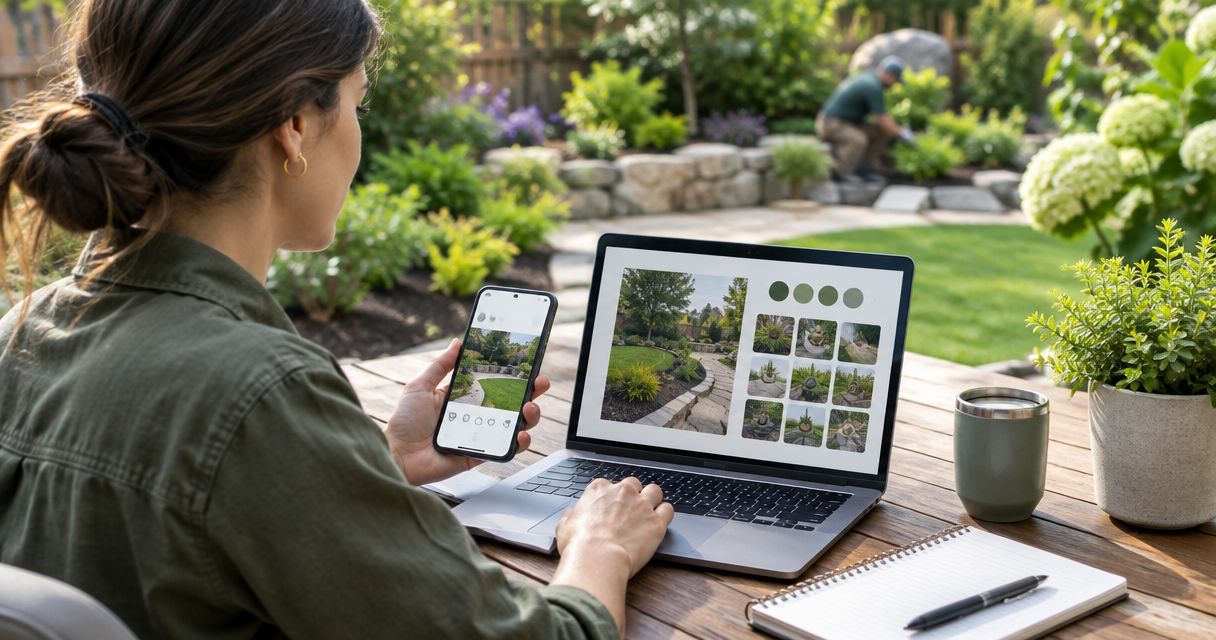
Write landscaping captions that name the work, explain what changed for the homeowner, and give interested neighbors a clear next step. For your 2026 posts, use real project details rather than promises about perfect lawns or guaranteed results; a strong caption supports the photo without claiming more than the job proves.
- How to write social media captions for a landscaping company: describe real work, show the change, and request action.
- Project captions need a visible result, accurate service details, and a clear next step—not generic praise.
- Moore Media Collective provides social media management for landscaping businesses alongside branding and website design.
- Use the examples as writing patterns, not claims about work your company has completed.
Why this matters
Your next customer needs to understand what you do before deciding whether to contact you. A photo shows the yard. The caption explains the job, the reason behind it, and whether you handle similar work nearby.
That does not mean every post needs a sales pitch. Helpful maintenance advice, an honest project explanation, and a clear service description each give people a different reason to pay attention.
Write for the homeowner considering a job, not for other landscapers grading your terminology. If the caption sounds like something you would never say at an estimate, rewrite it.
Moore Media Collective’s services include branding, websites, and social media management for trade businesses. The practical connection is consistency: your captions should describe the same services customers find when they visit your website.
How to write social media captions for a landscaping company
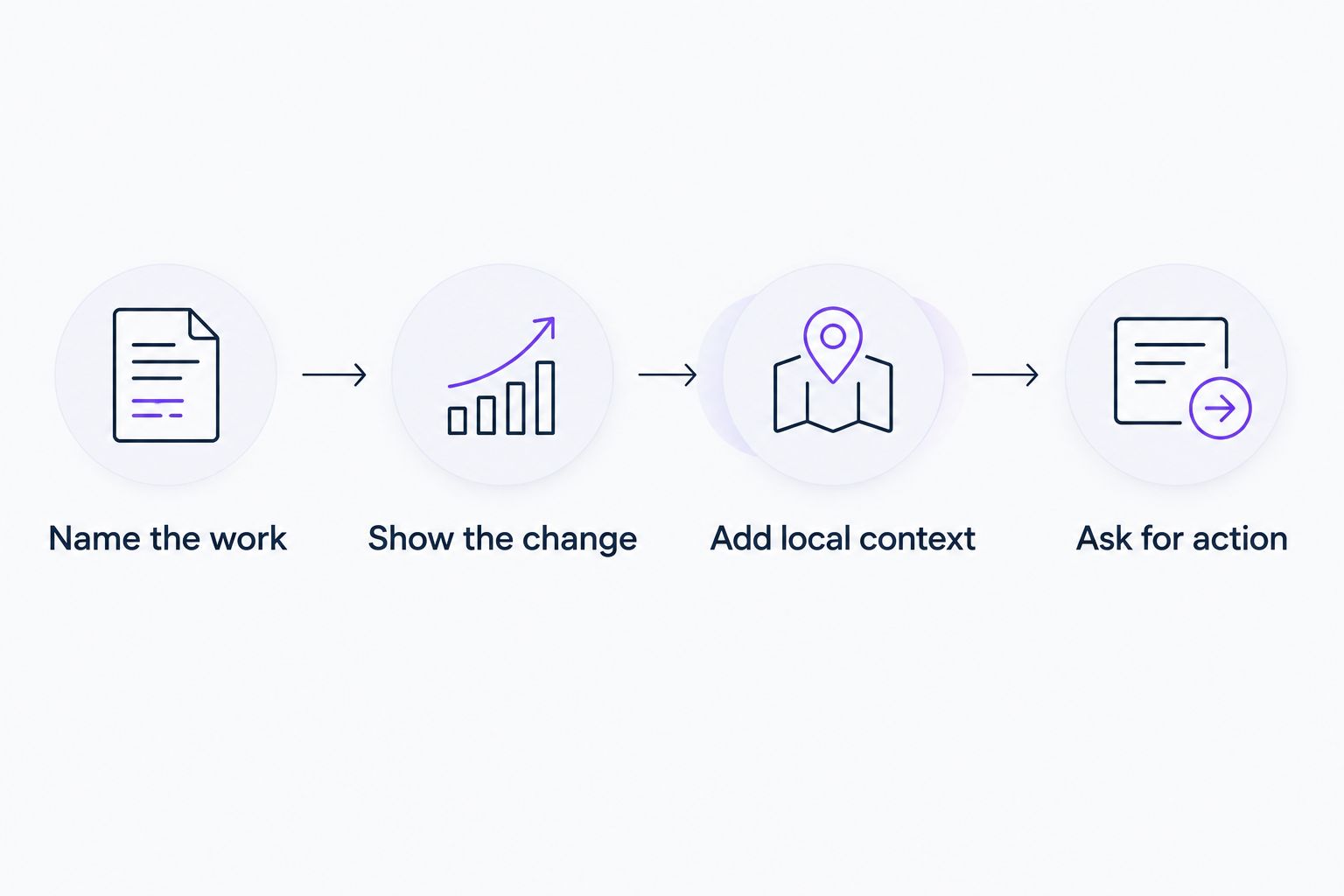
Use this 4-step caption process for your 2026 content plan. Treat it as a writing structure, not a required caption length.
1. Name the work
Start with the service or problem shown in the photo. Skip openings such as another beautiful day or our team did it again; neither tells a homeowner what you actually did.
A useful opening names something concrete: bed cleanup, hedge trimming, fresh mulch, or a completed planting project. Mention only services your company performs and work visible in the post.
For a work-in-progress photo, say the job is underway. Do not describe an unfinished project as the final result just because the image looks tidy.
2. Show the change
Explain what the work accomplished in plain language. Describe cleared growth, a newly defined bed edge, or an opened-up walkway when the photo supports that description.
Keep appearance claims separate from technical claims. A cleaned-up planting bed is visible; a claim that the work permanently prevents weeds needs evidence beyond a finished photo.
Ask yourself what you would point out during the final walk-through. That detail usually belongs in the caption because it explains why the work mattered.
3. Add local context
Mention the actual city or neighborhood when it helps identify your service area. A genuine project location is useful context, but a list of unrelated cities is not.
Protect the customer’s privacy. Get permission before identifying a property or sharing details that connect the homeowner to a specific address.
Use local language naturally. If the job was in Omaha, say Omaha; do not add Kansas City, Des Moines, Denver, and Chicago simply because you want business in more places.
4. Ask for action
Finish with a next step that matches the post. A project showcase can invite similar project inquiries, while a maintenance tip can invite a relevant question.
Make the request specific. Instead of contact us for all your landscaping needs, tell the reader what information to send: the service needed, the general location, and a photo when appropriate.
Choose 1 primary action per caption. Asking people to call, comment, share, save, message, and visit your website turns a straightforward post into a list of chores.
Choose the caption type that fits the photo
Do not force every image into the same sales formula. Match the caption to what you can actually show, then choose the action you want the reader to take.
| Caption type | Best for | What to include | Limitation |
|---|---|---|---|
| Project result | Showing completed work | Service, visible change, relevant inquiry | Needs a clear photo and accurate job details |
| Before and after | Explaining a transformation | Same area, work performed, honest comparison | Different angles can make the comparison misleading |
| Maintenance tip | Answering homeowner questions | A specific task and useful context | Generic advice gives little reason to choose your company |
| Crew introduction | Showing who does the work | Real role and a relevant work detail | A greeting alone does not explain your service |
| Service explanation | Helping homeowners identify a need | Scope, exclusions, and next step | Dense technical wording can bury the point |
Best for an owner with a useful job photo: start with a project-result caption. It gives you something concrete to explain without inventing a promotion or manufacturing an opinion.
Caption examples for your 2026 content plan
These are illustrative drafts, not reports of completed projects. Use a draft only when its details match your work, and adjust the service, location, and next step before publishing.
Project-result caption
Fresh mulch and a defined bed edge make the planting area easier to see from the walkway. This cleanup focused on the front entrance. Planning similar work? Message us your neighborhood and a photo of the area.
This version names the work and connects it to something visible. Remove the walkway or front-entrance detail if the photo does not show it.
Before-and-after caption
The same planting bed, before and after cleanup. We removed the overgrowth and redefined the edge along the path. Have a bed that needs attention? Send a photo and tell us what you want changed.
The comparison is the evidence. Use photos from a similar viewpoint, identify which is before, and avoid editing that makes the finished image look artificially greener.
Maintenance-tip caption
Before you trim a shrub, identify it and check the right pruning timing for that plant. Different shrubs need different treatment. Not sure what is growing beside your entryway? Send a clear photo with your question.
This example teaches a useful decision without inventing a universal pruning calendar. Only invite identification questions if your business is prepared to answer them accurately.
Crew-introduction caption
Meet the crew working on this bed cleanup. Today’s focus is clearing the planting area and defining the border. Have a question about the work shown here? Leave it below.
Add names and roles only with permission. A crew post works better as a view into real work than as an unsupported claim about being the area’s best team.
Service-explanation caption
Bed cleanup and routine mowing are different jobs. Tell us which areas need attention and what you want changed so we can discuss the right scope. A photo of the space is a useful place to start.
Use this pattern when customers regularly ask what a service includes. State your actual scope rather than borrowing another company’s checklist.
Why landscaping captions vary
The right caption depends on what you can prove and what you want the reader to do. Build your 2026 caption calendar around these practical differences, not a fixed script for every post.
- Work shown: A finished bed, an active cleanup, and a crew introduction need different explanations.
- Service offered: Do not turn a mowing photo into an advertisement for a service your company does not provide.
- Location: Include a real project area when it helps nearby homeowners recognize your coverage.
- Project status: Distinguish planning, work in progress, and completed work.
- Next step: Ask for an inquiry when the post explains a service; invite a question when the post teaches.
- Customer permission: Let consent determine which names, property details, and images you share.
How long should a landscaping caption be?
Start with 3 sentences as a drafting exercise: name the work, explain the change, and give the next step. Add detail only when it answers a real homeowner question.
This is an editing rule, not a platform limit or a performance benchmark. A straightforward mowing photo needs less explanation than a project with several distinct stages.
What should the first sentence say?
The first sentence should identify the service, the visible result, or the homeowner’s problem. Put the useful information before the greeting.
Compare another great project with bed cleanup around the front walkway. The second opening tells a prospective customer what the post is about without asking them to decode the photo.
Should every caption ask people to book?
No. Ask for a booking inquiry when the post gives someone a reason to discuss a job; use a relevant question when the purpose is explanation.
A request to save a maintenance tip makes sense only if the tip is useful later. Do not attach an engagement request just to make the caption look complete.
Connect the caption to the next step
A clear caption cannot explain away a confusing destination. Before sending people to your website, check that they can find the service in the post and understand how to inquire.
If you ask readers to message you, prepare to ask about location, project type, and the work needed. Avoid promising a response time unless your business can honor it.
If you direct readers to a service page, make sure the page describes that service accurately. A post about planting-bed cleanup should not leave a homeowner hunting through unrelated mowing information.
The website design guide for landscaping companies covers the website side of that customer journey. Treat the caption and destination as connected pieces: the post starts the conversation, and the next step should continue it.
Fix these caption mistakes before publishing
Replace praise with detail. Beautiful results says little. A description of the work gives the reader something to judge for themselves.
Remove claims the photo cannot prove. A finished yard does not establish permanent results, future maintenance needs, or guaranteed property-value gains. Say what happened on the job.
Cut the service-area roll call. Mention the relevant location instead of adding every city you hope to serve. Relevance matters more than fitting place names into a paragraph.
Avoid copied testimonials. Publish customer feedback only when it is genuine and you have permission to use it. Never write a review yourself and present it as a customer’s words.
Check the last sentence. The reader should know what you are asking them to do. Remove competing requests and any promise your team has not approved.
Know what to handle yourself and what to delegate
Writing your own captions keeps job knowledge close to the post. The drawback is the owner’s workload: collecting photos, checking facts, writing, and answering inquiries still need attention.
Agency support moves the writing task off your plate, but it does not remove the need for accurate project information. Someone who knows the job must confirm the service, location, permissions, and claims.
Moore Media Collective fits trade owners who want branding, websites, and social media management from a creative agency. Those services match a business that wants its posts and website to describe the same company clearly.
When discussing social media management with Moore Media Collective, ask how project details, draft reviews, and inquiry handling would work. Establish approval responsibilities before publishing; never assume an outside provider knows what happened on a job.
Discuss your landscaping social media
Talk through social media management, branding, and website needs for your landscaping business.
FAQ
How do I write a landscaping caption when I only have a photo?
Name the work you can verify from the photo, then confirm the job details with the person who completed it. Do not invent the location, customer goal, or service scope to fill space.
What is a good caption for a landscaping before-and-after post?
A good landscaping before-and-after caption identifies the area, explains the work performed, and invites a relevant inquiry. Use comparable photos and describe only changes the images and job details support.
Should I put my city in every landscaping caption?
Include your city when it gives useful project or service-area context. Avoid inserting unrelated locations or identifying a customer’s property without permission.
Do landscaping captions need hashtags?
Hashtags are optional; the caption should explain the work without them. If you use hashtags, keep them relevant to the actual service and location rather than treating them as a substitute for clear writing.
Can I reuse landscaping captions?
Reuse the structure, not unverified project details. Check the service, location, project status, and next step every time you adapt an older draft.
Can social media captions guarantee more landscaping jobs?
No caption guarantees more landscaping jobs. Use captions to explain your work and invite suitable inquiries, then review the conversations and booked work that actually follow.
What information should I send someone writing my landscaping captions?
Send the actual service, project status, approved location, useful job details, and photos you have permission to publish. Include the action you want readers to take and identify who must approve the draft.
One last thing
Before publishing your next 2026 post, cover the business name and read the caption again. Can you still tell what work happened and why a homeowner should care?
If the same words could sit beneath a roofing, plumbing, or HVAC photo without changing anything, they are too generic. Replace the filler with a real job detail. The strongest starting point is not a clever line. It is something true about the work.