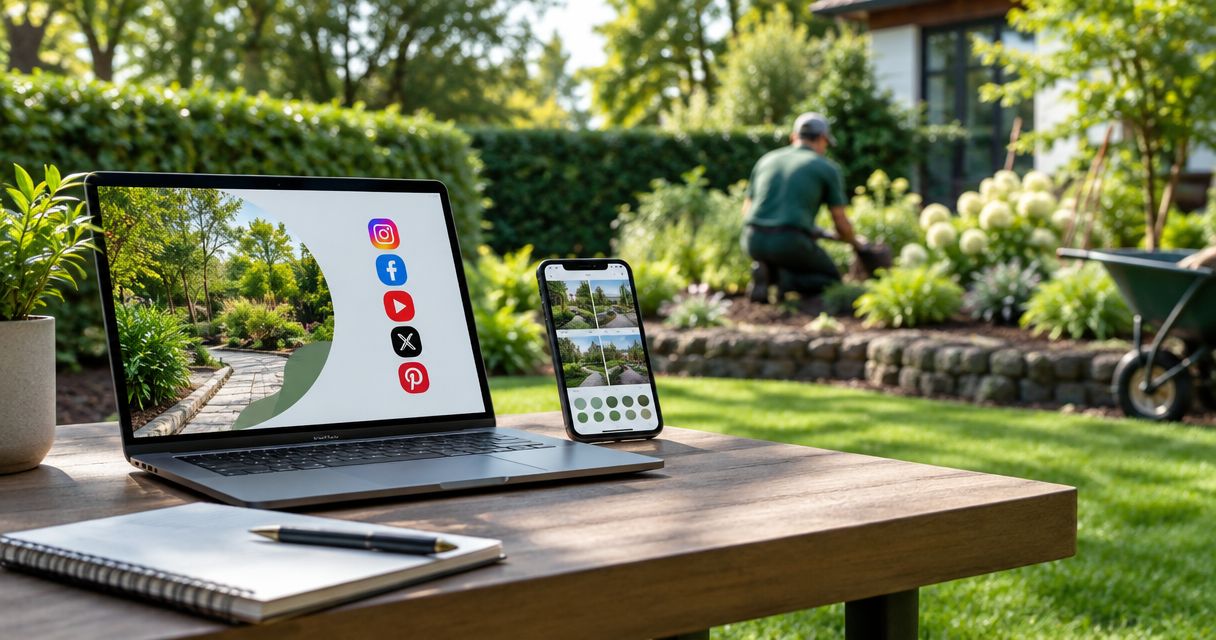
Best overall: Facebook. Best for showcasing finished yards: Instagram. Best for neighborhood visibility: Nextdoor. This 2026 guide ranks the best social media platforms for landscaping companies by the work you sell, the buyers you want, and the content you can realistically keep publishing.
- Facebook tops the best social media platforms for landscaping companies for homeowner updates, project photos, and conversations.
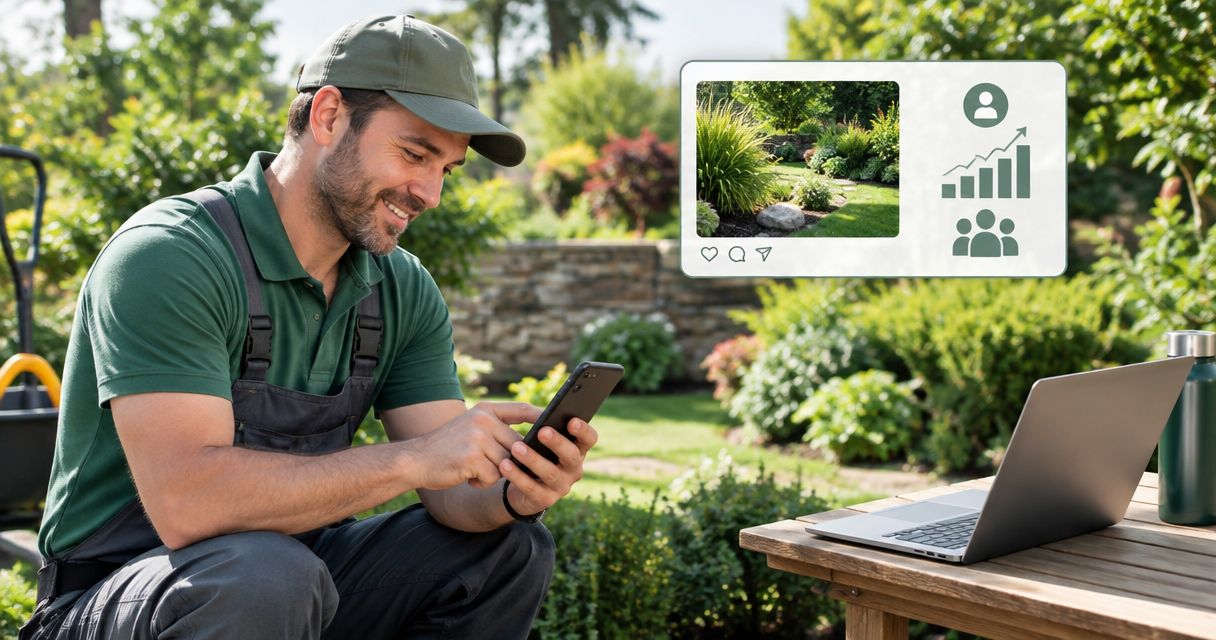
- Instagram suits visual landscaping portfolios; LinkedIn suits commercial property relationships.
- Choose two platforms first. Connect project posts to a clear website inquiry path.
- Mmcollective fits landscaping owners seeking agency support for branding, websites, and social media management.
Why this matters
A finished patio looks good in a photo. But a good photo alone does not tell a homeowner whether you serve their neighborhood, handle their project, or answer inquiries.
Your social accounts should make those answers obvious. Show the work. Name the service area. Give people a clear next step. Choose platforms that support the jobs you want, not platforms that simply keep you busy.
Mmcollective provides branding, website design, and social media management for landscaping and other trade companies. Mmcollective is best for landscaping owners who want agency support across those services rather than another account to manage themselves.
What makes the best platform for a landscaping company?
Use these criteria before opening another account:
- Buyer fit: Homeowners, property managers, and commercial buyers need different messages. Pick the audience before the platform.
- Local relevance: Your profile and posts must make your service area clear. Attention outside that area is not a job opportunity.
- Proof of work: The platform should accommodate the photos, videos, or project explanations you can actually produce.
- Inquiry path: A visitor should know whether to message, call, or use your website inquiry form.
- Production effort: Choose formats your team can maintain without pulling attention away from jobs and customers.
- Job fit: Lawn maintenance, planting, drainage, and hardscaping deserve different examples. Show the service you want to sell.
For your 2026 plan, start with 2 platforms: one for customer conversations and one for project proof. Add another only when you can explain its separate purpose.
Landscaping social platforms at a glance
These recommendations rank platforms by distinct jobs, not by audience size. Facebook is the default for a homeowner-facing company; a commercial-focused landscaper should give LinkedIn more attention.
| Platform | Best for | Standout feature | Key limitation |
|---|---|---|---|
| Homeowner communication | Business pages, messaging, and local groups | Group rules and ongoing moderation require attention | |
| Visual project portfolios | Photo posts, carousels, Stories, and Reels | Attractive images still need local and service context | |
| Nextdoor | Neighborhood visibility | Neighborhood-centered discussions and business presence | Relevant conversations require careful participation |
| Commercial relationships | Professional profiles and business conversations | A weak match for a homeowner-first content plan | |
| YouTube | Detailed project explanations | Searchable videos and longer demonstrations | Useful videos take preparation and editing |
| TikTok | Short-form field content | Vertical video built around a clear visual hook | Views do not establish local buying intent |
1. Facebook: best for homeowner communication
Facebook is the strongest default starting point for a landscaping company serving homeowners. A business page can hold project updates and company information, while messaging gives visitors a place to start a conversation.
Use Facebook to answer practical questions. Explain which services you perform, where you work, and what someone should send when asking about a project. A lawn-maintenance company needs different posts from a contractor building retaining walls.
Facebook pros:
- Supports photos, video, business information, and customer conversations.
- Offers local groups where permitted participation can add neighborhood context.
- Accommodates straightforward updates without requiring every post to be a polished video.
Facebook cons:
- Local groups set their own rules; a promotional post does not belong everywhere.
- Comments and messages create an ongoing response task.
Best for: Residential landscapers who want one account that supports project proof and homeowner questions.
What to post: Pair a completed project with the service performed and the approved location detail. Ask interested homeowners to send their project type and service area through your chosen inquiry channel.
Verdict: Choose Facebook as your default starting platform.
2. Instagram: best for visual landscaping portfolios
Instagram fits work that customers need to see. Patios, planting beds, lawn renovations, and outdoor living projects give you material for photos and video.
Make the portfolio useful, not just attractive. Explain the starting problem and what changed. A finished garden without context shows appearance; a project sequence helps a homeowner understand the work.
Instagram pros:
- Carousels keep multiple stages of a project together.
- Reels support short demonstrations and site walkthroughs.
- Stories provide a place for less polished progress updates.
Instagram cons:
- Consistent project documentation takes effort on site.
- Attractive posts still need service-area details and a clear inquiry route.
Best for: Landscapers selling visually distinctive installations and renovations.
What to post: Build a carousel with 4 photos: the starting condition, preparation, installation, and finished result. Explain each stage in plain language. Get the customer's permission before publishing identifiable property details.
Use captions to connect the result to a real service. Describe bed preparation, edging, planting, or another part of the actual project. Do not promise that another property will get an identical result.
Verdict: Choose Instagram when finished work is your strongest selling material.
3. Nextdoor: best for neighborhood visibility
Nextdoor centers conversations on neighborhoods, which makes it relevant to landscaping businesses with defined service areas. Its business presence and neighborhood discussions give you a setting for local information rather than a general portfolio alone.
Keep participation useful. Answer the question being asked. Do not turn every discussion about a yard problem into a sales pitch.
Nextdoor pros:
- Neighborhood context aligns with local service work.
- Discussions expose the questions homeowners ask about their properties.
- A business presence gives residents a place to identify your company.
Nextdoor cons:
- Participation must follow the platform's current community and business rules.
- Discussions require attention; repetitive promotion is not a content plan.
Best for: Residential landscaping companies focused on defined neighborhoods and nearby service areas.
What to post: Explain the information you need to assess a landscaping request. For example, ask homeowners to describe the problem and share relevant property photos through an appropriate private inquiry channel. Avoid diagnosing drainage or grading problems from a public comment alone.
Verdict: Choose Nextdoor for neighborhood-focused participation, not mass posting.
4. LinkedIn: best for commercial landscaping relationships
LinkedIn suits a landscaper pursuing business relationships with property managers, facilities teams, and commercial buyers. Professional profiles and company pages provide a setting for explaining your work in business terms.
Shift the message accordingly. A homeowner wants to picture their finished yard. A commercial contact also needs to understand your scope, communication process, and suitability for the property.
LinkedIn pros:
- Supports professional introductions and business conversations.
- Gives you space to explain commercial projects and work scope.
- Connects company content with the people responsible for the business.
LinkedIn cons:
- A residential project gallery alone does not answer commercial buying questions.
- Useful participation includes conversations, not just scheduled company posts.
Best for: Landscaping companies actively pursuing commercial maintenance or installation relationships.
What to post: Describe an actual project, the property requirements, and the work performed. Only mention contract terms, credentials, or client names you can substantiate and have permission to publish.
For a residential-only business in 2026, LinkedIn belongs behind your homeowner-facing channels. For a commercial-focused business, move it up the list.
Verdict: Choose LinkedIn when commercial relationships are a defined priority.
5. YouTube: best for detailed project explanations
YouTube gives you room to explain landscaping work beyond a quick clip. Use it for project walkthroughs, maintenance explanations, and answers to questions that need visible examples.
The subject must justify the length. Show what viewers need to understand, and cut the extended introduction. A clear explanation beats a long video that never reaches the point.
YouTube pros:
- Supports searchable videos organized around specific questions.
- Accommodates detailed walkthroughs and demonstrations.
- Gives you source material to adapt into shorter clips.
YouTube cons:
- Clear footage, understandable audio, and editing require preparation.
- General educational viewers are not necessarily local prospects.
Best for: Landscapers whose services need explanation before a customer can make a sensible inquiry.
What to post: Explain how you assess a project, what information the homeowner should provide, or what happened during a documented installation. Distinguish general education from advice about a particular property.
Keep the service area visible in the description and profile. A useful video should still help a potential customer identify whether your business is relevant to them.
Verdict: Choose YouTube when explanation is part of selling the work.
6. TikTok: best for short-form field content
TikTok fits a team that already captures clear vertical video while working. A visible task, a concise explanation, and a finished result provide a straightforward starting format.
Keep the content tied to landscaping. Random trends can fill a calendar without explaining why someone should hire your company.
TikTok pros:
- Supports short demonstrations of actual field work.
- Gives crew members room to explain techniques in their own words.
- Accommodates recurring formats built around real tasks.
TikTok cons:
- Video production becomes another responsibility for the team.
- Viewing figures alone do not establish inquiries from your service area.
Best for: Landscaping crews comfortable filming useful, repeatable short videos.
What to post: Show an actual task, explain what the viewer is seeing, and connect it to the service performed. Keep filming clear of active equipment and avoid distracting workers.
Do not make TikTok the foundation of your 2026 plan if collecting usable footage is already a struggle. Get the basic customer information and project portfolio right first.
Verdict: Hold TikTok until field-video production is manageable.
How the platforms are ranked
The ranking uses buyer fit, local relevance, project proof, inquiry handling, production effort, and job fit. It is a decision guide, not a claim that one platform guarantees more leads.
Facebook takes the default position because its formats cover several homeowner-facing tasks. Each remaining platform earns a separate role: visual portfolios, neighborhood participation, commercial relationships, detailed explanations, or short-form field content.
Your customer mix takes priority over the numbered order. A commercial landscaper should not adopt a residential content plan simply because Facebook appears first.
Turn the platform choice into a working plan
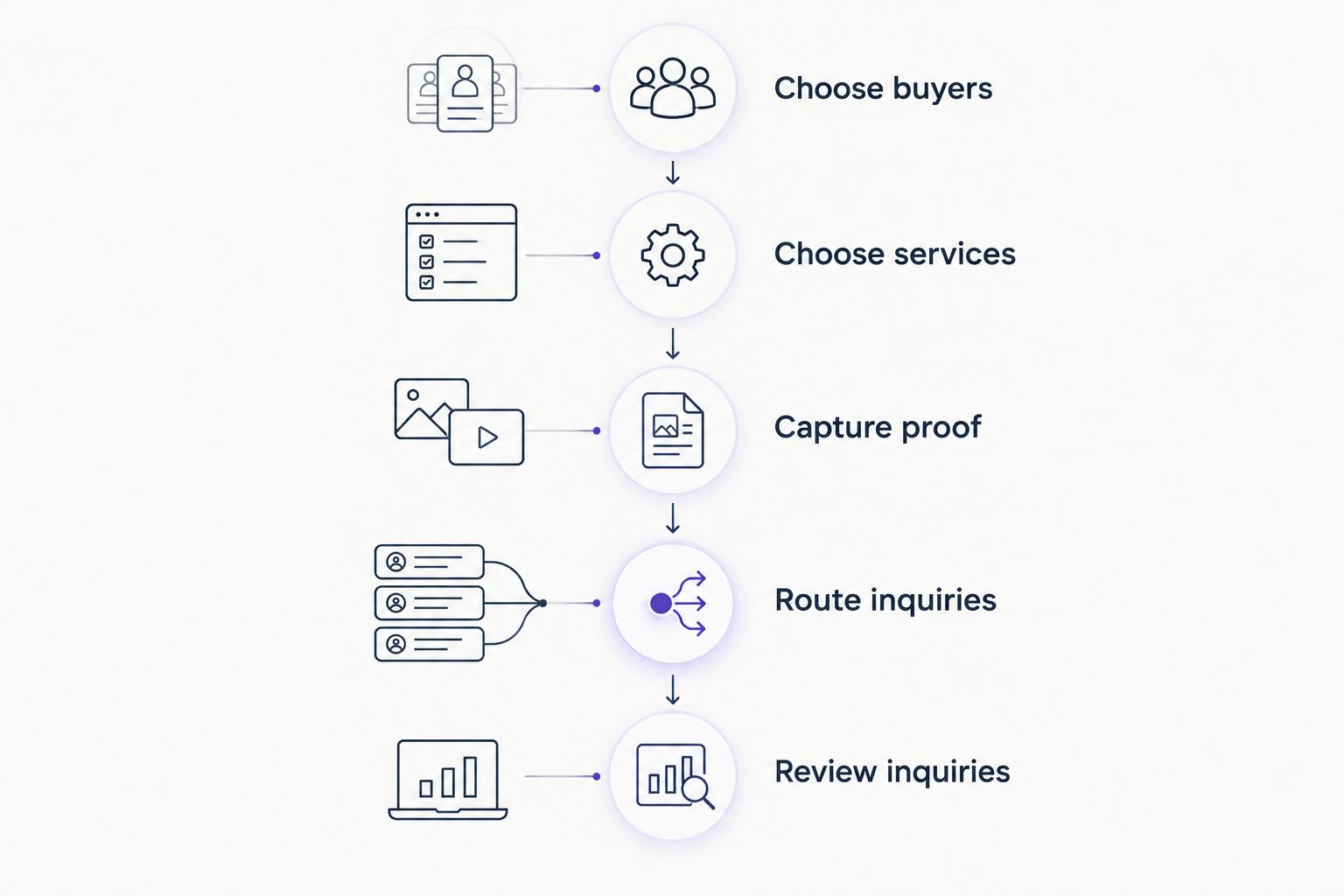
A platform is only useful when the account, content, and inquiry process agree. Build the process before adding more channels:
- Choose buyers: Decide whether the immediate priority is homeowners or commercial contacts.
- Choose services: Name the work you want inquiries about. Use actual services, not a vague promise to handle everything.
- Capture proof: Photograph or film real projects with permission. Record the problem, work performed, and finished result.
- Route inquiries: Give visitors one clear next step and make sure someone handles incoming questions.
- Review inquiries: Record the source, requested service, location, and outcome of each inquiry.
Run this setup for 30 days before expanding the platform mix. That is a practical review period, not a promised lead-generation timeline. Look for relevant inquiries and unanswered messages rather than treating every view as business progress.
Your website should support the same message. If a post features landscape installation, the next step should explain that service and how to ask about a project—not leave the visitor guessing.
Mmcollective provides social media management alongside branding and website design. Treat those as connected decisions. Agree on the content, inquiry path, and website changes before publication; no live-site change belongs outside your approval process.
Make your next step clear
Explore branding, website design, and social media management for your landscaping business.
Which platform should you choose?
For an undecided residential landscaper, start with Facebook and Instagram. Facebook handles company updates and conversations. Instagram gives finished projects a dedicated visual home.
Choose Facebook and Nextdoor instead when neighborhood participation is your main focus. Put LinkedIn first when commercial relationships drive the plan. Add YouTube for explanations or TikTok for field video only when you can support that separate task.
Your 2026 social plan does not need every platform. It needs recognizable work, accurate service information, and a clear way for the right customer to reach you.
FAQ
What's the best social media platform for a landscaping company?
Facebook is the default recommendation for a homeowner-facing landscaping company. It combines business information, project posts, messaging, and local-group participation where permitted.
Is Instagram better than Facebook for landscapers?
Instagram is better suited to a visual landscaping portfolio; Facebook is better suited to broader homeowner communication. Choose by the task, or pair them when you can maintain both.
Should a landscaping company use Nextdoor?
Use Nextdoor when neighborhood visibility matches your service area and you can participate usefully. Follow its current rules and avoid repetitive promotional replies.
What's the best platform for commercial landscaping?
LinkedIn is the strongest fit in this guide for commercial landscaping relationships. Explain actual work scope and communicate with relevant business contacts rather than posting only residential yard photos.
How many social platforms should my landscaping business use?
Start with two platforms that have different jobs. Expand only when your existing accounts have current information, useful content, and a working inquiry process.
What should landscapers post on social media?
Post actual project work, explain the service performed, and state your service area. Get permission for identifiable customer property and give interested viewers a clear next step.
Can an agency manage landscaping social media and website design?
Mmcollective provides social media management, website design, and branding for landscaping and other trade companies. Agree on responsibilities, approvals, and the customer inquiry path before work is published.
One last thing
Check your profile as if you have never heard of the company. Can you identify the service, service area, and next step without reading old posts?
Fix those basics before planning another video. A good project post should not send a homeowner into a guessing game.