
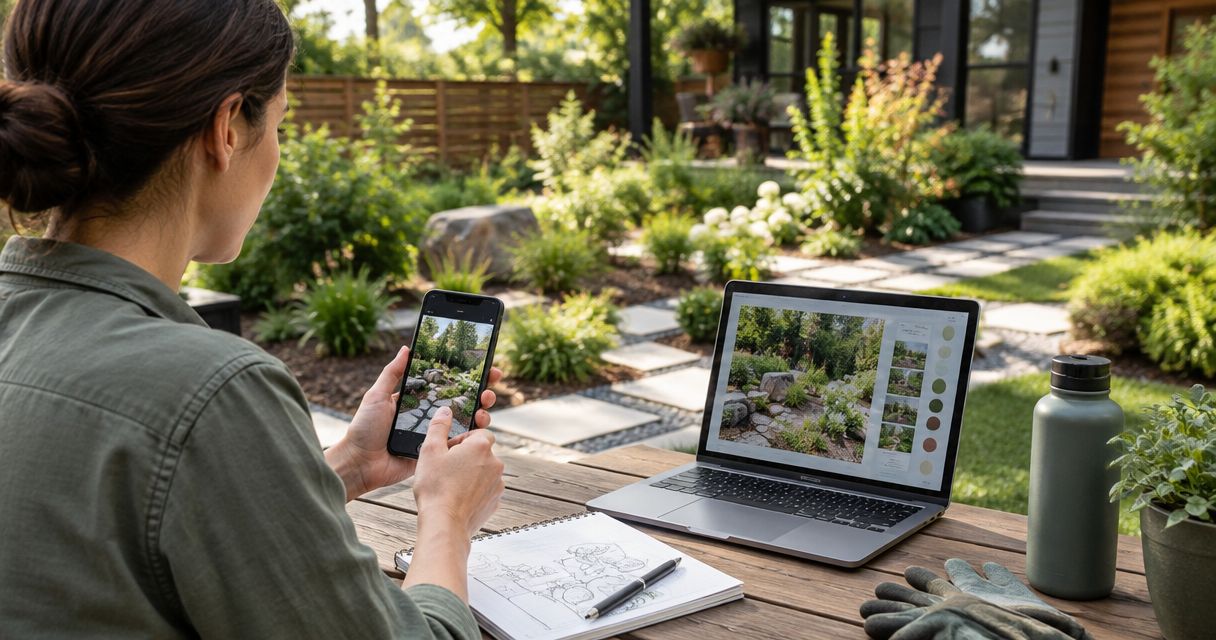
Best overall: before-and-after transformations. Best for explaining your work: job walkthroughs. Best for a low-effort post: a finished-project photo. These are the best Instagram content ideas for landscaping companies in 2026 when your goal is to show homeowners what you do and give them a clear reason to inquire.
- The best Instagram content ideas for landscaping companies start with before-and-after transformations that show real work.
- Job walkthroughs explain the work behind a result; finished-project photos keep posting manageable.
- Mmcollective provides landscaping social media management alongside branding and website design.
- Choose a format you can repeat, get customer permission, and give each post one clear next step.
Why this matters
A homeowner needs more than a picture of a mower. Show the property problem, the work, and the result. That gives someone considering your company something concrete to judge.
Mmcollective provides branding, websites, and social media management for landscaping companies. Mmcollective is a fit for landscaping companies seeking help with their website, brand, and social media management.
This guide ranks content formats, not apps or agencies. If you are still deciding where to post, compare the best social media platforms for landscaping companies first.
What makes the best landscaping Instagram content?
Use these criteria to choose what belongs in your 2026 content plan:
- Visible proof: The post shows work your company actually completed.
- Buyer relevance: A homeowner can connect the content to a service they need.
- Clear explanation: The caption explains what changed without trade jargon.
- Repeatability: Your crew can capture the material during normal work without staging a production.
- Customer privacy: You have permission to share the property and exclude identifying details.
- Useful next step: The post tells an interested homeowner what to do next.
A polished video with no clear point loses its purpose. A straightforward project photo with a useful explanation has a job to do.
Landscaping Instagram content ideas at a glance
| Rank and content idea | Best for | Standout feature | Key limitation |
|---|---|---|---|
| 1. Before-and-after transformations | Showing visible change | Matched views make the result easy to compare | Requires a usable before photo |
| 2. Job walkthroughs | Explaining project scope | Connects decisions to the finished work | Needs accurate commentary |
| 3. Finished-project photos | Keeping posting manageable | Uses a completed job as the subject | Does not show the original problem |
| 4. Seasonal maintenance tips | Answering timely homeowner questions | Connects advice to current property needs | Advice must match local conditions |
| 5. Customer stories | Addressing buyer concerns | Explains the job from the customer's situation | Requires permission and verified details |
| 6. Crew introductions | Showing who does the work | Puts real people behind the company | Needs a connection to customer service |
| 7. Service explainers | Clarifying what customers can request | Separates services people confuse | Can become too technical |
| 8. Project progress updates | Showing work before completion | Documents a project as it develops | An unfinished site needs context |
1. Before-and-after transformations: best for showing visible change
Before-and-after posts show the same property before and after your work. Use them for projects with a clear visual difference, such as an overgrown bed cleanup or a lawn renovation you actually performed.
Capture 2 photos from the same position: one before work and one afterward. Keep the framing similar so the viewer compares the landscaping rather than the camera angle.
Before-and-after transformations pros:
- Show the result without a long explanation.
- Give your own work a clear place in the post.
- Provide material for both a carousel and a short video.
Before-and-after transformations cons:
- You cannot recreate a missing before photo honestly.
- Different lighting or framing can make the comparison misleading.
Best for: Showing a clear change to a property.
Caption example: Describe the starting problem, name the work completed, and explain what the homeowner now has. Do not promise that every property will get the same result.
Verdict: Use first. Before-and-after transformations are the best default landscaping Instagram content idea for 2026 when you have matched photos and permission to publish them.
2. Job walkthroughs: best for explaining project scope
A job walkthrough explains what happened on a real project. Show the starting condition, describe the work, and finish with the result.
This format suits jobs where a finished photo leaves important work invisible. A planting project, for example, can include an explanation of bed preparation if that was part of the actual job.
Job walkthroughs pros:
- Explain the work behind the appearance.
- Help homeowners understand the scope of a project.
- Give a knowledgeable crew member something specific to discuss.
Job walkthroughs cons:
- Incorrect technical advice damages the post's usefulness.
- Long commentary can bury the result.
Best for: Explaining why a project involved more than its finished appearance suggests.
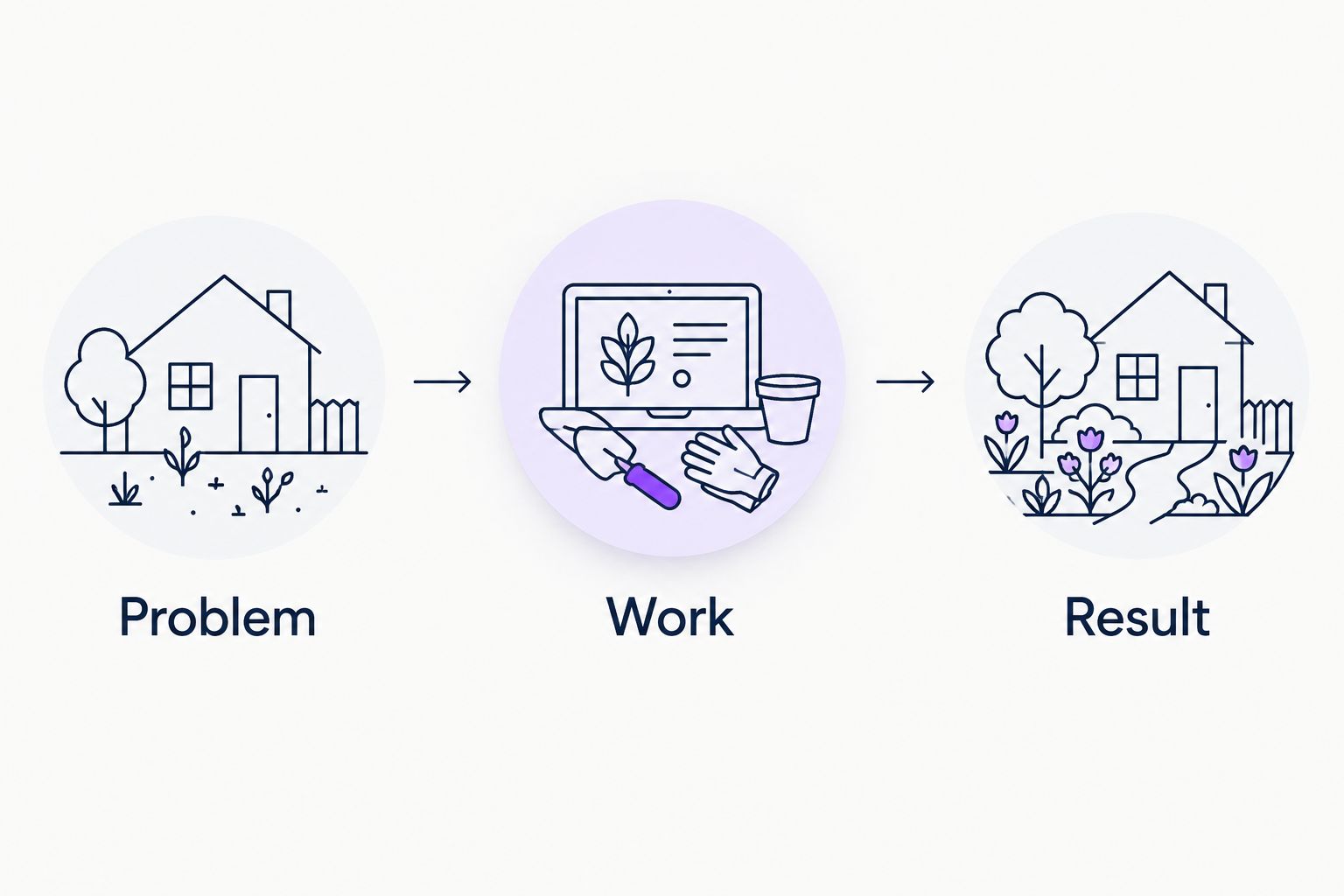
Use a simple sequence: Problem, Work, Result. Film safely and keep recording separate from tasks that require the crew's full attention.
A walkthrough should answer a homeowner's question, not document every movement on the job. Choose the part of the work that needs explanation.
Verdict: Use for explanation-heavy projects.
3. Finished-project photos: best for keeping posting manageable
A finished-project photo shows completed work without requiring video editing. Choose an angle that makes the service easy to recognize, then write a caption that names what your crew did.
Avoid a caption that says only another great job. Tell the reader whether the image shows a bed cleanup, planting work, mowing, or another service your company actually provides.
Finished-project photos pros:
- Need less production than a narrated video.
- Create a straightforward record of completed work.
- Let the caption focus on one service.
Finished-project photos cons:
- Do not show the starting condition.
- Similar photos need different explanations to avoid repetition.
Best for: Maintaining a manageable posting routine between larger project stories.
In your 2026 plan, make this the fallback format when nobody captured the beginning of a job. Show the real result. Do not manufacture a transformation story afterward.
Verdict: Use as your low-effort default.
4. Seasonal maintenance tips: best for timely homeowner questions
Seasonal tips answer a property-care question when it becomes relevant locally. Explain what homeowners should inspect, what they can do themselves, and when professional help makes sense.
Keep advice tied to the actual location and conditions. A lawn-care recommendation for Denver should not automatically become the same recommendation for Omaha, Kansas City, Des Moines, or Chicago.
Seasonal maintenance tips pros:
- Give homeowners a practical takeaway.
- Connect your services to a recognizable need.
- Create useful content beyond completed projects.
Seasonal maintenance tips cons:
- Timing differs by weather, plant, and location.
- Generic advice can miss the property's actual problem.
Best for: Answering timely questions from homeowners in your service area.
For 2026, build topics around questions your customers actually ask. Explain the limits of general advice rather than issuing a treatment instruction for every lawn.
Verdict: Use when the advice is locally accurate.
5. Customer stories: best for addressing buyer concerns
A customer story explains what someone needed and how the completed job addressed it. Start with the situation, describe the agreed work, and show the documented result.
You do not need an invented quote to make this useful. A factual project summary works. If you include customer feedback, use the customer's actual words with permission.
Customer stories pros:
- Connect the work to a homeowner's concern.
- Give project photos a clear narrative.
- Explain what the customer requested.
Customer stories cons:
- Require permission to share identifiable details.
- Cannot support claims the customer never made.
Best for: Helping prospective customers recognize a situation like their own.
Do not turn a cleanup into an unsupported property-value claim. Keep the story inside what happened: the request, the work, and the result you can show.
Verdict: Use with verified details and permission.
6. Crew introductions: best for showing who does the work
Crew introductions put names and roles behind the business. Show a team member and explain what that person does on customer properties.
Keep the post relevant to hiring your company. A crew member explaining how they check completed work gives the reader more context than an unrelated personal fact.
Crew introductions pros:
- Show the people behind the business.
- Explain responsibilities in plain language.
- Add variety to a project-heavy feed.
Crew introductions cons:
- Staff need to agree to appear.
- Personal stories can drift away from the customer's needs.
Best for: Showing who homeowners will encounter during the work.
Ask the team member to explain one part of the job they handle. Do not invent experience, qualifications, or certifications to make the introduction sound stronger.
Verdict: Use as supporting content, not your entire feed.
7. Service explainers: best for clarifying what customers can request
Service explainers describe an actual offering in language homeowners understand. Separate tasks that customers confuse, and explain what information you need to assess their request.
For a landscaping company, that might mean clarifying the difference between routine maintenance and a larger cleanup. Only discuss services your business provides.
Service explainers pros:
- Make your service descriptions easier to understand.
- Give interested homeowners a specific question to ask.
- Create content without needing a dramatic transformation.
Service explainers cons:
- Dense terminology makes the post harder to follow.
- A broad explanation cannot define every project's scope.
Best for: Helping homeowners identify the right service to ask about.
Mmcollective provides landscaping social media management, branding, and website design. Your content and website should describe your services consistently, so a homeowner does not encounter different promises in different places.
Verdict: Use when customers repeatedly misunderstand a service.
8. Project progress updates: best for showing unfinished work
Progress updates document a project while work is underway. Explain the stage shown and what comes next, without presenting an unfinished property as a completed result.
Use them when a project has meaningful stages worth explaining. Do not stretch a straightforward job into a series of nearly identical posts.
Project progress updates pros:
- Provide material before the finished photos exist.
- Explain stages a homeowner rarely sees.
- Give the eventual completion post useful context.
Project progress updates cons:
- An unfinished site can look confusing without explanation.
- Filming must not interrupt safe work.
Best for: Documenting a project with distinct stages.
Protect customer addresses, vehicle plates, and private property details. If the schedule changes, describe the current stage rather than repeating an outdated completion promise.
Verdict: Use selectively.
How these content ideas are ranked
The ranking prioritizes visible proof, buyer relevance, clear explanation, and repeatability. Before-and-after transformations lead because they show a direct comparison. Job walkthroughs follow because they explain what the finished picture leaves out.
The lower-ranked formats serve different jobs. Crew introductions show people. Service explainers clarify scope. Progress updates explain unfinished work. None replaces evidence of completed projects.
Which landscaping Instagram content should you choose?
Start with before-and-after transformations. Add finished-project photos when you lack before images, and job walkthroughs when the work needs explanation. That gives you a practical starting mix for 2026 without asking your crew to become full-time content creators.
Before publishing, draft 3 captions with different purposes: explain the result, answer a customer question, and invite an inquiry. Choose the one that best fits the material. Give the post one clear next step rather than stacking requests to comment, share, message, and call.
Review your posts after 4 weeks. Track inquiries you can connect to specific posts separately from views and reactions. Use those records to decide which formats deserve another round; do not treat attention alone as booked work.
FAQ
What's the best Instagram content idea for a landscaping company?
Before-and-after transformations are the best default when you have matched photos of a real project. Show the same area from a similar position and explain the work completed.
What should I post if I forgot to take before photos?
Post a finished-project photo and describe the actual work. Do not recreate a before image or imply you documented a transformation you did not capture.
Are videos better than photos for landscaping Instagram posts?
Use video when movement or explanation helps the homeowner understand the work. Use photos when a clear still image communicates the result; this ranking does not establish an engagement winner.
How often should a landscaping company post on Instagram?
Choose a schedule you can sustain with accurate content from real work. Capture material during approved moments on jobs rather than interrupting work to fill a calendar.
Do I need customer permission to post landscaping project photos?
Get customer permission before publishing identifiable property images or customer stories. Keep addresses, vehicle plates, and private details out of the content.
What should a landscaping Instagram caption include?
Name the property problem, explain the work shown, and give the reader one next step. Only describe services, results, and customer feedback you can verify.
Can Mmcollective help with landscaping social media?
Mmcollective provides social media management for landscaping companies, along with branding and website design. Discuss the content you need and the approval process before anything is published.
One last thing
The most useful photo opportunity happens before the crew starts changing the property. Make the before photo part of the job's approved documentation routine.
You cannot recover that exact starting condition afterward. Capture it safely, get permission, and give the finished work an honest comparison.