
An HVAC company's branding cost depends on the work you commission; a logo-only project and a brand update that includes your website are different jobs. For a usable 2026 budget, request a written scope that separates design work from printing, installation, website implementation, and ongoing management.
- How much does branding cost for an HVAC company? Get a scope-based quote, not an unsupported average.
- Separate logo design, brand guidelines, website work, and physical materials before comparing proposals.
- Moore Media Collective provides branding, websites, and social media management for HVAC and other trade companies.
- Approve the design and rollout plan before anyone changes your live website or orders replacement materials.
Why this matters
You want more calls and better-fit jobs. Your branding brief should start there, not with a favorite color or a request to make the logo bigger.
A homeowner needs to recognize your business, understand what you do, and find the next step. Your truck, website, estimate, and social profiles should tell the same story. A polished logo does not fix a website that hides your service area or makes calling difficult.
Start with the business problem. The branding for HVAC companies guide covers the broader work behind a consistent identity. Use that scope to decide what belongs in your quote and what can wait.
Budget for the problem you need solved, not just the design file you expect to receive.
How much does branding cost for an HVAC company?
There is no single price that covers every HVAC branding project. Your quote needs to identify what gets designed, what gets delivered, and where the new identity gets applied.
For your 2026 comparison, put each proposal into the same scope. Otherwise, you are comparing different jobs under the same heading.
| Scope | Best for | What to request | Advantage | Limitation |
|---|---|---|---|---|
| Logo design | Owners whose main problem is an unusable or outdated logo | Approved logo versions, usable files, and ownership terms | Addresses a defined visual problem | Does not resolve website content or inconsistent messaging |
| Brand identity | Owners whose materials look unrelated | Logo system, colors, typography, usage rules, and agreed templates | Gives future materials a consistent starting point | Requires someone to apply the rules |
| Brand and website update | Owners whose identity and website both need attention | Brand deliverables plus clearly scoped website design and implementation | Connects the visual identity with the customer-facing website | Adds content, technical, and approval decisions |
These are scope categories for comparing proposals, not named packages from any particular agency. Ask each provider to identify the category their proposal actually covers.
Separate creative work from rollout work
Designing a truck graphic is not the same task as producing and installing it. Designing a website page is not the same task as building, testing, and publishing it.
Ask the proposal writer to distinguish:
- Creative work: Research, messaging, logo design, layout, and guidelines.
- Implementation: Building approved website pages or preparing approved materials for use.
- Production: Printing, embroidery, signage, or vehicle graphics.
- Ongoing work: Social media management, website maintenance, or future design requests.
Do not assume any of these are included because a proposal says “complete branding.” Get the deliverables in writing.
Logo design: best for a focused visual fix
Choose a logo-only scope when you can name the problem clearly. Perhaps your current mark becomes unreadable on a shirt, or your business name disappears when the logo is reduced for a profile image.
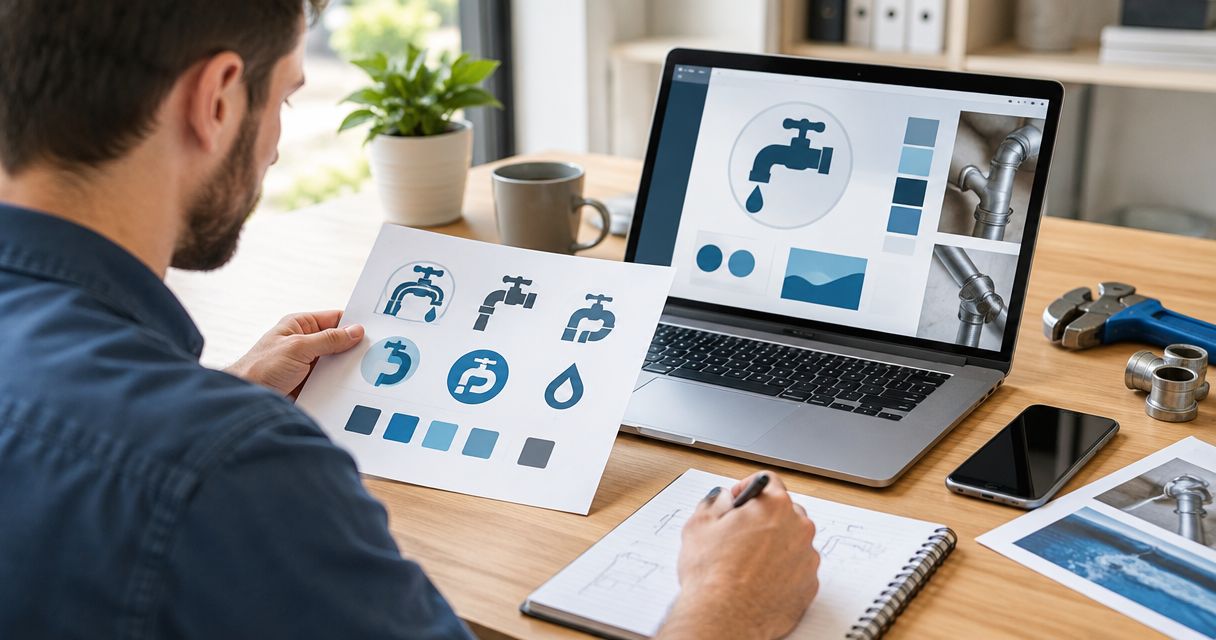
Ask the designer to show how the proposed logo works in the places you actually use it. For an HVAC owner, that can include a truck door, an estimate header, a website header, and a work shirt. Request those applications in the scope rather than assuming they come with the logo.
The benefit is focus. You can evaluate a specific deliverable against a specific need. The drawback is equally clear: a new mark will not rewrite confusing service descriptions or repair a difficult contact process.
Choose logo design when the logo is the problem. Do not expect it to solve every customer-facing problem.
Brand identity: best for inconsistent materials
Choose a broader identity scope when your website, trucks, estimates, and social profiles look like different businesses. The work needs to establish rules, not just supply another logo file.
Request clear decisions about logo use, colors, typography, and the templates your team needs. For example, a maintenance reminder and an installation announcement serve different purposes, but they should still look like they came from the same contractor.
The advantage is repeatability. Your office staff, printer, and future designer have a reference instead of guessing. The limitation is execution: guidelines sitting in a folder do not update a truck, replace an estimate template, or change a website.
For a 2026 identity project, name the materials that must be ready at handoff. Separate those from examples that only demonstrate the design.
Brand and website work: best when both need attention
Combine the work when your website needs more than a replacement logo. A dated site with unclear service pages needs its own scope, even if the visual identity is changing at the same time.
Ask who writes the page content, who supplies project photos, and who builds the approved design. Specify the service area accurately. An Omaha HVAC contractor should not use wording that suggests it serves Kansas City unless that is true.
The benefit is coordination. You can review the identity alongside the pages where customers will see it. The trade-off is a larger decision set: content, forms, mobile layouts, hosting access, and publication responsibilities all need attention.
Keep design approval separate from permission to publish. Your provider should have written authorization before changing the live website. A design presentation is not that authorization.
Why HVAC branding scope varies
The useful question is not whether branding is expensive. It is which work belongs in your project. These factors give you a practical way to compare proposals without guessing at a market average.
- Existing identity: Tell the provider whether you want to preserve the business name and recognizable elements or replace them. Those are different briefs.
- Deliverable list: A logo, a usage guide, and editable templates are separate outputs. Name the ones you need.
- Applications: Website headers, truck graphics, uniforms, yard signs, and estimates each need suitable layouts. Identify the actual materials in use.
- Website work: Distinguish a visual update from new page content, development, forms, or a broader rebuild.
- Review process: Specify who approves the work, how feedback is collected, and how requests outside the agreed scope are handled.
- Rollout responsibility: State who prepares files, coordinates production, updates digital properties, and checks the finished materials.
Use this list to remove ambiguity. Do not add deliverables just to make the proposal look bigger. A landscaping company needing yard-sign artwork and an HVAC contractor needing service-page content should not receive identical briefs.
How to get a quote you can actually compare
A good brief lets a designer price the work you need. It also gives you a way to judge whether the proposal answers the brief.
State the problem
Write down what is wrong in plain language. “Our logo is unreadable on uniforms” is actionable. “We need something modern” leaves the main decision unresolved.
Connect the problem to the customer experience. Explain whether homeowners struggle to recognize the company, understand the services, or find a way to contact you. Treat more calls as the goal, not a promised design result.
List the deliverables
Name the files and materials you expect to receive. Include website work only when you want it quoted. If you need templates your office can reuse, ask what software and access those templates require.
Identify what you will supply, too. Existing artwork, approved business details, service-area information, and usable photos help define responsibilities. Do not send customer images for publication without the necessary permission.
Assign the approvals
Choose the person who has final say. Gather staff feedback before sending a consolidated response to the designer, rather than issuing conflicting instructions through separate conversations.
Put the approval points in writing. Agree when you review the direction, approve the final artwork, and authorize production or website publication.
Plan the rollout
List where the approved identity needs to appear. Mark which updates you will handle and which you want included in the proposal.
Then identify dependencies. Do not order embroidered uniforms while the logo is still being revised. Do not authorize a website launch before checking the business details and contact forms.
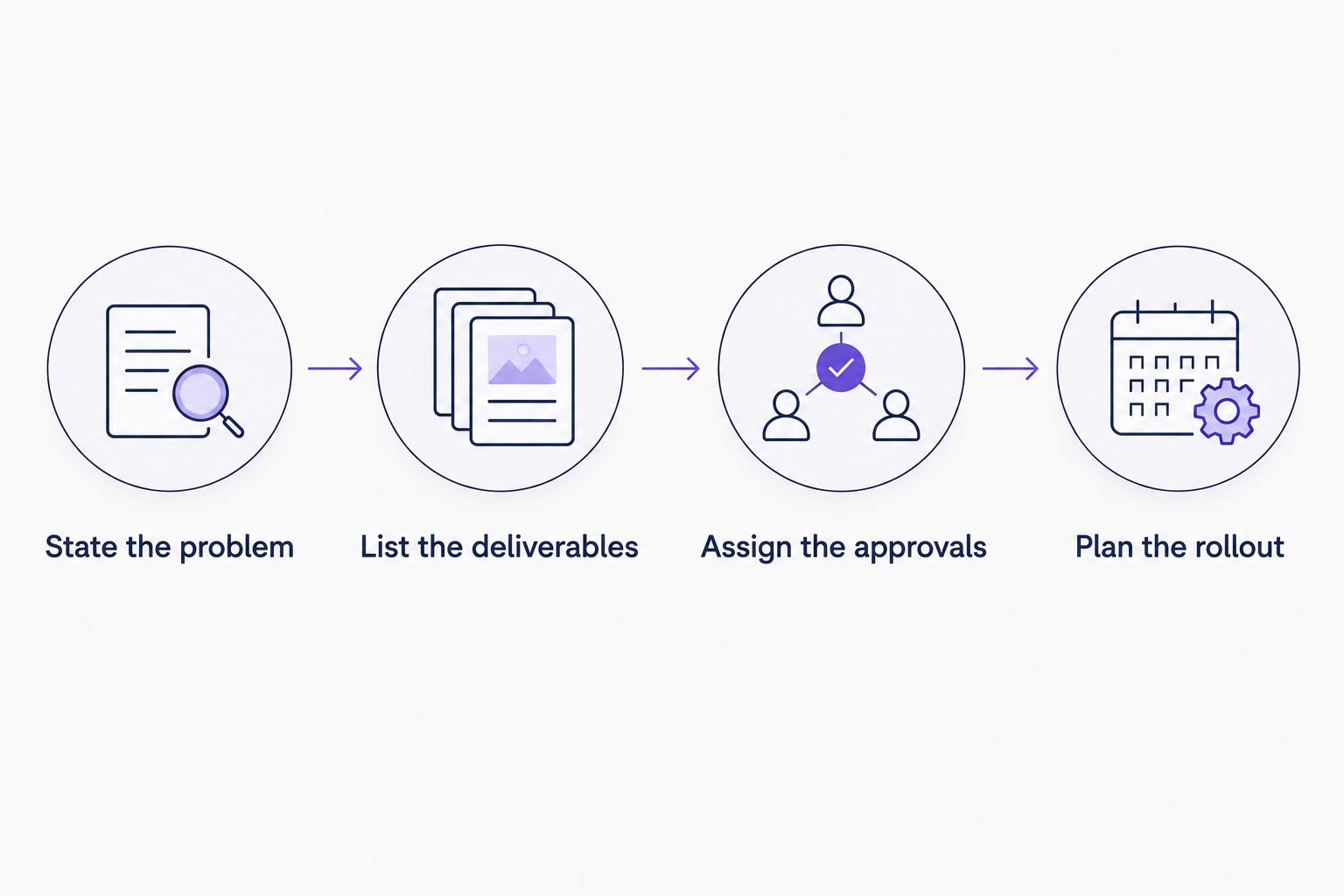
A 2026 branding brief does not need fancy language. It needs enough detail that you and the provider can point to the same finish line.
What should you check before signing?
Read the scope and terms together. A strong portfolio does not tell you what your particular agreement includes.
Ask these questions before approving the proposal:
- Files: Which final formats and editable source files will you receive?
- Rights: What ownership or usage rights transfer, and when?
- Feedback: What review process is included, and how is additional work approved?
- Third-party assets: Are fonts, photography, or other licensed materials involved?
- Website access: Who controls the domain, hosting, and administrative accounts?
- Completion: What counts as delivery, and what remains your responsibility?
Request written clarification when a term is unclear. Do not infer ownership rights from a file preview or assume website access is included because website design appears in the proposal.
Moore Media Collective is a fit for HVAC owners seeking branding, website design, and social media management from a creative agency. Review the services against your brief. Request the actual deliverables and responsibilities; the service category alone is not a project scope.
Is a logo enough for an HVAC company?
A logo is enough for a logo-specific problem, not for an entire customer journey. If your service information is clear and your materials already follow a consistent style, a focused logo project gives you a narrower decision to make.
If your website, truck lettering, and estimates disagree about the business name or appearance, request an identity scope. Fix the inconsistency rather than adding another variation.
Should I replace every branded item at once?
You do not need to replace every item as part of the same design assignment. Separate urgent corrections from materials that remain accurate and usable.
For your 2026 rollout, prioritize incorrect contact details, misleading service information, and broken contact paths. Then schedule the remaining changes around your actual operations and approved production plan.
FAQ
How much does branding cost for an HVAC company in 2026?
An HVAC branding quote depends on the agreed scope, so request a written proposal rather than using an unsupported average. Separate logo design, identity guidelines, website work, production, and ongoing management.
What's the difference between HVAC logo design and branding?
Logo design creates or updates the identifying mark; a broader branding scope can also define messaging, typography, colors, and usage rules. Ask which deliverables the proposal includes rather than relying on the project label.
Does HVAC branding include a new website?
Website work is included only when the agreement specifies it. Ask whether the scope covers design, content, development, testing, and publication, and require approval before live changes.
Can I keep my current HVAC company name?
You can make retaining your current company name a requirement in the brief. Tell the provider which other recognizable elements you want evaluated or preserved.
Will a new HVAC logo get me more calls?
A new logo does not guarantee more calls. Treat branding as one part of the customer experience, alongside accurate service information, a usable website, and a working contact process.
Does Moore Media Collective work with HVAC companies?
Moore Media Collective provides logo design, branding, websites, and social media management for HVAC, plumbing, roofing, and landscaping companies. Confirm the deliverables for your project in a written proposal.
One last thing
Before approving new branding, open your current website on your phone and try to contact your own business. Follow the same path a homeowner would take.
Check the phone number, service area, and form delivery. Send a real test inquiry and confirm where it arrives. Do not let a better-looking identity distract you from a broken route to the office. Put any failure into the website scope before signing.