

A roofer’s logo-design timeline depends on the agreed scope, review schedule, and final approval—not a standard number of days. For your 2026 project, separate the first design presentation from finished files and rollout; approving a logo does not mean your trucks, website, and signs are ready.
- How long does it take to design a logo for a roofer? Scope, feedback, and approval determine the schedule.
- Mmcollective provides logo design, branding, and websites for roofing companies; define the deliverables before setting a deadline.
- Separate logo design from truck graphics, website changes, and sign production.
- Approve the direction before requesting final files or scheduling the rollout.
Why this matters
You want a logo that looks right on the truck and helps homeowners recognize your business. A rushed approval can leave you solving the same problem again when the artwork reaches a sign shop or your website.
Mmcollective is a fit for roofing owners who want logo design, branding, and website work from a creative agency. Its creative services cover those needs. Agree on what the project includes rather than treating every branded item as part of the logo deadline.
The useful question is not just when you will see a design. Ask when you will have approved artwork ready for the specific places you need it.
How long does it take to design a logo for a roofer?
Set the deadline around an approved scope and named milestones, not an assumed turnaround. Your schedule needs to cover the brief, design presentation, feedback, revisions, approval, and file handoff. Production and publishing belong on a separate schedule unless the agreement includes them.
Use this sequence to plan your 2026 logo project:
- Confirm scope. State whether you need a new logo, a refresh, or a wider branding project. List the required uses before design starts.
- Approve the brief. Confirm the business name, target customer, services, and visual direction. Resolve naming questions here.
- Review concepts. Judge the proposed direction against the brief. Ask how it works on a truck, a yard sign, and a phone screen.
- Consolidate feedback. Send a clear decision and a single set of comments. Separate essential corrections from personal preferences.
- Approve artwork. Check spelling, arrangement, and the agreed versions. Give explicit approval before files move into production.
- Receive files. Confirm that the handoff matches the agreed deliverables. Then coordinate printing, installation, and website updates.
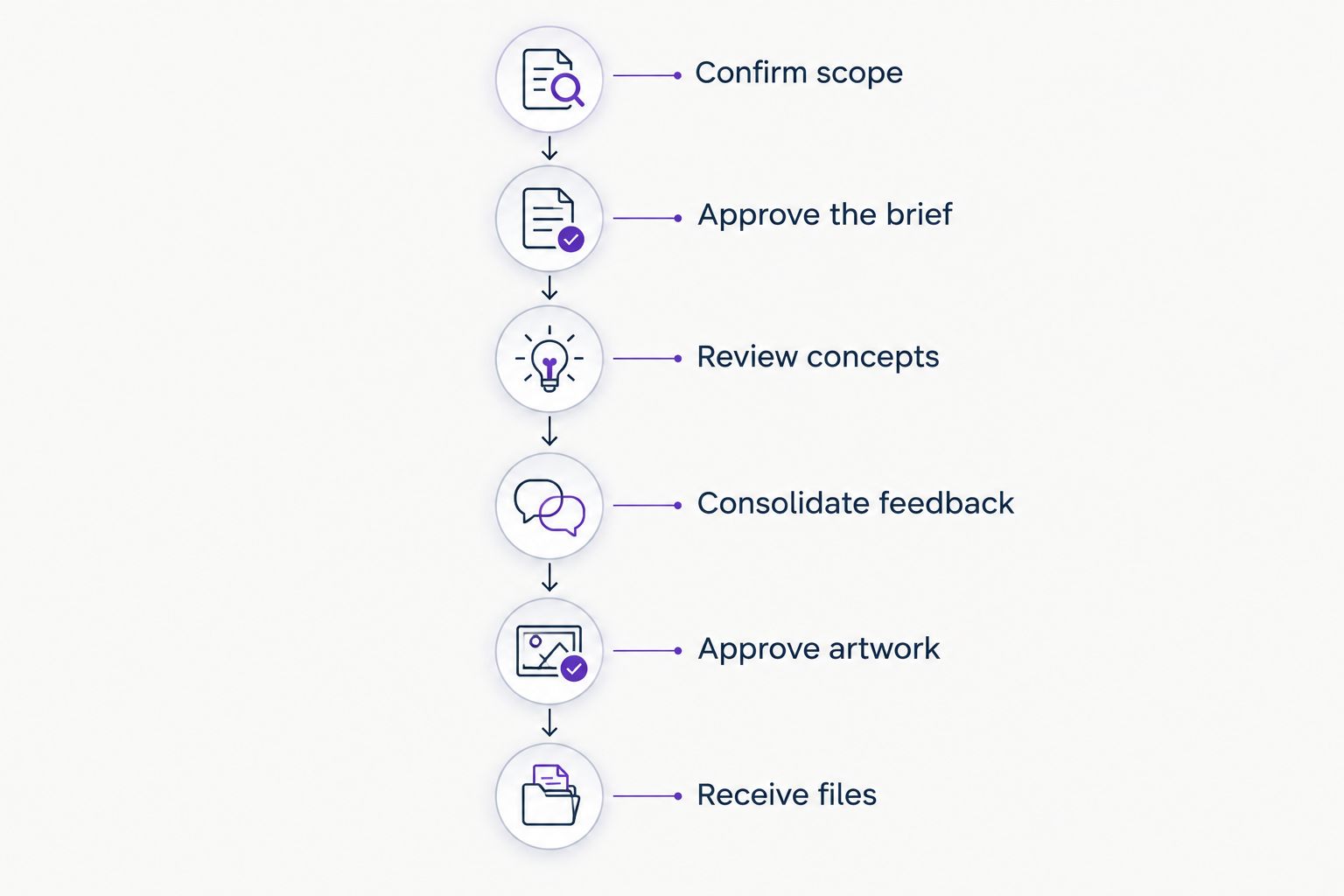
Ask the designer to attach a date and an owner to each milestone. Also ask what happens to later dates if feedback arrives after the agreed review window.
That gives you a usable schedule. A completion date without those details leaves too much open.
Logo refresh: keep the scope narrow
Best for: a roofing company keeping its name and recognizable identity. A refresh has a defined starting point when you can state exactly what stays and what changes.
For example, you might want clearer lettering while retaining the existing symbol. Or you might need a cleaner arrangement for website headers without replacing the identity homeowners already recognize.
The benefit is a focused brief. The limitation is that a refresh preserves some existing choices, including choices you might no longer like.
Do not approve a refresh scope if you actually want a different name, a new symbol, and a different overall look. Call that work what it is before setting the schedule.
New logo: settle the direction before refining details
Best for: a new roofing business or an owner replacing an unsuitable identity. A new logo needs a clear brief because there is no approved visual direction to refine.
Decide what the logo must communicate through its wording and appearance. A residential roof-repair company and a commercial roofing contractor can have different customer-facing priorities without needing complicated artwork.
The benefit is freedom to choose a direction that fits the business. The trade-off is that more decisions remain open at the start.
Settle the company name first. Designing around a name that is still under discussion creates avoidable rework.
Branding project: separate identity from rollout
Best for: a roofing company changing how it presents itself across several channels. A branding project can include a logo alongside typography, colors, website direction, and other agreed materials.
That gives you a chance to make the pieces consistent. It also creates more approvals and dependencies than a logo-only brief.
For Mmcollective logo design and branding work, define the requested deliverables in the project agreement. Do not assume that a logo assignment includes truck-wrap layouts, printed signs, or changes to a live website.
Use the roofing company branding guide to frame the wider project before asking for a deadline.
| Project type | Best for | Main advantage | Main limitation | Clarify before scheduling |
|---|---|---|---|---|
| Logo refresh | Keeping a recognizable identity | Focused changes to existing artwork | Retains parts of the old direction | What stays and what changes |
| New logo | Starting fresh or replacing an unsuitable mark | A new direction based on the brief | More initial decisions remain open | Name, audience, uses, and approval owner |
| Branding project | Coordinating several customer-facing materials | A shared direction across agreed materials | More deliverables need review | Which assets and rollout tasks are included |
These are scope choices, not promised turnaround tiers. Select the work you actually need, then agree on the milestones.
Why a roofing logo-design timeline varies
The schedule follows the work and the decisions attached to it. Check these factors before you commit to a launch date:
- Scope: A lettering cleanup and a new identity are different assignments. Describe the work precisely.
- Starting materials: Supply existing artwork, the confirmed business name, and relevant examples before design begins.
- Decision ownership: Name the person who gives final approval. Collect other opinions before sending the designer your response.
- Feedback quality: Explain the problem you need solved. A comment such as “the company name gets lost” gives clearer direction than “make it pop.”
- Revision boundaries: Confirm what counts as a refinement and what restarts the direction. A new name or concept is not a minor adjustment.
- Handoff requirements: Identify the files and arrangements needed for your agreed uses. Keep vendor production separate from design approval.
For a 2026 launch, work backward from the first public use. Tell the designer whether that means an approved logo file, a published website, or installed truck graphics.
Those finish lines are different. Put the right one in writing.
What should you send before logo design starts?
Send a brief that answers practical business questions. You do not need a long presentation, but the designer needs more than a company name and a request to make it look professional.
Include the exact business name and any wording that must appear. Describe the roofing work you want to represent, such as residential replacement, repairs, or commercial projects.
List the intended placements. A website header, work shirt, truck door, and yard sign give the designer concrete applications to consider.
Share examples with explanations. Say that you like clear lettering or a simple symbol—not just that another company’s logo looks good. Identify anything you want to avoid, including elements that resemble a local competitor too closely.
Finally, name your approval owner and your intended launch event. A truck appointment or website launch is a planning constraint, not proof that the design can be completed by that date.
How do you keep logo revisions from dragging on?
Review against the brief, not against everyone’s taste. Ask whether the business name reads clearly, whether the direction fits your roofing company, and whether the proposed arrangements suit the agreed applications.
Gather comments before replying. If your business partner and office manager disagree, resolve that internally rather than sending conflicting instructions.
Make feedback specific:
- Replace “make it stronger” with “the company name needs more emphasis than the symbol.”
- Replace “try something different” with “this direction feels too decorative for the plain, practical look in the brief.”
- Replace “we do not like it” with the exact issue you need addressed.
Do not turn each review into a new brief. If the business direction has changed, acknowledge the scope change and reset the schedule with the designer.
For your 2026 project, reserve time to review the work instead of fitting approval between jobsite calls. The designer needs a decision, not an unread email thread.
Does logo approval mean your roofing business is ready to launch?
Logo approval is not rollout approval. The finished identity still needs to be applied to each agreed customer-facing asset, and those assets need their own checks.
Before a website update, review the proposed changes and approve them before publication. Check that the company name, phone details, and service wording remain correct.
Before printing, ask the vendor to confirm its artwork requirements and provide a proof. Check placement and wording on the actual item rather than approving only the standalone logo.
Keep a simple handoff record: what was approved, which files were supplied, and who is responsible for the next task. This prevents a finished design from sitting unused while everyone assumes someone else owns the rollout.
Plan your roofing logo project
Discuss the scope, required files, and approval steps with Mmcollective before setting a launch date.
Can a roofer get a logo done faster?
A narrower scope and prompt decisions remove avoidable delays. They do not establish a guaranteed completion date.
Confirm the business name, appoint the final decision-maker, and supply the brief before requesting an accelerated schedule. Ask the designer which deliverables can be completed by your deadline and which belong later.
Do not skip approval just to meet a printing appointment. Move the appointment if the artwork is not ready rather than committing an unapproved design to a truck or sign.
Should you update the website at the same time?
Coordinate the projects when the website needs the new identity, but keep the approvals distinct. A logo decision should not silently become permission to publish website changes.
For a 2026 website refresh, agree on which pages and assets need the new artwork. Review the proposed website application before it goes live.
A new logo alone does not fix unclear service pages, buried contact details, or a confusing inquiry process. Treat those as separate website decisions with their own scope.
FAQ
How long does it take to design a logo for a roofer?
A roofer’s logo-design timeline depends on the agreed scope, feedback schedule, revisions, and approval. Get dated milestones for the design presentation, final artwork, and file handoff rather than treating them as one deadline.
Is a logo refresh the same project as a new roofing logo?
A logo refresh changes an existing identity, while a new roofing logo establishes a new direction. State what must stay before asking for a refresh schedule.
What does a designer need before starting my roofing logo?
A designer needs your confirmed business name, business description, intended logo uses, and approval contact. Explain what you like about any examples instead of asking the designer to copy them.
Can I put the first logo concept on my truck?
Use approved production artwork rather than an unapproved first concept. Ask the truck-graphics vendor to confirm file requirements and provide a proof before production.
Will a new logo get my roofing company more jobs?
A new logo does not guarantee more booked jobs. Use it as part of a clear customer-facing identity, alongside accurate service information and an easy way to contact your business.
Does Mmcollective provide more than roofing logo design?
Mmcollective provides logo design, branding, websites, and social media management for trade companies, including roofers. Confirm the deliverables and approval process for your specific project before work starts.
One last thing
Define “finished” before you approve the schedule. An approved concept, a folder of final files, a published website, and a newly lettered truck are different milestones.
Write the finish line into the brief. You will have a clearer deadline—and a clearer answer when someone asks whether the logo is done.