Branding for a landscaping company takes as long as the agreed design, feedback, and approval work requires; there is no single deadline that covers every project. A logo refresh and a full rollout across your website, trucks, uniforms, and social accounts are different jobs. Set the scope and approval checkpoints before you commit to a launch date, and keep production and website publishing separate from design approval.
- How long does branding take for a landscaping company? Separate design approval from the full rollout before setting a deadline.
- Mmcollective serves landscaping companies with branding, website design, and social media management; define the deliverables before scheduling.
- A logo refresh has a narrower scope than a brand identity and website rollout.
- Approve the direction before ordering truck graphics, printing materials, or publishing website changes.
How long does branding take for a landscaping company?
Your branding timeline should follow the deliverables, not a generic promise. Ask for a schedule that shows what you review, when you provide feedback, and what must be approved before the next stage starts.
For your 2026 project, use these checkpoints to build that schedule:
- Scope agreed. List the assets you need and identify what stays unchanged.
- Direction approved. Confirm the customers, services, and overall impression the branding must support.
- Design approved. Review the logo and supporting identity in practical applications.
- Files accepted. Confirm that the handoff includes the agreed formats and usage instructions.
- Rollout approved. Authorize website updates, printing, signage, and account changes separately.
Ask Mmcollective to discuss the branding, website, and social media work you need together. Then require a written scope that makes clear which of those jobs belongs in the project.
A useful schedule names the person responsible for each checkpoint. It also explains what happens when feedback arrives late or the scope changes. That gives you something you can manage while running crews.
Why this matters
You want the business to look like the obvious choice when someone needs landscaping work. A finished logo helps establish that identity, but it does not automatically update the places customers see you.
Think about a homeowner who spots your truck, searches your name, and opens your website. Plan for those touchpoints to match. Otherwise, you can finish the design project while leaving the public-facing business only partly updated.
For a 2026 launch, define two finish lines: the branding is approved and the agreed customer-facing materials are updated. Put both in the schedule.
That distinction also protects your operating business. You should know what will change, what will remain live, and what needs your approval before anything gets published or ordered.
Logo refresh: a narrower project
Best for: a landscaping business keeping its name and basic positioning. Choose a logo refresh when the central task is improving the mark rather than rebuilding the whole identity.
Start by listing what stays. That might include your business name, service focus, existing colors, or a recognizable symbol. Then identify the actual problem: cramped lettering, an unclear icon, or a design that is difficult to use on your current materials.
A narrower brief gives the designer a defined target. The trade-off is equally clear: a refreshed logo does not resolve weak website copy, inconsistent social graphics, or a confused service message unless those items are included.
Use the logo design guide for landscaping companies to shape that discussion. Keep the decision practical. Ask to see the proposed mark on the materials you actually plan to use.
Before approving a refresh, settle whether the website and printed materials will retain the existing identity or move to the new one. Do not leave that choice until the final files arrive.
Brand identity: more decisions to approve
Best for: a landscaping business that needs a consistent identity beyond its logo. A brand identity project can cover the mark, colors, type choices, and rules for applying them, depending on the agreed scope.
The benefit is consistency. You have a reference for making a truck graphic, estimate document, social post, and website feel like the same business.
The trade-off is additional decision-making. You are not only approving a symbol; you are approving how the business presents itself across different uses.
For example, a lawn-maintenance company and a landscape-design business should brief the designer on their actual services and customers. Do not ask the designer to infer your business from a leaf icon.
Your 2026 branding brief should explain what you sell, where you work, and what customers need to understand first. Keep claims factual. Do not build the design around services, credentials, or guarantees your business does not offer.
Full rollout: design plus implementation
Best for: a landscaping business updating several customer touchpoints together. A full rollout connects the approved identity to the places where customers encounter the company.
The advantage is a coordinated change. The limitation is that each application adds its own work and approval requirements.
| Project scope | Best for | Main benefit | Main limitation | Finish line to define |
|---|---|---|---|---|
| Logo refresh | Keeping the existing business identity | Focused design brief | Other materials remain outside scope unless included | Approved logo files |
| Brand identity | Establishing consistent visual rules | Shared direction across materials | More design decisions to review | Approved identity and agreed guidance |
| Full rollout | Updating multiple customer touchpoints | Coordinated public-facing change | Implementation needs separate planning | Approved assets applied to agreed channels |
A website update needs more than a new logo file. Decide which pages change, whether the copy changes, and who checks the forms and contact details before publishing.
Truck graphics and printed materials also need their own approvals. Treat a design mockup as a review tool, not permission to place an order.
Approval of the branding is not approval to change your live website. Keep those decisions separate in the project plan.
Why landscaping branding timelines vary
Build your schedule around the work you actually need. These factors belong in the planning discussion:
- Scope. Specify whether the job covers a logo, an identity, or implementation across additional materials.
- Business decisions. Settle the name, service focus, and target customer before asking for final design work.
- Approval ownership. Name the person authorized to approve the direction and final assets.
- Feedback. Agree on how comments will be collected and how revision requests will be handled.
- Source materials. Identify who supplies photos, existing files, service descriptions, and account access where required.
- Rollout requirements. Separate digital updates from printing, signage, uniforms, and vehicle graphics.
Do not treat every change as a small revision. Replacing a font and changing the business name are different requests. Ask how scope changes affect the schedule before approving them.
The same applies to adding a website halfway through a logo project. It is another deliverable, not simply another place to paste the mark.
How do you keep a landscaping branding project moving?
Make the decisions that only the owner can make before design starts. Your designer can develop the visual work. Your designer should not have to guess which services you want to sell or who has final approval.
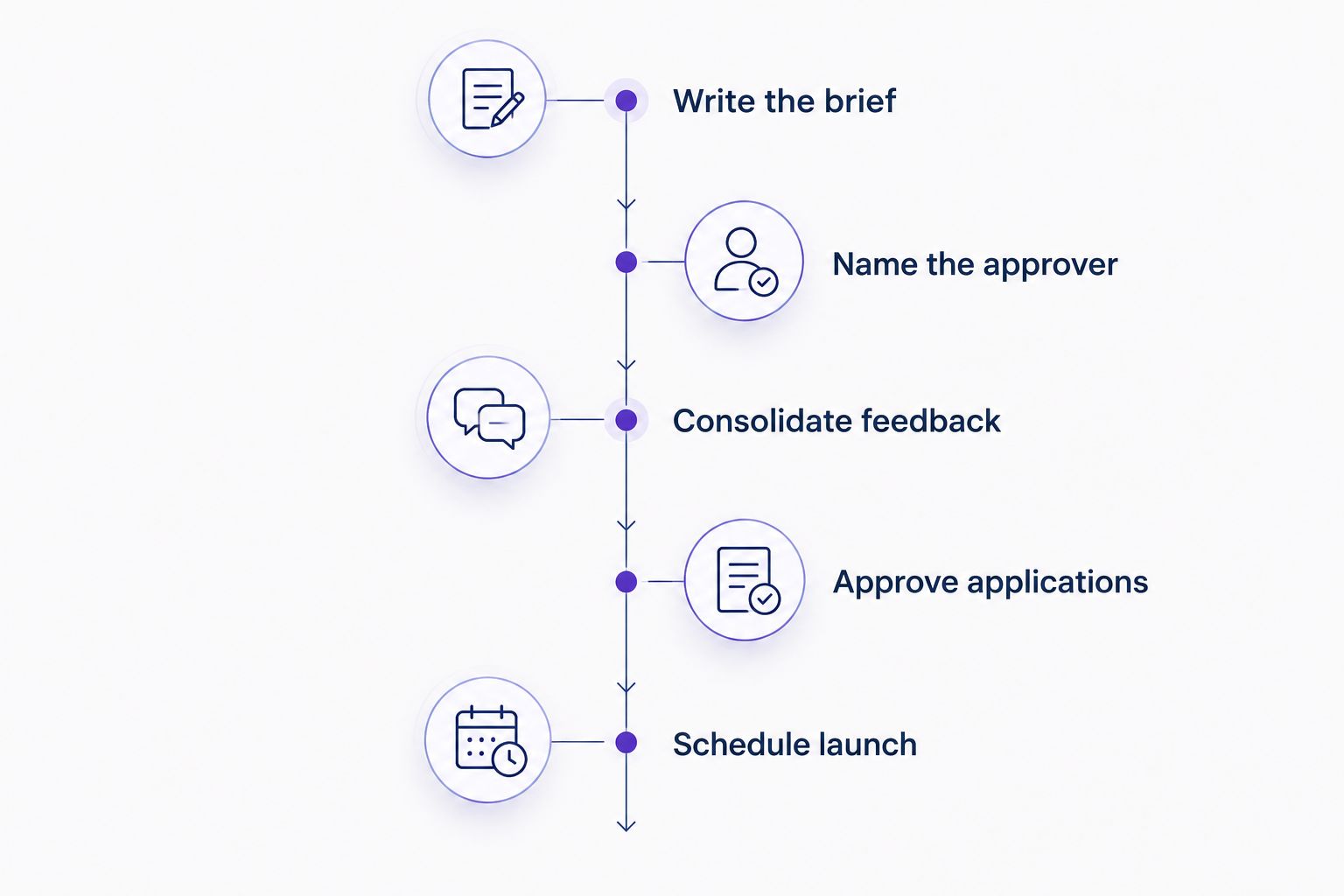
Write the brief
List your main services, service area, customer type, and the materials that need updating. Include examples of your current branding and explain what is not working.
Use specific language. “The business name is hard to read on our yard signs” gives a clearer task than “make it pop.”
Name the approver
Choose who gives the final answer. Other people can contribute, but send one consolidated response rather than separate instructions from the owner, office manager, and crew.
If a business partner must approve the result, include that partner at the direction stage. Do not wait until the files are ready.
Consolidate feedback
Review the work against the brief. Identify what needs changing and explain the business reason.
Instead of asking for an entirely new direction because a color feels unfamiliar, check whether the proposal works for the intended uses. Keep personal preference separate from a clear functional problem.
Approve applications
Review the identity where you intend to use it. That can include a website header, truck-door mockup, estimate heading, or social profile image, depending on your scope.
Ask what each example represents. A mockup demonstrates the design; it does not establish production specifications or authorize publication.
Schedule launch
Assign responsibility for updating each approved channel. Keep a list of what is ready, what is waiting, and what you have authorized.
For your 2026 rollout, make the launch checklist part of the project—not an afterthought once the designer sends the files.
What should you ask before accepting a deadline?
Ask what the promised finish date actually means. Is it the first presentation, the approved identity, delivery of final files, or completion of the rollout?
Then ask what the schedule assumes you will provide. Your responsibilities should be as clear as the designer's.
Use this checklist before signing off:
- Which deliverables are included?
- What must be supplied before work starts?
- When do you review and approve each stage?
- How are revisions and added requests handled?
- Which file formats and instructions are included?
- Who approves production and live website changes?
Mmcollective is a fit for landscaping owners seeking branding, website design, and social media management from one agency. Confirm the scope of each service rather than assuming one project includes all of them.
Discuss the boundary between design and implementation early. That conversation is more useful than accepting a short deadline with an unclear finish line.
Define your landscaping branding project
Discuss the branding, website, and social media work your landscaping business needs.
Can you launch the new logo before updating everything?
You can plan a staged rollout, but decide which materials change first and who approves each change. Keep a list so older assets do not get mistaken for the current version.
The benefit is a manageable implementation plan. The drawback is a period when different versions are in circulation. Decide whether that trade-off makes sense for your business before launch.
Should you finish branding before redesigning your website?
Approve the visual direction before finalizing the website's appearance. You can prepare service information, collect job photos, and outline pages while branding decisions are underway.
For a 2026 website refresh, distinguish preparation from publication. Gathering content does not require taking your current site offline or authorizing changes to it.
FAQ
How long does branding take for a landscaping company?
Branding takes the time required to complete the agreed scope, reviews, and approvals; there is no universal deadline. Ask for separate milestones for design approval, file delivery, and rollout.
Is a logo refresh quicker than a full landscaping rebrand?
A logo refresh covers a narrower set of deliverables than a full rebrand. Compare the actual scope and approval requirements rather than assuming a turnaround from the project name.
Can I keep my landscaping website live during branding?
Keep your existing website live while the new branding is developed unless you have separately approved another plan. Design approval should not be treated as permission to publish website changes.
What should I have ready before starting landscaping branding?
Prepare your business name, service list, service area, existing assets, and the materials you want updated. Name the person authorized to approve the work.
Does branding include truck graphics and uniforms?
Truck graphics and uniforms belong in the project only when the agreed scope includes them. Ask whether the work covers design files, production coordination, or both.
Can Mmcollective help with branding and a landscaping website?
Mmcollective provides branding, websites, and social media management for landscaping companies. Agree on the deliverables and approval process for each service before setting the schedule.
One last thing
Ask for a handoff walkthrough, not just a folder of files. Have the designer identify which approved asset belongs on your website, which files go to a printer, and which version your team should use.
Then archive the retired artwork separately. A finished branding project needs a clear current version, or the old logo can find its way back onto the next estimate or social post.
Make that handoff part of your 2026 completion checklist. Finish with assets your business knows how to use.