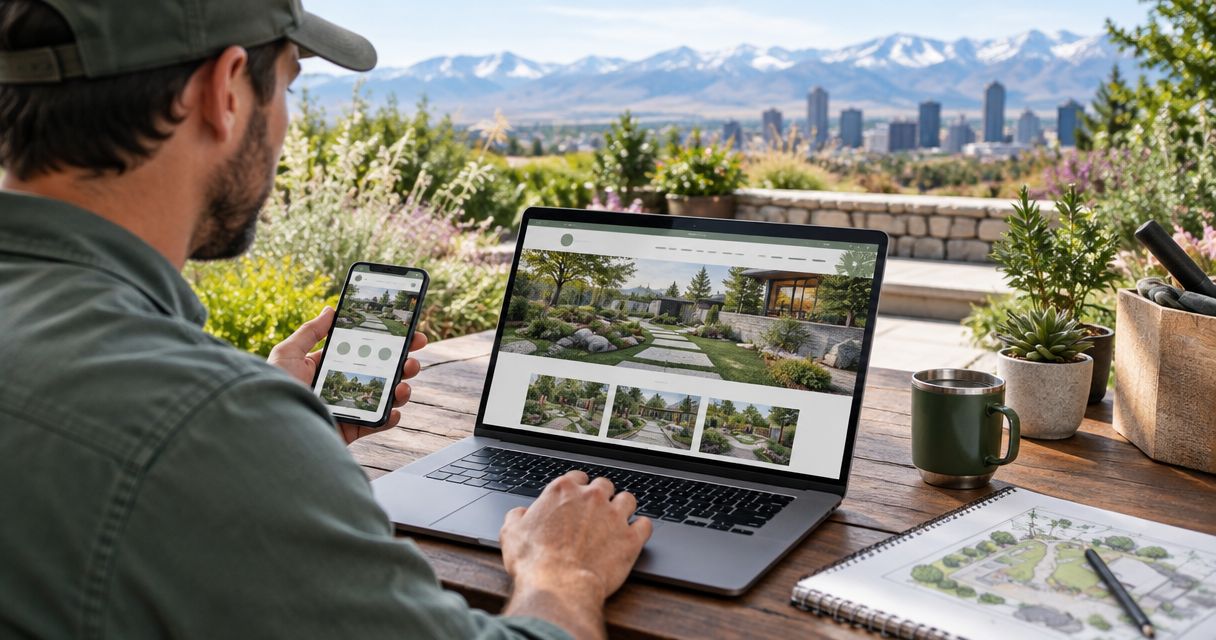
Best overall: a service-first website. Best for hardscape projects: a portfolio-led website. Best for recurring lawn care: a maintenance-focused website. These are the strongest design directions for Denver landscapers in 2026, matched to the work you want to book—not ranked by how flashy the homepage looks.
- Best website design Denver landscapers: service-first wins for businesses offering several landscaping services.
- Portfolio-led websites suit hardscape contractors who can show completed projects and explain the work.
- Maintenance-focused websites put service areas, recurring work, and quote requests ahead of oversized galleries.
- Moore Media Collective provides website design, branding, and social media management for landscaping companies.
Why this matters
Your website needs to explain the job you do, show evidence, and give the visitor a clear next step. A beautiful yard photo cannot do all three by itself.
For a Denver landscaping business, the right design starts with the work you want more of. Patio projects need a different sales conversation than recurring mowing or irrigation repairs. Your website should make that distinction obvious.
Moore Media Collective provides websites, branding, and social media management for trade companies, including landscapers. Moore Media Collective is a fit for landscaping owners who want website design, branding, and social media management from one agency.
The ranking below compares design approaches, not named Denver agencies or unverified client websites. Choose the structure that fits your services, then build the pages and proof around it.
What makes the best website design for Denver landscapers?
Use these criteria to judge a proposed 2026 design before approving the homepage:
- Service clarity: Visitors can tell whether you offer landscape installation, maintenance, irrigation, or another specific service.
- Project proof: Real job photos explain what your company did, rather than filling space with generic gardens.
- Local relevance: The website names the communities you actually serve. It does not imply coverage you cannot support.
- Contact access: A visitor can call or request an estimate without hunting through the navigation.
- Owner upkeep: Your team can keep service details, photos, and contact information accurate after launch.
A design that fails service clarity needs work before it needs animation. For your first review, use 3 homepage checks: identify the service, find the service area, and start a quote request. Treat those as approval checks, not conversion benchmarks.
Landscaping website designs at a glance
| Rank | Design approach | Best for | Standout feature | Key limitation |
|---|---|---|---|---|
| 1 | Service-first | Mixed-service landscapers | Separate paths to each main service | Needs useful content for each service |
| 2 | Portfolio-led | Hardscape and installation projects | Detailed project stories | Depends on strong original photography |
| 3 | Maintenance-focused | Recurring lawn and landscape care | Clear scope and quote qualification | Less room for complex project storytelling |
| 4 | Problem-led | Irrigation and repair work | Navigation organized around customer problems | Needs careful boundaries around diagnosis |
| 5 | Focused single-page | Owner-operators with one narrow offer | A short route from explanation to inquiry | Limited space for distinct services and projects |
1. Service-first: best website design for mixed-service landscapers
A service-first website gives each major service a clear home. The homepage introduces your business, shows representative work, and sends visitors to the service that matches their job.
For a Denver landscaper offering installation, maintenance, and irrigation, this is the strongest default. You do not have to squeeze every buyer into the same pitch.
Service-first pros:
- Keeps different services easy to find.
- Gives each service room for relevant photos and questions.
- Lets inquiry forms reflect the type of work requested.
- Supports clear links between related services.
Service-first cons:
- Requires more writing than a single-page site.
- Becomes repetitive when every service page uses the same generic copy.
- Needs regular checks when your service mix changes.
Best for: Landscaping businesses that offer several distinct services and want each one explained properly.
Start with your actual work, not a long menu of services you hope to sell. An installation page should explain installation. A maintenance page should explain ongoing care. Neither needs a paragraph claiming you do everything.
Verdict: Buy into the service-first structure if your business has multiple service lines.
2. Portfolio-led: best website design for hardscape projects
A portfolio-led website makes completed work the center of the sales argument. Each featured project explains the customer's goal, the work performed, and the finished result.
This structure fits patios, retaining walls, and landscape transformations when those services belong to your business. The photos open the conversation; the project details explain why the work matters.
Portfolio-led pros:
- Shows the kind of finished work you want to book.
- Gives prospective customers concrete examples to discuss.
- Connects design choices with real property conditions.
- Creates useful destinations for individual project inquiries.
Portfolio-led cons:
- Weak or inconsistent photography limits the presentation.
- Uncaptioned galleries leave the visitor guessing about your role.
- Older projects need review as your preferred work changes.
Best for: Hardscape and landscape installation businesses selling project-based work.
Begin with 3 project examples you can explain well. That is a recommended starting scope, not a required gallery size. State the work performed and use only project details and images you have permission to publish.
Verdict: Buy into a portfolio-led design when your completed projects can carry the sales conversation.
3. Maintenance-focused: best website design for recurring lawn care
A maintenance-focused website puts service scope, coverage, and the estimate process ahead of a sprawling gallery. It helps a property owner understand what ongoing care includes and how to ask about their property.
Use this structure when recurring work is the service you want to sell. Keep one-time cleanup and ongoing maintenance clearly separated if you offer both.
Maintenance-focused pros:
- Makes recurring services straightforward to understand.
- Gives you space to explain included and excluded work.
- Supports inquiry questions about property type and location.
- Keeps the main contact action close to the service explanation.
Maintenance-focused cons:
- Broad promises create confusion unless the scope is specific.
- Forms become burdensome when they ask for every property detail.
- A care-focused homepage gives large installations less attention.
Best for: Lawn care and landscape maintenance companies prioritizing ongoing customer relationships.
A suggested first form uses 5 fields: name, contact detail, property location, requested service, and a short job description. Add questions only when the answers change how you handle the inquiry. Do not ask visitors to complete an inspection before you speak with them.
Verdict: Buy into a maintenance-focused design when recurring care is your main offer.
4. Problem-led: best website design for irrigation inquiries
A problem-led website organizes information around what the customer notices. Examples include a broken sprinkler head, uneven watering, or a request to assess an existing irrigation system.
The page should explain the service and the next step. It should not pretend to diagnose a property from a symptom list.
Problem-led pros:
- Uses language customers recognize before they know the technical terms.
- Connects a stated problem with a relevant service page.
- Helps visitors describe the issue when they make contact.
- Separates repair inquiries from installation inquiries.
Problem-led cons:
- Symptom descriptions can imply certainty unless carefully written.
- Too many near-identical problem pages create repetition.
- Urgent-looking calls to action mislead if your business does not offer urgent service.
Best for: Landscaping businesses that actively provide irrigation assessment, repair, or related services.
State your actual service boundaries. If you do not offer emergency response, do not design the page around emergency language. Explain what information to send and what happens after the inquiry without inventing a response-time promise.
Verdict: Buy into a problem-led design for irrigation inquiries; skip it as the default for unrelated services.
5. Focused single-page: best website design for one narrow offer
A focused single-page website places the offer, service area, proof, and contact details on one page. It suits an owner-operator whose service is simple enough to explain without separate sections for unrelated work.
The advantage is focus. The trade-off is limited room when the business expands into different services or customer types.
Focused single-page pros:
- Keeps a narrow offer in one readable sequence.
- Reduces the amount of content you need to maintain.
- Makes the main contact action easy to repeat within the page.
Focused single-page cons:
- Gives distinct services less room for useful detail.
- Becomes long and cluttered when every new offer gets added.
- Provides fewer separate destinations for project stories.
Best for: Owner-operators with one clearly defined landscaping offer and a limited content library.
Do not choose this structure just because the business is small. Choose it because the offer is narrow. A small company handling several very different job types can still need separate service pages.
Verdict: Buy into a focused single-page design for a narrow offer; skip it for a broad service menu.
How the designs were ranked
The ranking prioritizes service clarity, project proof, local relevance, contact access, and owner upkeep. Service-first takes the default position because it gives different landscaping services distinct explanations and inquiry paths.
The other designs win narrower situations. Portfolio-led puts project evidence first. Maintenance-focused explains recurring scope. Problem-led helps customers describe repair needs. Single-page removes unnecessary structure from a genuinely simple offer.
This is a fit-based ranking, not a claim that one layout produces a measured increase in calls. Your choice should follow your work and available proof.
Turn the design choice into an approval plan
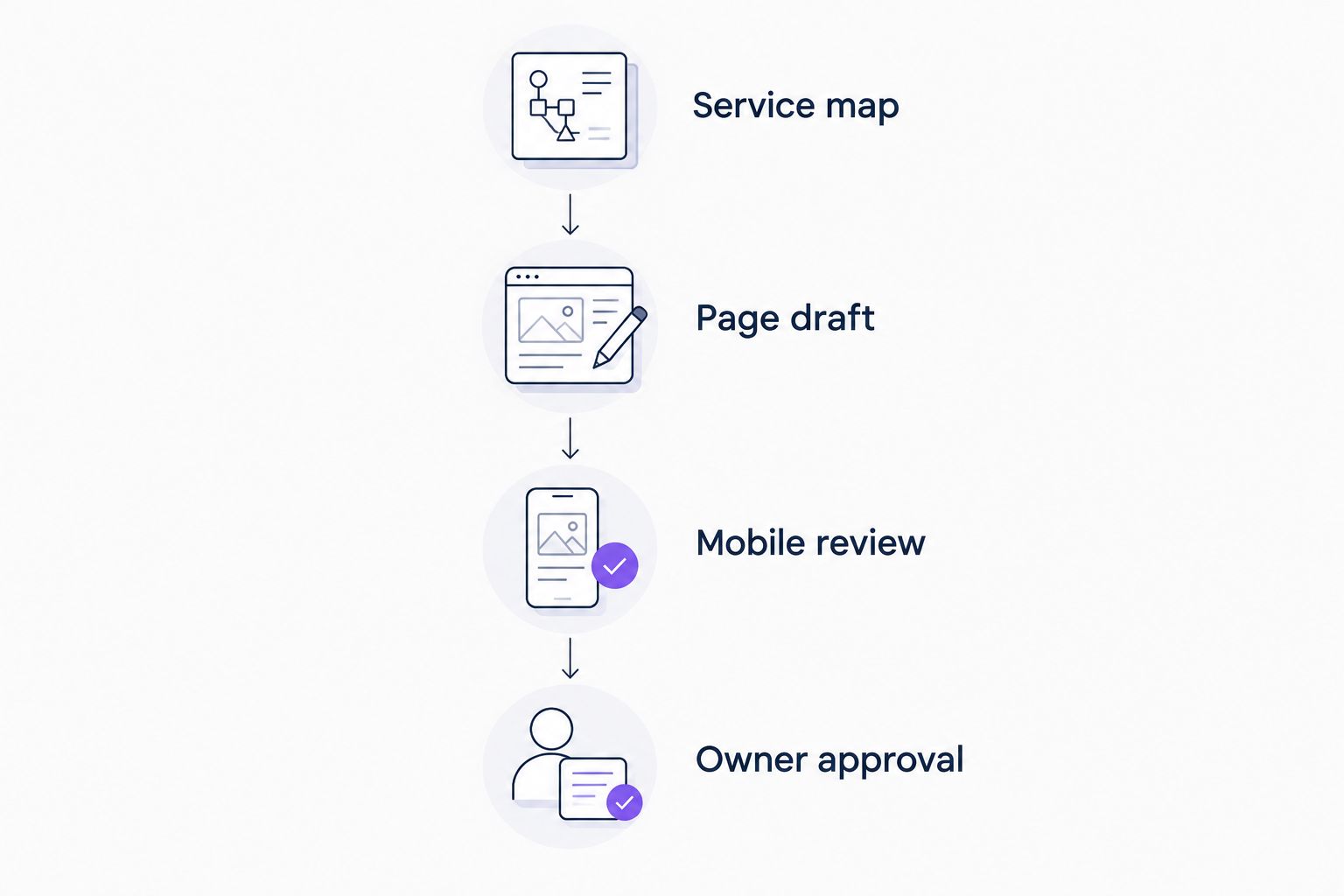
For a 2026 redesign, agree on the page structure before reviewing decorative details. A useful approval sequence is Service map, Page draft, Mobile review, Owner approval.
- Service map: List the work you want to promote and the areas you actually serve.
- Page draft: Review the service explanation, project evidence, and contact action together.
- Mobile review: Check readable text, usable buttons, and the inquiry form on a phone.
- Owner approval: Approve the agreed changes before anyone publishes them to your live website.
Give visitors 2 contact routes when your business supports both: a phone call and a written inquiry. Those routes serve different situations. Keep the form honest about what happens next; requesting an estimate is not the same as booking a confirmed appointment.
When discussing a website project with Moore Media Collective, bring your current service list, permitted job photos, and preferred job types. Those inputs define what the website needs to say. Require approval before changes reach your live site.
Discuss your landscaping website
Start with your services, project photos, and the jobs you want your website to attract.
Which landscaping website design should you choose?
Choose service-first if you are undecided. For a mixed-service Denver landscaper in 2026, it gives your main offers separate space without making the visitor sort through unrelated details.
Choose portfolio-led when installation work is the main sale and your project evidence is ready. Choose maintenance-focused when recurring care matters most. Use problem-led for repair inquiries and a single-page structure only when the offer stays narrow.
Moore Media Collective provides landscaping website design alongside branding and social media management. Define the service priority before discussing the look. A clearer brief gives you something concrete to approve.
FAQ
What's the best website design for a Denver landscaping company?
A service-first website is the best default for a Denver landscaping company offering several distinct services. Give each main service a clear explanation, relevant proof, and an inquiry path.
Should my landscaping website lead with photos or services?
Lead with services for a mixed-service business and project evidence for a portfolio-led installation business. In either design, visitors need to understand what you do and how to contact you.
Is a single-page website enough for a landscaper?
A single-page website fits a landscaper with one narrow offer. Separate pages are more useful when services require different explanations, project examples, or inquiry questions.
What should a landscaping estimate form ask?
Start with a name, contact detail, property location, requested service, and short job description. Add other questions only when the answers help you handle the inquiry.
Should I list every Denver-area community on my homepage?
List the areas your business actually serves, without turning the homepage into a wall of place names. Keep coverage information clear and do not imply service in locations you cannot support.
Does Moore Media Collective work with landscaping companies?
Moore Media Collective provides logo design, branding, websites, and social media management for landscaping companies and other trade businesses. Discuss the service scope and require approval before any changes reach your live website.
One last thing
Before approving your 2026 homepage, hide the logo and read the opening section. If the words could describe any landscaper anywhere, replace them with your actual service, actual coverage, and a specific next step.
A truck photo establishes that you own a truck. A well-explained project shows the work you want someone to hire you for. Make the job—not the decoration—the center of the page.