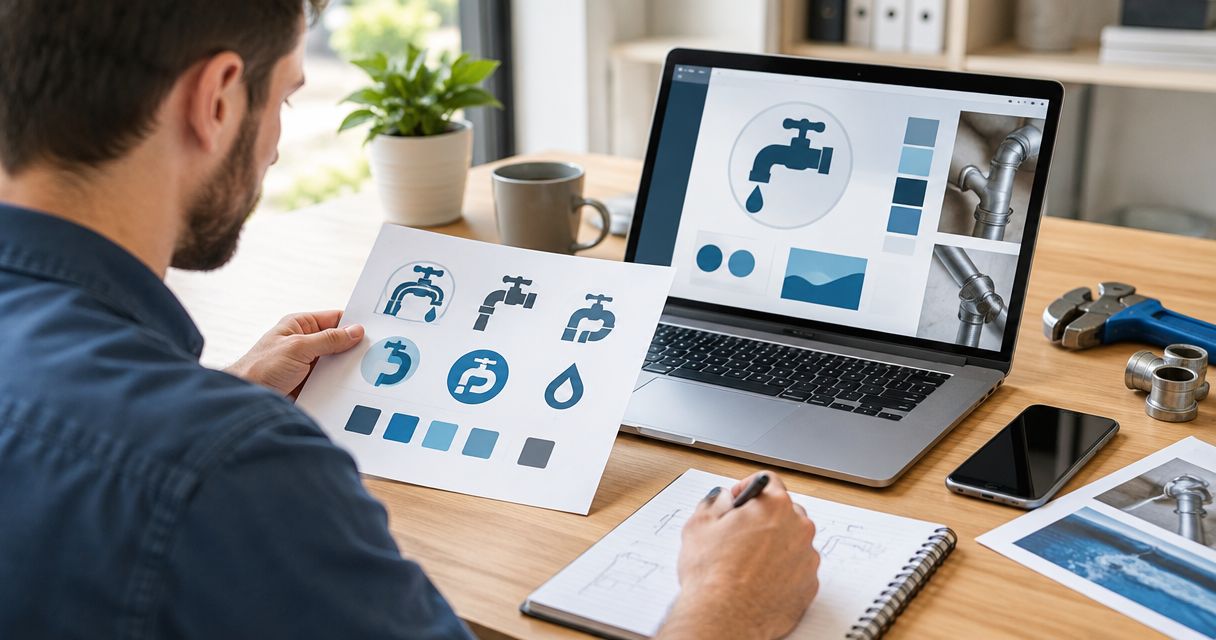

A new logo can support a plumber’s efforts to book more jobs, but it cannot create demand, answer calls, or fix a broken booking process. Its job is to make your business recognizable and your name readable wherever customers find you. For your 2026 plan, redesign the logo only when you can name the problem it needs to solve.
- Does a new logo actually help plumbers book more jobs? Only as part of a clear, credible path to contact.
- Plumbing logo design should fix recognition and readability problems, not substitute for website improvements.
- Moore Media Collective provides logo design and websites for trade businesses; neither service guarantees booked jobs.
- Keep a recognizable logo when missed calls or broken booking forms are the actual problem.
Why this matters
You want more plumbing jobs, not another design project. Before replacing the mark on your truck, check what happens between a customer seeing your name and getting an appointment. A sharp-looking business still needs a working phone link, clear service information, and someone handling inquiries.
Start with the actual design problem. The guide to logo styles for plumbing companies is a useful next step when you need to compare visual directions, rather than decide whether branding is the right priority.
Does a new logo actually help plumbers book more jobs?
A new logo supports recognition; booking jobs requires a working path from interest to appointment. Those are different jobs. Treating them as the same problem makes it difficult to choose the right work or judge the result.
Picture a homeowner who gets your name from a neighbor, searches for your business, and opens your website. The logo helps identify the company. Your service information, evidence of actual work, contact options, and response determine what happens next.
Use this decision table for your 2026 priorities. These are starting points for diagnosing the problem, not promises of additional calls.
| Option | Best for | Practical benefit | Limitation | Recommendation |
|---|---|---|---|---|
| Keep the current logo | Businesses with a readable, recognizable identity | Preserves a familiar identifier | Leaves genuine design problems unresolved | Keep it when the booking problem is elsewhere |
| Refresh the current logo | Businesses with a familiar mark that is difficult to use | Addresses legibility or file problems without replacing everything | Cannot fix weak service information or missed inquiries | Refresh when the underlying identity still works |
| Replace the logo | Businesses whose current identity no longer identifies them clearly | Establishes a deliberate visual direction | Requires updating customer-facing materials | Replace only with a defined reason and rollout plan |
None of these choices replaces answering the phone. Start where the customer gets stuck.
Keep the logo when the booking problem is elsewhere
Best for: plumbers whose current name and mark are already clear. If customers can read your business name, recognize your materials, and find the right company, changing the logo is not the first repair to make.
Test the contact process instead. Open your website on your phone, tap the phone number, and submit a test inquiry. Check where that inquiry lands and who is responsible for responding.
Read the service information as a homeowner would. Does the site explain whether you handle the requested work and serve the customer’s location? A recognizable logo cannot answer those questions on its own.
The advantage of keeping the current logo is continuity. The drawback is that you retain any real readability or usability problems it has. Keep it when it works; fix the broken customer step first.
Refresh the logo when recognition is worth keeping
Best for: plumbers with an established identity that needs practical cleanup. A refresh keeps the recognizable parts while addressing a specific defect, such as cramped lettering or a mark that disappears at a small size.
Ask to see the proposed design in context, not just enlarged on a presentation page. Check it in a website header, on an estimate, and against a generic vehicle background. The business name should remain readable without relying on the designer’s explanation.
A refresh has a clear boundary: preserve the identity, improve its use. Its limitation is that small adjustments will not solve a deeper mismatch between the business name, services, and presentation.
For a 2026 refresh, write down what stays before reviewing concepts. Refresh when you can state both what is broken and what must remain familiar.
Replace the logo when the identity itself is the problem
Best for: plumbers whose current mark no longer clearly represents the business. Replacement deserves consideration when the name is difficult to read, the artwork cannot be used properly, or the identity points customers toward the wrong kind of work.
Separate a business problem from personal boredom. Being tired of your own logo is not evidence that customers cannot recognize it. Describe the defect in plain language before asking anyone to draw alternatives.
Replacement gives you room to correct the underlying identity. The drawback is the work of updating the places where customers see it, including documents and physical materials.
Make that rollout part of the decision, not an afterthought. Replace the logo when a refresh cannot fix the identified problem without preserving the confusion.
Why the effect of a plumbing logo redesign varies
A logo change does not happen in isolation. What else changes determines what you can reasonably learn from the result.
Check these factors before calling the project a success or failure:
- Existing recognition: Decide which familiar elements need to stay identifiable. Do not remove them without a reason.
- Readability: Check whether customers can read the business name in its actual uses, not only in a large design preview.
- Consistency: Compare the identity on your website, estimates, vehicles, and business profiles. Identify conflicting versions.
- Contact usability: Test phone links and inquiry forms separately from the design. Treat failures as contact problems.
- Follow-up: Assign responsibility for incoming inquiries. A design change does not handle that work for you.
These are diagnostic checks, not a formula for predicting extra jobs. A logo project needs its own acceptance criteria, separate from your sales goals.
Check the customer path before approving design work
Use this sequence to decide what needs attention. Bring the findings to the designer instead of starting with a request to make everything look newer.
1. Check recognition
Compare 3 surfaces: your website header, an estimate, and a vehicle graphic. Put them side by side. Check whether the same business name is readable and whether the identity looks consistent across them.
Write down the mismatch, if there is one. An unclear name needs a different solution from an old file that looks blurry when enlarged.
2. Check usability
Open the website on your phone. Read the navigation, find the plumbing service you want to promote, and locate the contact information without relying on memory.
Inspect the logo at its displayed size. If it becomes unreadable, record that specific issue rather than labeling the entire site outdated.
3. Check booking
Follow the route a customer takes to request work. Tap the phone link and test the form. Confirm that the message reaches the right person and includes enough information to respond.
Do not mark this check complete just because the form displays a confirmation. Verify receipt at the other end.
4. Approve changes
Separate proposed logo changes from proposed website changes. Review both in context, including the mobile version, before authorizing publication.
For a 2026 project, keep a written record of what you approved. An approved logo concept is not blanket approval to change a live website.
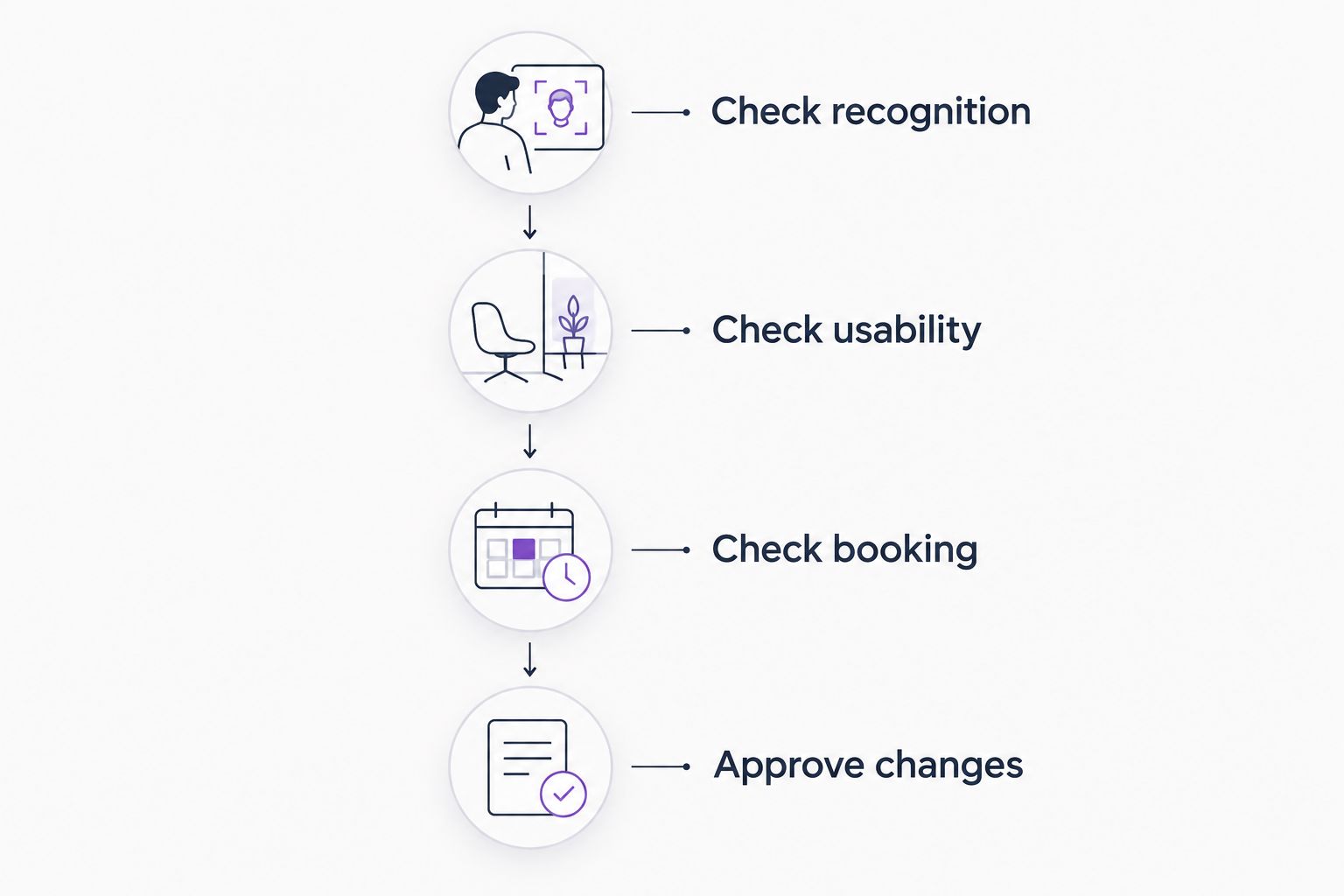
The sequence keeps the brief tied to a real problem. It also gives you a way to review the finished work without falling back on whether someone likes the new color.
Give the designer a business brief, not a mood
A useful brief explains what the logo must do and where it must work. Start with the services you actually provide, the business name customers know, and the materials you need to update.
Answer 4 questions before reviewing concepts:
- What is difficult to read, recognize, or use about the current logo?
- Which existing elements should remain familiar?
- Where will the new artwork appear?
- Who approves the design and authorizes each update?
Use practical examples. A plumbing company needs its name to remain readable on an estimate. An HVAC contractor needs to check the website header on a phone. A roofer or landscaper should review the mark against the actual materials planned for use.
Moore Media Collective is a fit for trade owners seeking logo design and website design from a creative agency. Review Moore Media Collective’s services against your brief, rather than treating a new logo as a guarantee of more work.
The service fit is clear; the booking result still needs measurement. Keep those expectations separate when choosing the scope.
Discuss the problem before the design
Bring your current logo, website concerns, and the customer step you want to improve.
Measure the logo project without inventing a sales result
Keep 2 records: a change log and an inquiry log. The change log says what changed and when. The inquiry log records how customers contacted you, what they requested, and whether the inquiry became booked work.
For your 2026 review, distinguish inquiries from jobs. A phone call is not automatically a qualified lead, and a qualified lead is not automatically a booking. Use the same definitions before and after the project.
If you change the logo, rewrite the website, adjust advertising, and improve call handling together, do not credit the logo alone for the outcome. Record the combined project accurately.
Judge the design against the original brief as well. Did the business name become readable in the approved applications? Did the inconsistent versions get replaced? Were the agreed files delivered?
Those checks establish whether the design work solved its assigned problem. They do not establish that the artwork caused additional sales.
For Moore Media Collective logo design work, set these acceptance criteria before approval. A specific brief gives you something concrete to evaluate; a request for more jobs leaves the role of the logo undefined.
Should I redesign my plumbing website before my logo?
Fix a broken inquiry path before replacing a readable logo. If customers cannot find your services, use the phone link, or send a request successfully, address those issues directly.
Plan logo and website work together when both have clear problems. Review the proposed changes together, but approve the scope and publication steps explicitly.
Will customers trust my plumbing company more with a new logo?
A new logo is an identifier, not evidence of workmanship. Use it alongside accurate service information, real project photos, and customer feedback you have permission to publish.
Do not ask the design to stand in for proof. A polished mark cannot substantiate an experience claim or explain how your team handles a particular plumbing job.
Should I change the business name when I change the logo?
A logo redesign does not require a business-name change. Keep the naming decision separate unless the name itself creates a specific problem you need to address.
List the customer-facing materials affected before approving either change. That makes the scope visible and prevents a design refresh from becoming an unplanned identity replacement.
FAQ
Does a new logo actually help plumbers book more jobs?
A new logo can support recognition, but it does not book plumbing jobs by itself. Check the website, contact process, and inquiry handling before treating design as the answer.
How do I know if my plumbing logo needs a redesign?
Start with a specific readability, recognition, or usability problem. Check the logo on your website, estimates, and vehicle materials before deciding whether to refresh or replace it.
Should I keep the same colors in my new plumbing logo?
Keep existing colors when they serve a clear recognition or practical purpose. Judge proposed changes in the materials where the logo will actually appear, rather than in an isolated preview.
Can a new logo fix a plumbing website that gets no calls?
A new logo does not fix broken phone links, unclear service information, or failed inquiries. Test those parts of the website separately and correct the identified failures.
How can I tell whether a logo redesign brought in more jobs?
Track inquiries, booked work, and other business changes before attributing an outcome to the logo. If several things changed together, report the combined result rather than assigning it to the artwork alone.
Does my designer need to change my live website to show me the logo?
A logo preview does not require permission to publish changes to your live website. Ask for a preview and approve the final implementation separately.
Does Moore Media Collective offer more than plumbing logo design?
Moore Media Collective provides logo design, branding, websites, and social media management. The agency serves HVAC, plumbing, roofing, and landscaping companies.
One last thing
Before opening another logo concept, follow your current contact process all the way through. Find the service. Tap the phone number. Send the inquiry. Confirm receipt.
If that process breaks, you have a specific repair to make. If it works and the identity creates a clear recognition problem, you have a useful design brief.
Do not ask a logo to do the dispatcher’s job. Give the logo responsibility for identification and readability. Give the website responsibility for clear information and usable contact options. Give someone responsibility for responding. Then judge each part against its actual job.