Yes, DIY branding can hurt a roofing company's credibility when your website, truck lettering, estimates, and social profiles look like different businesses or make your contact details hard to find. Doing it yourself is not the problem; the problem is making homeowners work to confirm who you are, what you do, and how to request an estimate.
- Can DIY branding hurt a roofing company's credibility? Yes—when inconsistent branding makes the business difficult to recognize.
- Keep DIY branding if your roofing company looks consistent, reads clearly, and uses accurate business information.
- Fix website clarity and real project evidence before replacing a usable logo.
- Moore Media Collective provides branding and website design for trade businesses, including roofing companies.
Can DIY branding hurt a roofing company's credibility?
DIY branding hurts credibility when it creates confusion—not simply because the owner made it. A plain company name, readable lettering, and accurate information give you a workable starting point. A complicated logo does not fix missing service details or an estimate form that fails.
Use the roofing company branding guide to consider the whole customer-facing setup, rather than judging the logo alone.
| Branding approach | Best for | Main advantage | Main drawback |
|---|---|---|---|
| Consistent DIY branding | Owner-operators with a clear identity they can maintain | Keeps decisions under your control | You handle design decisions, file management, and updates |
| Targeted professional help | Roofers with specific problems, such as an unreadable logo or confusing website | Focuses the work on a defined problem | Untouched materials can remain inconsistent |
| Coordinated professional branding | Roofing companies that need their identity and website rebuilt together | Creates shared direction across materials | Requires a clear brief, review, and rollout planning |
None of these approaches proves workmanship. Your branding should identify the business clearly and support genuine evidence of your roofing work. It should not substitute for that evidence.
Why this matters
A homeowner needs to connect your yard sign, business profile, website, and estimate to the same contractor. When the name or contact information changes between them, you leave a question unanswered.
For your 2026 review, start with that connection. Do not ask whether the logo looks expensive. Ask whether someone can recognize your business, understand your services, and reach the right person without sorting through conflicting information.
That is the practical job of branding. Make the business easy to identify. Then let accurate project details and clear communication support the decision to contact you.
When keeping your DIY branding makes sense
Keep your existing identity when it is readable, consistent, and useful. A working logo does not need replacing just because it was made in-house.
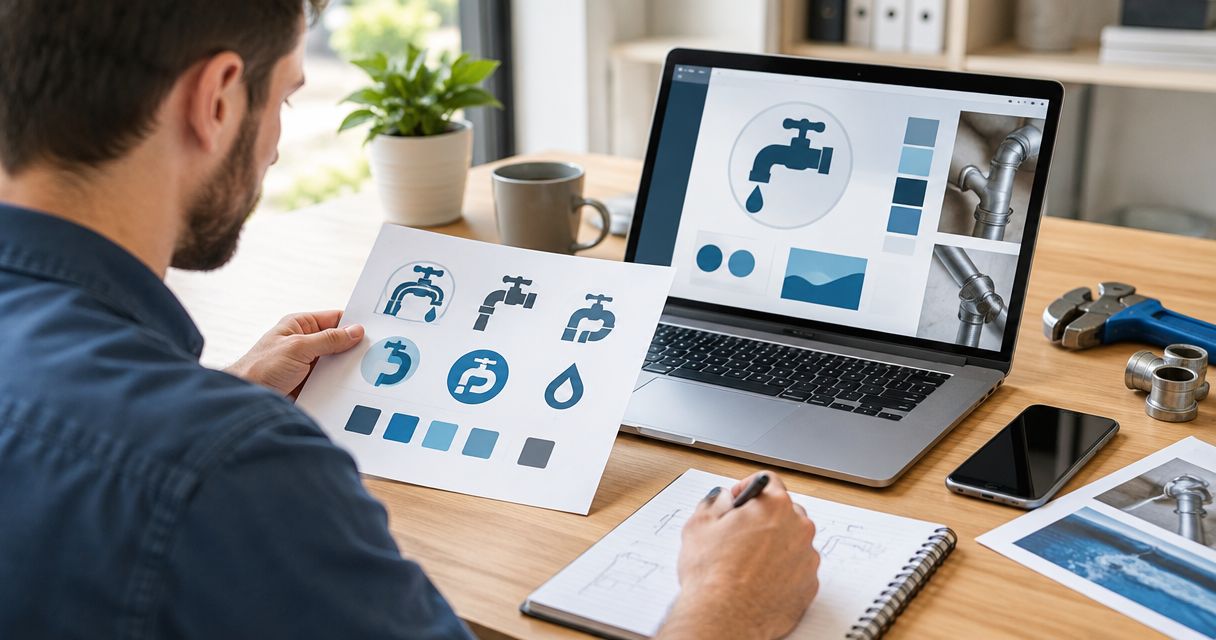
Check the company name first. It should read clearly in the website header, on an estimate, and in a small social profile image. If a decorative roof symbol overwhelms the name, simplify the arrangement before adding more detail.
Then check whether you can reproduce the design reliably. Your printer and website designer should not need to rebuild the logo from a blurry screenshot. Keep the approved files together and identify which version belongs on each type of material.
DIY branding also needs boundaries. Choose a standard typeface, a defined set of colors, and a consistent way to write the business name. Without those decisions, each new flyer becomes another redesign.
The trade-off is your time. Keeping design work in-house means you also own the checking, organizing, and correction work.
When targeted professional help is the better move
Use targeted help when you can name the problem precisely. An unreadable company name needs a design correction. A confusing mobile homepage needs website work. Neither automatically calls for replacing everything.
For example, suppose your logo reads well on the truck, but your website opens with a vague slogan and no clear roofing services. Keep the usable identity. Rewrite and reorganize the page around what you actually do, where you work, and how customers can request an estimate.
The limitation is the boundary of the project. A corrected website will not update an old estimate template by itself. List every affected item before approving the work so you know what stays and what changes.
Best for: roofing owners who need a defined repair, not a fresh start. Give the designer an observable problem instead of asking for something that merely looks more professional.
When coordinated branding work makes sense
Consider a coordinated project when the inconsistencies run across the business. Different company names, competing logo versions, conflicting service descriptions, and disconnected website pages require shared decisions—not separate cosmetic fixes.
A useful brief identifies the correct business name, actual services, real service area, approved project evidence, and preferred contact action. Those decisions should guide the identity and website together.
Moore Media Collective is a fit for trade owners seeking branding and website design from the same creative agency. Its stated services include logo design, branding, websites, and social media management for roofing and other trade companies.
That scope does not make a full project necessary for every roofer. Keep the brief tied to the problems you need solved, and ask what deliverables are included before agreeing to the work.
Best for: roofing companies whose materials need one clear direction. Professional design still cannot supply project evidence or business facts that you have not provided.
Why the credibility risk varies
The risk depends on what your branding gets wrong and where homeowners encounter it. Use these factors to separate cosmetic preferences from problems that deserve attention:
- Business identity: Different names or unexplained variations make it harder to match your website to an estimate or business profile.
- Legibility: Thin lettering, crowded symbols, and weak contrast can obscure the company name or phone number.
- Contact accuracy: An outdated number or broken inquiry form creates a direct obstacle to reaching you.
- Project evidence: Unlabeled images leave visitors without a clear account of what your crew actually completed.
- Claim accuracy: Unsupported badges, credentials, or promises create questions that better artwork cannot answer.
- Consistency: New designs on every channel make the same business harder to recognize across materials.
For a 2026 cleanup, address accuracy and contact access before decorative changes. A corrected phone number solves a defined problem. A different shade of blue does not solve that problem.
How do you check your roofing brand before redesigning it?
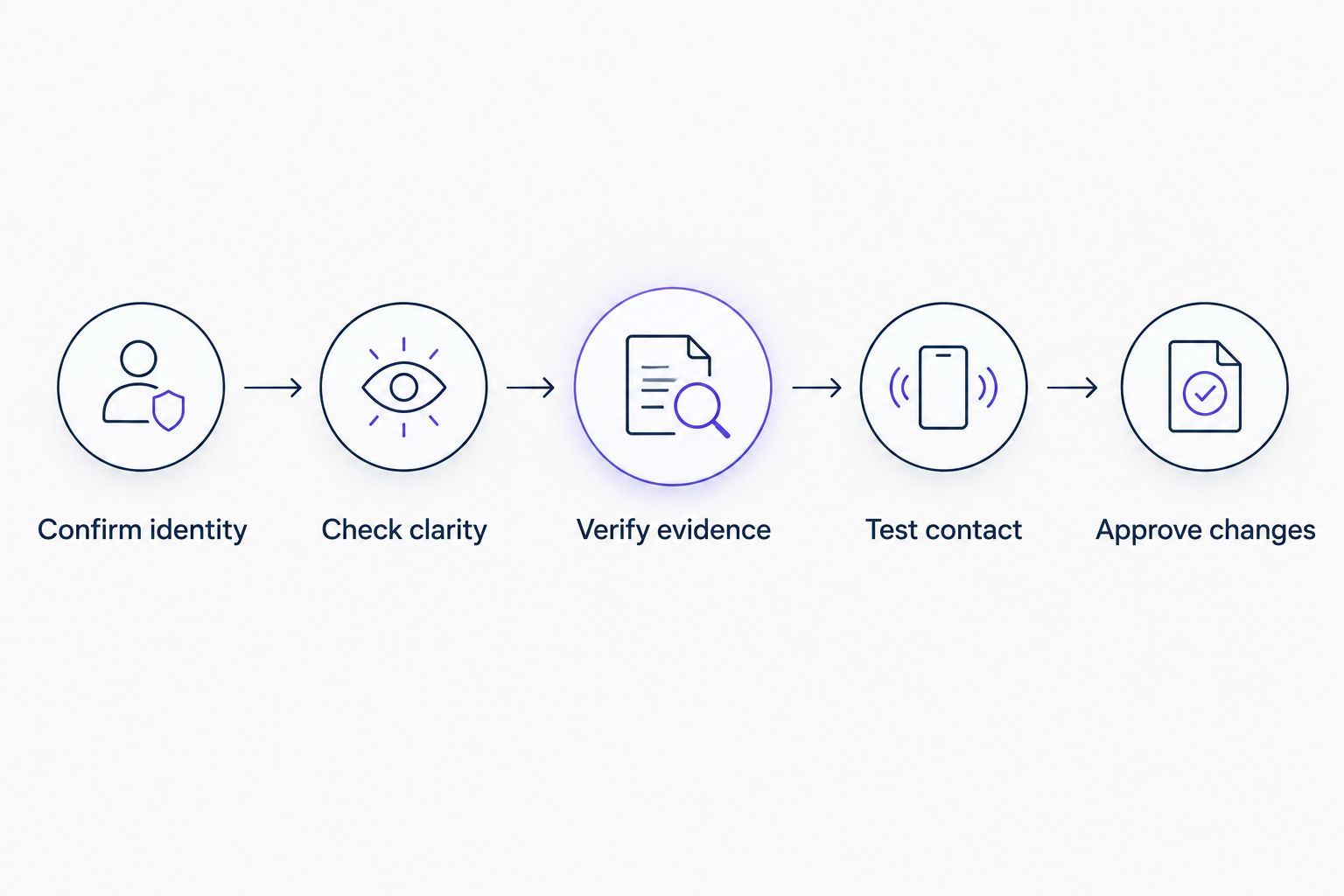
Use this sequence to find the work that matters. Keep notes tied to specific pages or materials so a designer can act on them.
1. Confirm identity
Put your website header, truck lettering, business profile, and estimate template side by side. Compare the business name and phone number. Explain intentional differences, such as a shortened name, rather than assuming a homeowner will understand them.
2. Check clarity
Open the website on your phone. Read the business name, roofing services, and service area without zooming. Remove slogans that take up space without explaining the work you offer.
3. Verify evidence
Review project photos and their captions. Use your own work with appropriate permission, and describe the job accurately. Remove credentials, review graphics, or badges you cannot substantiate.
4. Test contact
Tap the phone link and submit the estimate form. Confirm that the inquiry reaches the intended recipient. Check the confirmation message so it does not promise a response time your business has not committed to.
5. Approve changes
Separate essential corrections from optional design changes. Review proposed work before publication, keep copies of current files, and give explicit approval before anyone changes your live website.
Bring that list to a designer instead of asking for a vague refresh. Moore Media Collective offers branding and website design; your brief should specify the problems to address and the decisions you need to approve.
Discuss your roofing brand
Explain what is inconsistent and which website or branding problems you want to address.
What should your roofing website make clear?
Your homepage should identify the business, explain the roofing work you actually offer, state your service area, and provide a clear contact action. Keep those facts ahead of broad claims about quality.
If you offer roof repairs but not complete replacements, say so. If your company serves Des Moines and specific nearby communities, name the places you genuinely cover. Do not add cities simply because you want visibility there.
Pair project photos with useful context. Describe the work shown without inventing results, customer comments, or technical details. A clear caption gives the image a purpose beyond filling space.
For a 2026 website refresh, check the contact path as carefully as the page design. A readable button is useful only when it leads to a working phone link or form. Keep the request simple enough for a homeowner to understand what happens next.
Does a homemade logo automatically look unprofessional?
No. A homemade logo can be clear and consistent, while a professionally made logo can be poorly applied. Judge the result in the places you use it.
Test the name in a small website header and on a printed estimate. Ask whether it remains readable without explaining the design. If the name disappears behind the artwork, reduce the detail.
Do not add seals or badges just to create an official appearance. Use only claims and credentials that accurately apply to your company.
Will professional branding get you more roofing jobs?
Professional branding does not guarantee more roofing jobs. It can address defined presentation problems, but it does not replace accurate service information, working contact tools, or your handling of inquiries.
Choose a result you can inspect. Examples include a readable company name, matching contact details, a functioning estimate form, and approved files your suppliers can use. Ask about those deliverables rather than accepting an unsupported promise of more leads.
FAQ
Can DIY branding hurt a roofing company's credibility?
Yes, DIY branding can hurt a roofing company's credibility when it creates inconsistent names, unreadable materials, inaccurate claims, or confusing contact details. The problem is the result, not who made the design.
Should I replace my roofing logo if I made it myself?
Keep your roofing logo if it reads clearly, identifies your business, and works across your materials. Replace or refine it when you can identify a specific problem.
Is professional branding better than DIY branding for roofers?
Professional branding is the better choice when you need design expertise or coordinated work you cannot manage in-house. Consistent DIY branding remains a workable option when you can maintain it accurately.
What should I fix first on an outdated roofing website?
Fix incorrect business details, broken contact tools, and unclear service information first. Then address readability and design consistency.
Can I keep my logo and redesign my roofing website?
Yes, you can keep a usable logo and redesign the website around it. Set clear rules for typography, colors, project photos, and contact actions so the new pages remain consistent.
How do I make my roofing business look trustworthy without exaggerating?
Use accurate business information, genuine project photos, clear service descriptions, and credentials you can substantiate. Do not use invented reviews or unsupported promises.
Will a designer change my live roofing website without asking?
Require explicit approval before any live website changes. Put that requirement in the project scope and agree on how you will review proposed work.
One last thing
Check your estimate template before ordering a new logo. If the document a homeowner receives has an old phone number, a different company name, or blurry artwork, it needs attention too.
Make your final 2026 check across the whole path: the sign someone notices, the website they visit, and the estimate they receive. Keep the business recognizable from start to finish. Moore Media Collective's branding services are relevant when you need help bringing those pieces into line—not when a usable logo simply feels old.