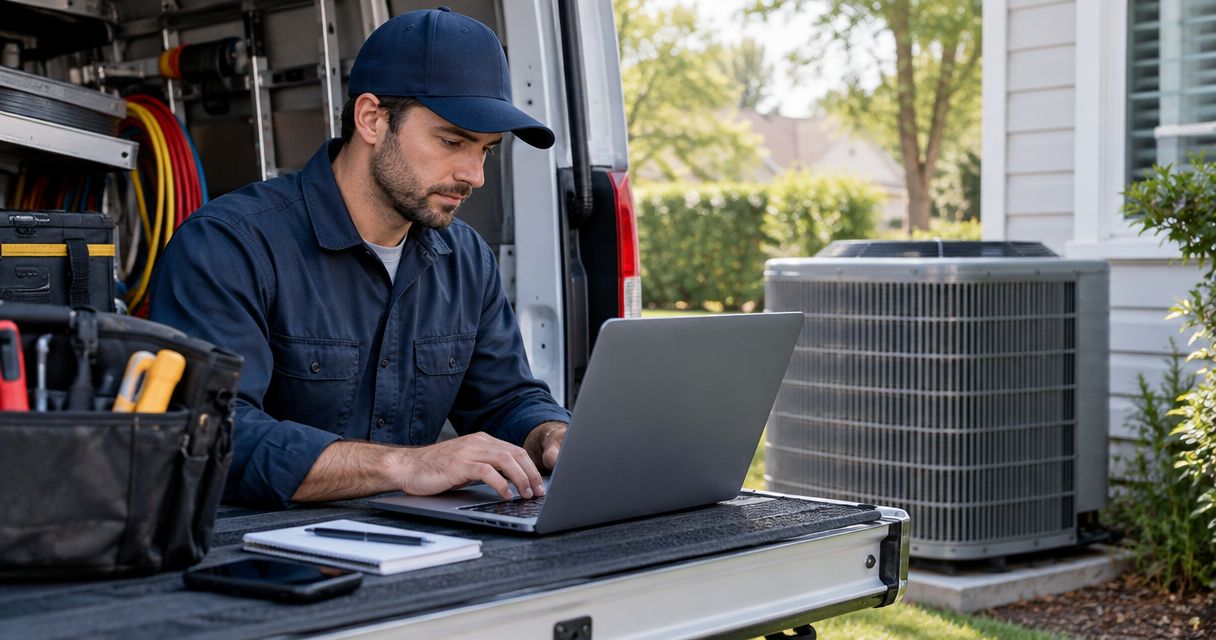
Yes. A new website can get an HVAC company more calls when it makes your services clear, proves you serve the homeowner’s area, and makes contacting you easy. In 2026, a redesign still needs qualified traffic and someone ready to answer; a better-looking site alone does not guarantee more calls or booked jobs.
- Can a new website get an HVAC company more calls? Yes, when HVAC website design removes barriers to contacting you.
- Fix the path from service page to phone call before spending time on decorative changes.
- Measure qualified calls and booked jobs, not just phone-button taps.
- Moore Media Collective provides website design, branding, and social media management for HVAC and other trade companies.
Can a new website get an HVAC company more calls?
Yes—but the new website must fix something that stands between a homeowner and a call. A buried phone number, vague service descriptions, and unclear service areas are practical problems. A different background color is not a substitute for fixing them.
Start with the customer’s task. Someone with a furnace that will not start needs to know whether you handle furnace repair, serve their address, and offer a way to request help. Your HVAC contractor website design should make those answers easy to find.
Use this comparison to decide whether your website needs focused repairs or a larger rebuild. Neither option creates demand by itself.
| Approach | Best for | Main advantage | Main limitation |
|---|---|---|---|
| Repair the existing website | Owners whose service pages work but contact details are hard to find | Addresses specific obstacles without replacing everything | Leaves deeper navigation or content problems untouched |
| Redesign the website | Owners whose services, service areas, and contact paths are confusing throughout the site | Lets you rebuild the customer’s path around requesting service | Requires content decisions, testing, and approval before launch |
Choose the smallest project that solves the real problem. Do not replace a working website just because it looks older than a competitor’s.
Why this matters
Your website sits between attention and action. A homeowner might arrive after seeing your truck, finding your business in search, or getting a recommendation. The website should confirm that they found the right contractor—not leave them guessing.
For an HVAC owner planning a website project in 2026, the business question is simple: what stops a suitable customer from contacting you? That question gives the project a useful target. It also keeps design conversations tied to calls rather than personal taste.
More calls and better calls are different outcomes. Make your actual services and coverage clear so homeowners can judge whether you fit their needs before dialing.
What should a new HVAC website fix first?
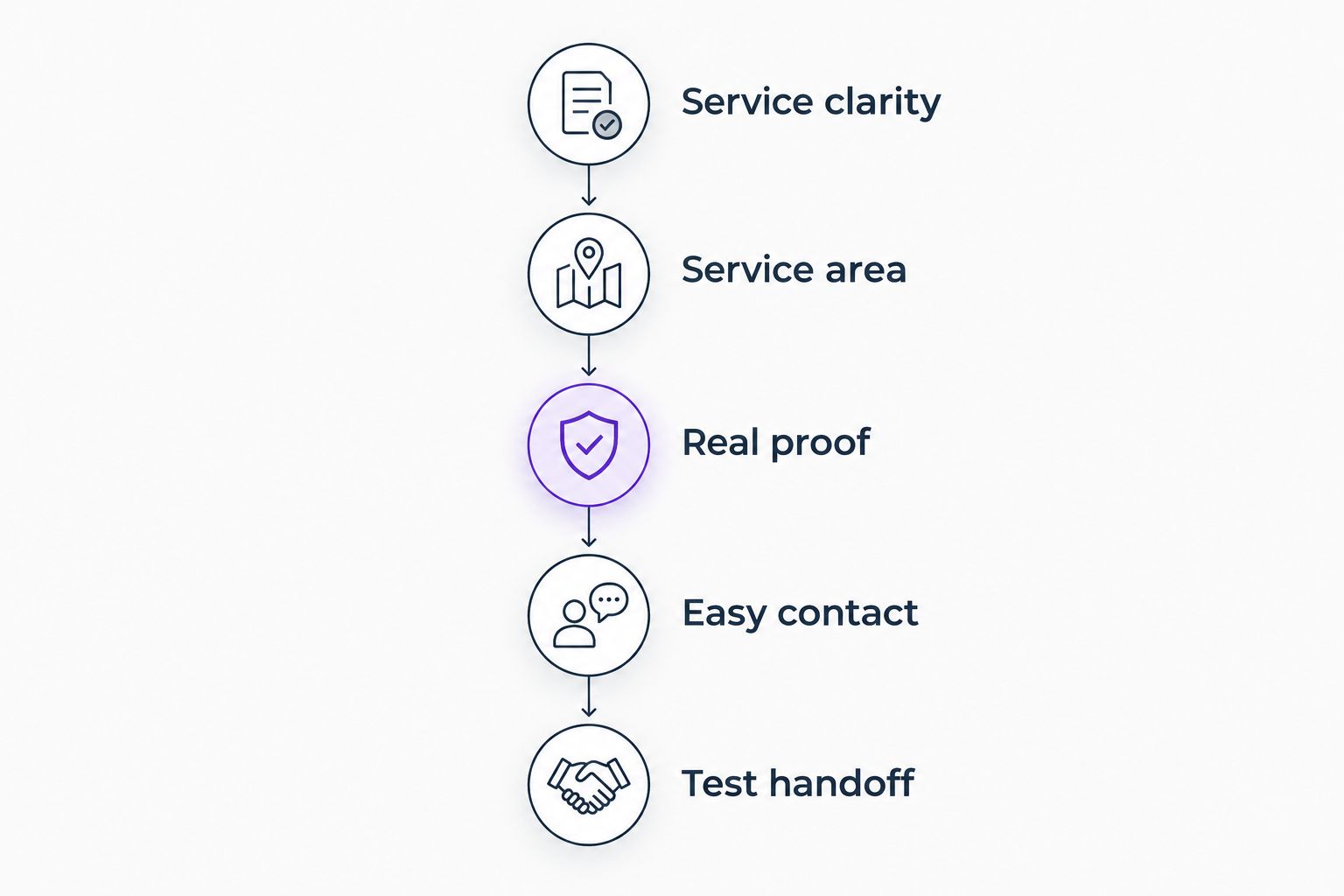
Build around the homeowner’s decision, not a list of design trends. Follow this sequence before choosing animations, fonts, or decorative effects.
Start with service clarity
Put the service where the customer expects it. A furnace repair page should explain furnace repair, not open with a long company introduction. An air conditioning installation page should address installation rather than sending everyone back to a general contact page for basic information.
Describe only work your company actually performs. If you do not handle commercial equipment, do not use broad language that suggests otherwise. Clear limits help screen inquiries as well as attract them.
State your service area
Name the places you serve in plain language. An Omaha homeowner should not need to infer your coverage from a photograph or a phone area code.
The same rule applies in Kansas City, Des Moines, Denver, and Chicago. Use the city and surrounding communities that match your real operating area. Do not add locations simply because you want traffic from them.
Show real proof
Use genuine project photos, accurate business information, and customer reviews you have permission to display. Place relevant proof near the service it supports. A photo of an actual installation tells a clearer story than an unrelated stock image.
Do not publish credentials, guarantees, or response promises your business cannot support. A polished claim that falls apart during the call works against the trust you are trying to build.
Make contact easy
Keep the phone number readable and tappable on mobile. Give the contact button a clear label, such as Call for Service or Request an Estimate, that matches what happens next.
Do not label a form Book Now if submitting it only requests a callback. The button should set the right expectation before the homeowner acts.
Test the handoff
Follow the whole path yourself. Open a service page on your phone, tap the number, submit the form, and confirm that the inquiry reaches the right person.
A working form is not enough if messages go to an unattended inbox. Decide who receives requests, who follows up, and how the office records the outcome.
Why results vary between HVAC websites
A redesign changes the website. It does not automatically change the demand for your services, the people reaching the site, or how your office handles calls.
These factors determine what your website project needs to address:
- Visitor intent. A homeowner searching for furnace repair has a different task from someone researching how a thermostat works. Match the page to the task.
- Service fit. Clear equipment, service, and coverage information helps visitors decide whether your company can help.
- Contact friction. A hidden number, broken form, or confusing button interrupts an otherwise useful visit.
- Credibility. Accurate business details and genuine examples of your work give visitors evidence to evaluate.
- Call handling. The website can introduce a customer. Your team still needs to answer, qualify the request, and arrange the next step.
- Measurement. Count actual inquiries and their outcomes so you can distinguish increased activity from useful business.
Weather and seasonal demand also affect HVAC inquiries. When comparing results, consider whether the periods represent similar operating conditions rather than crediting every change to the redesign.
How should you plan an HVAC website redesign in 2026?
Write the business requirements before reviewing design concepts. Start with the services you want inquiries for, the areas you cover, and the action each page should support.
Then map the pages you already have. Identify useful service information, genuine project photos, customer proof, and contact details worth keeping. Rebuilding the website does not mean throwing away everything that works.
Use a written approval process. Review the proposed content and page layouts before launch, then test the approved version. Any change to your live website should have your approval.
Keep these decisions separate:
- What the customer needs to know before calling.
- What the office needs to qualify an inquiry.
- What the website needs to record for measurement.
- What you must review before publication.
For example, your office might need the homeowner’s service address to confirm coverage. That does not mean the first screen of every page needs a long intake form. Give the visitor a clear route to contact, then collect the information needed for the next step.
A redesign brief should also say what will stay unchanged. List existing phone numbers, important page addresses, and working inquiry routes so the project does not accidentally break them.
How do you measure whether the new website works?
Judge a 2026 website project by the path from visitor to qualified inquiry to booked job. Website activity matters, but it is not the same as business won.
Record a baseline before launch using the same definitions you will use afterward. Separate website inquiries from other sources where your tracking allows it. Keep the comparison periods consistent and note changes in advertising, coverage, staffing, and seasonal demand.
Track distinct outcomes rather than rolling everything into a single lead total:
- Phone-button taps: someone selected the call link; this does not prove a conversation happened.
- Connected calls: someone reached your business; this does not prove the request was suitable.
- Qualified inquiries: the requested work fits your services and coverage.
- Booked jobs: a suitable inquiry became scheduled work.
Review form submissions too. Confirm that requests arrive, contain usable contact information, and reach the person responsible for follow-up.
A redesign succeeds when it improves the customer’s path—not when a traffic chart merely looks busier. If visits rise but suitable inquiries do not, inspect the pages attracting those visitors. If suitable inquiries rise but bookings do not, inspect the handoff and scheduling process.
Can a new website help if nobody visits it?
A new website does not create visitors simply by being published. It gives people a destination, but they still need a way to find it through search, business listings, advertising, referrals, or other channels.
Plan website design and visitor acquisition as connected tasks. Clear service pages support the customer journey; they do not replace the work of getting relevant people to those pages.
Do you need a full redesign to get more calls?
No. A focused repair is the better choice when the main obstacle is specific, such as an incorrect phone link or a contact form that fails.
A larger redesign fits a larger problem: confusing navigation, missing service information, or a mobile experience that makes basic tasks difficult. Diagnose the obstacle before choosing the project.
Will more website calls mean more booked jobs?
More website calls do not automatically mean more booked jobs. Some callers need work you do not perform, live outside your coverage, or cannot get through to your office.
Make the website accurate and the handoff dependable. Then record why suitable inquiries do or do not become scheduled work.
When outside design help makes sense
Moore Media Collective is best for trade owners seeking website design, branding, and social media management from a creative agency. Its stated services cover HVAC, plumbing, roofing, and landscaping companies.
That scope fits an owner who wants the website and business presentation considered together. The limit is just as important: hiring an agency does not remove your responsibility to supply accurate service information, approve changes, and handle incoming inquiries.
Review Moore Media Collective’s services against the problem you need solved. For an HVAC website project, ask for a scope that identifies the pages, contact paths, testing, and approval steps—not just a new appearance.
Discuss your HVAC website
Explain your services, coverage, and current website problems before deciding what needs to change.
FAQ
Can a new website get my HVAC company more calls?
Yes, when the new website fixes obstacles that prevent suitable visitors from contacting you. Clear services, accurate coverage, genuine proof, and working contact paths matter more than appearance alone.
Will a website redesign guarantee more HVAC leads?
No, a website redesign does not guarantee more HVAC leads. Results also depend on relevant visitors, demand, service fit, and how your business handles inquiries.
What should an HVAC website show before someone calls?
An HVAC website should show what work you do, where you work, evidence that supports your credibility, and how to contact you. State service limitations and contact expectations accurately.
Should I rebuild my website or fix the existing one?
Fix the existing website when the obstacle is isolated and the rest of the customer journey works. Consider a rebuild when confusing structure, missing information, and contact problems affect the site throughout.
How do I know whether website calls turn into jobs?
Track connected calls, qualified inquiries, and booked jobs as separate outcomes. Phone-button taps alone do not show whether a caller reached your team or scheduled work.
Can Moore Media Collective help with HVAC website design?
Moore Media Collective provides websites, branding, logo design, and social media management for HVAC and other trade companies. Discuss your requirements and approval process before deciding on a project scope.
Should my HVAC website promise emergency service?
Promise emergency service only if your business actually provides it. Explain the real contact process and avoid implying immediate dispatch when a request only enters a callback queue.
One last thing
Before approving a website project in 2026, call your business using the number on your current mobile site. Then send a test inquiry through the form. Ask your office what arrived and what happened next.
Do not buy a new front door while leaving the phone unanswered behind it. Fix the handoff alongside the website so a better customer journey has somewhere useful to lead.