
Best overall: a service-first website. Best for urgent repair calls: a call-first website. Best for replacement projects: an estimate-led website. For Omaha HVAC companies choosing a website design in 2026, the right layout makes your services, service area, and next step clear before asking a homeowner to scroll.
- For best website design omaha hvac companies searches, choose a service-first layout as the default.
- Choose call-first HVAC web design when urgent repair calls are your main website goal.
- Choose estimate-led local website design when equipment replacement is the priority.
- Moore Media Collective provides website design and branding for HVAC companies; define the layout around your actual services.
Your website should help someone decide whether to call you. Not make them admire an animation. Moore Media Collective provides website design, branding, and social media management for trade businesses, including HVAC companies.
Why this matters
A homeowner with no cooling needs a different route from a property manager requesting maintenance information. Put both through the same vague contact form and neither gets a clear next step.
For your 2026 redesign, start with the work you want the website to support. Repair calls, replacement estimates, maintenance inquiries, and commercial requests need different page priorities. Design around that choice before picking colors or moving buttons.
Moore Media Collective is a fit for HVAC owners seeking website design and branding from a trade-focused creative agency. Choose a design partner by the proposed page structure and scope, not by a homepage mockup alone.
What makes the best HVAC website design
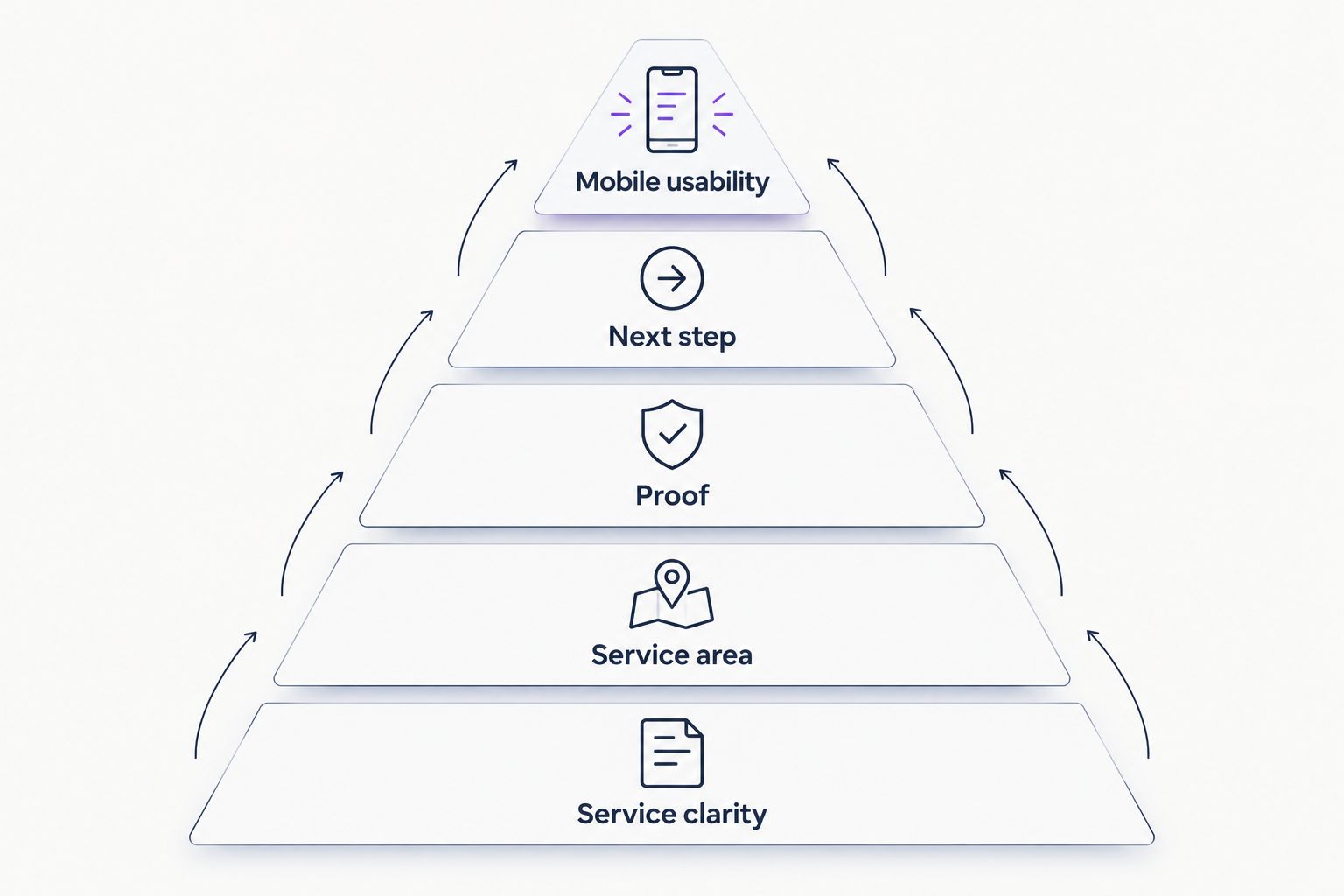
Use these criteria to judge every layout below. A design earns its place by matching a specific customer task, not by looking more expensive.
- Service clarity: Name the work you actually perform. Separate repair, replacement, and maintenance when those are distinct services.
- Service area: State that you serve Omaha only if that matches your coverage. Name additional communities accurately.
- Proof: Use genuine project photos, customer feedback, and credentials you can substantiate.
- Next step: Give each page 1 primary action, such as calling about a repair or requesting an estimate.
- Mobile usability: Make text readable, links usable, and forms manageable on a phone.
These are the design priorities for an Omaha HVAC website in 2026. Decorative choices come afterward. A polished page still fails its purpose when visitors cannot tell what you do or how to reach you.
Best HVAC website designs at a glance
These are recommended design approaches, not a ranking of named contractors or claims about their results. Choose the approach that matches the inquiries you want.
| Rank and design | Best for | Standout feature | Key limitation |
|---|---|---|---|
| 1. Service-first | Companies offering several residential HVAC services | Clear routes to each service | Needs useful individual service pages |
| 2. Call-first | Repair-focused companies | Immediate phone action and coverage details | Less room for replacement research up front |
| 3. Estimate-led | Replacement-focused companies | A guided estimate request | Requires a defined follow-up process |
| 4. Maintenance-first | Companies prioritizing recurring service | Clear explanation of maintenance work | A poor lead message for urgent repair visitors |
| 5. Commercial qualification | Contractors targeting business properties | Inquiry routing by property and scope | Too involved for a simple residential repair call |
1. Service-first: best overall for residential HVAC companies
A service-first website organizes the homepage around the jobs you perform. Visitors can choose heating repair, cooling repair, equipment replacement, or maintenance without decoding a broad promise about comfort.
This is the strongest default when your company handles several kinds of residential work. It gives each service a clear destination while keeping the homepage focused.
What the homepage should show
Start with your main service category and actual coverage area. Follow with service choices, credible proof, and a direct contact action. Use plain labels; a homeowner should not need trade knowledge to choose the right page.
For example, a repair page should explain the problems you handle and what happens after someone contacts you. A replacement page should explain the estimate process instead of repeating the same repair copy.
Service-first pros:
- Gives different customer needs separate routes.
- Supports focused pages for distinct services.
- Keeps the homepage useful without listing every detail.
Service-first cons:
- Requires more writing than a basic brochure page.
- Becomes repetitive when every service page says the same thing.
Best for: Residential HVAC businesses with several core services.
Verdict: Buy the service-first approach when you need one practical default.
2. Call-first: best for urgent repair inquiries
A call-first website puts the phone action near the top, alongside the service and coverage information someone needs before calling. It removes distractions from the path to a repair inquiry.
Use this approach when repair calls are your main website goal. Do not add emergency, same-day, or round-the-clock claims unless your business actually provides those services.
What the homepage should show
Lead with the repair work you handle. Keep the phone action visible and explain what callers should have ready, such as the problem and property location.
Run 2 mobile checks before approving the page: test the phone link and submit the contact form. Confirm that both reach the intended destination. A button that looks right is not enough.
Call-first pros:
- Makes the main contact action easy to identify.
- Keeps urgent repair information near the top.
- Reduces competing choices on the landing page.
Call-first cons:
- Gives equipment research less prominence.
- Depends on a real process for answering or returning calls.
Best for: HVAC companies whose website primarily supports repair inquiries.
Verdict: Buy the call-first approach for repair-focused pages; skip unsupported urgency claims.
3. Estimate-led: best for equipment replacement projects
An estimate-led website helps homeowners move from researching a replacement to requesting a conversation. The design explains your process before presenting the request form.
This approach fits replacement work better than a homepage built entirely around immediate phone calls. It gives you space to explain what information you need and how you assess a project.
What the homepage should show
Describe the replacement services you actually offer. Explain the next step without inventing equipment recommendations, project timelines, financing terms, or guarantees.
Start the form review with 3 field groups: contact details, property location, and project need. Require only information needed to handle the inquiry. Save detailed equipment questions for the conversation when they are not essential upfront.
The HVAC contractor website design guide provides a related planning topic for the broader site structure.
Estimate-led pros:
- Explains the process before asking for contact details.
- Separates replacement requests from repair inquiries.
- Gives project examples a useful place on the page.
Estimate-led cons:
- A long form creates extra work for the visitor.
- Unclear follow-up leaves the customer unsure what happens next.
Best for: HVAC companies prioritizing replacement and installation inquiries.
Verdict: Buy the estimate-led approach when replacement projects are the priority.
4. Maintenance-first: best for recurring service inquiries
A maintenance-first website explains routine HVAC service and how customers request it. The page makes the actual maintenance offering understandable rather than hiding it inside a general services list.
Use this approach when maintenance is a genuine business priority. Do not invent a membership, plan name, discount, or included benefit just to make the page sound more substantial.
What the homepage should show
Explain what the service includes, who it is for, and how to request it. Keep the language specific to your actual offer. If customers need a conversation before scheduling, say that instead of implying confirmed online booking.
Keep a visible route to repair information. Someone with a broken system should not have to work through maintenance copy to find help.
Maintenance-first pros:
- Gives routine service a clear explanation.
- Creates a dedicated destination for maintenance questions.
- Separates scheduled service from urgent repair needs.
Maintenance-first cons:
- Does not directly answer an urgent repair visitor's main question.
- Requires accurate, maintained descriptions of included work.
Best for: HVAC companies actively prioritizing recurring service inquiries.
Verdict: Buy the maintenance-first approach for a dedicated service page; hold on making it the entire homepage.
5. Commercial qualification: best for business-property inquiries
A commercial qualification website organizes inquiries around property needs and project scope. It helps a business buyer explain the request before the first conversation.
Choose this approach only when commercial HVAC work is part of your actual business. A residential contractor does not need commercial language simply to look bigger.
What the homepage should show
Identify the commercial services and property types you genuinely support. Explain the information needed to route a request, such as location, service need, and the person's role in the project.
Separate commercial inquiries from residential repair requests when the handling process differs. Avoid publishing response commitments, credentials, or client names without supporting facts and permission where needed.
Commercial qualification pros:
- Makes business-property services easier to identify.
- Collects context relevant to the request.
- Gives commercial project examples a clear purpose.
Commercial qualification cons:
- Adds unnecessary complexity for residential visitors.
- Needs specific service information to avoid generic business language.
Best for: HVAC contractors targeting commercial property decision-makers.
Verdict: Buy the commercial qualification approach for a defined commercial audience; skip it otherwise.
How these designs are ranked
The 2026 ranking follows the criteria above: service clarity, service area, proof, next step, and mobile usability. Service-first ranks first because it accommodates several residential service needs without making one customer type dominate the whole site.
The remaining designs win narrower jobs. Call-first prioritizes repair contact. Estimate-led supports replacement inquiries. Maintenance-first explains recurring service. Commercial qualification gathers business-project context.
This is a fit-based recommendation, not a performance test. No layout guarantees calls or booked jobs. Your actual offer, content, contact handling, and visitor needs still matter.
Which HVAC website design should you choose?
Choose service-first unless a specific business priority gives you a reason not to. Keep the homepage broad enough to route visitors, then give repair, replacement, and maintenance pages their own purpose.
For your 2026 project brief, write down the main inquiry you want, the services you perform, and the area you cover. Ask Moore Media Collective to address those points in the proposed website design scope. Agree on the content and approval process before any live-site changes.
Discuss your HVAC website
Start with your services, coverage area, and the inquiries you want your website to support.
FAQ
What's the best website design for an Omaha HVAC company?
A service-first website is the best default for an Omaha HVAC company offering several residential services. It gives repair, replacement, and maintenance visitors separate routes while keeping the homepage focused.
Is a call-first website better than an estimate form?
A call-first website fits repair-focused inquiries; an estimate form fits replacement-project inquiries. Choose the main action by the service and keep a secondary contact route for visitors who need it.
What should an HVAC website show at the top?
An HVAC website should show the service offered, the actual service area, and a clear next step at the top. Use direct wording rather than a broad slogan that leaves visitors guessing.
Should my HVAC website list every town near Omaha?
List only the towns your HVAC company actually serves. Explain genuine coverage clearly rather than adding location names that do not match your operation.
Do I need online booking on my HVAC website?
You do not need online booking to provide a clear contact path. Use a booking tool only when your scheduling process supports it, and distinguish an appointment request from a confirmed appointment.
What does Moore Media Collective offer HVAC companies?
Moore Media Collective provides logo design, branding, websites, and social media management for HVAC and other trade companies. Define the required services and project scope before choosing a website design approach.
One last thing
Your form confirmation message is part of the design. After submission, tell the customer whether they have requested contact or booked an appointment. Those are different promises.
Before approving your 2026 website, submit a real test inquiry and read the confirmation yourself. Check where it arrives. A tidy homepage cannot fix a request that reaches the wrong inbox.