
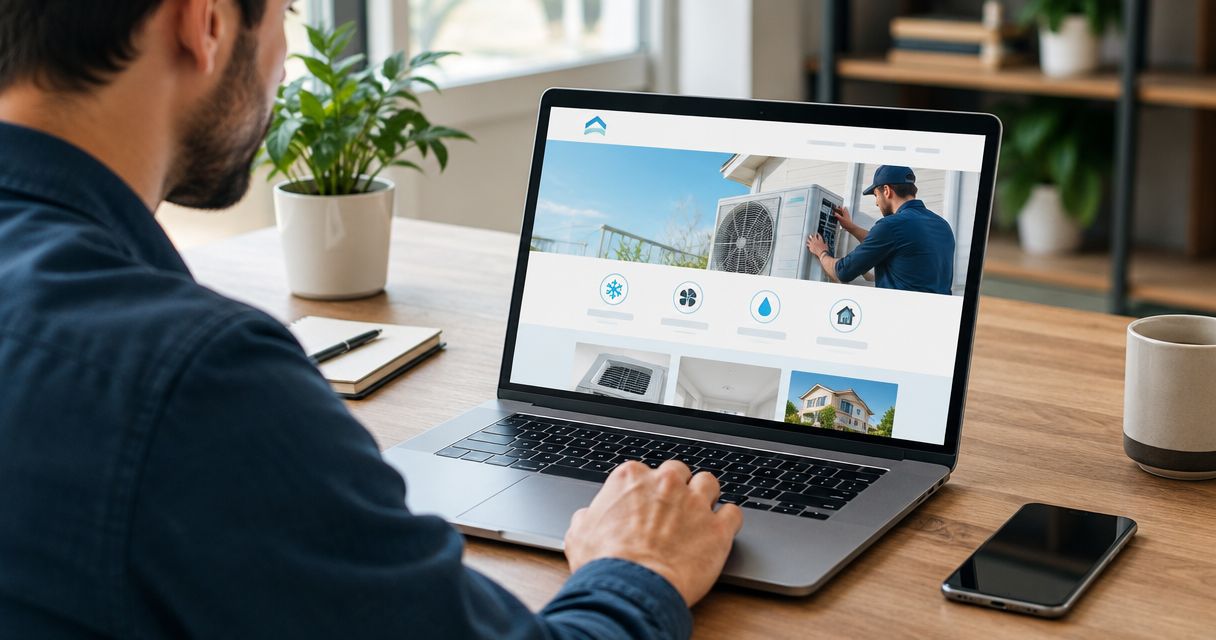
Best overall: a service-first local website. Best for urgent repair calls: a repair-first website. Best for a focused redesign: a lean service website. The best website design examples for HVAC companies make your services, coverage area, and next step obvious before a homeowner starts scrolling.
- The best website design examples for HVAC companies put services, local coverage, and contact options first.
- Choose a service-first local website as the default for an HVAC business offering repairs and installations.
- Choose a repair-first website only when your actual operating hours and call handling support the message.
- Moore Media Collective provides website design and branding for HVAC companies and other trade businesses.
These examples are design blueprints, not reviews of named contractors. Use them to decide what your 2026 website should do, then brief a designer on the layout that fits your business. Moore Media Collective provides branding, website design, and social media management for trade companies.
Why this matters
A homeowner needs answers, not a tour of your company history. Do you fix the problem? Do you serve the address? How does someone reach you?
Build the opening screen around those 3 questions. Put the company story farther down, where it supports the decision instead of delaying it. Your website should help someone request service without making them decode vague headlines or hunt through a menu.
For your 2026 redesign, start with the work you want to book. A company focused on furnace repairs needs a different opening than one focused on replacement systems. The website should reflect that difference without hiding the rest of your services.
What makes the best HVAC website design
Judge each example against these criteria before choosing a layout:
- Service clarity: Name the work you perform. Furnace repair means more than a headline about comfort.
- Local relevance: State the area you actually serve. Use real coverage details, not a string of cities added for appearance.
- Contact access: Make the main action easy to find and explain what happens after someone uses it.
- Useful proof: Include genuine project photos, customer feedback, or credentials only when you can substantiate them.
- Mobile usability: Check readable text, usable navigation, and contact controls on a phone.
- Editing control: Agree on content, forms, and approvals before publishing changes to a live website.
Choose the layout that matches your work and your ability to respond. A repair-focused headline is the wrong choice if your business mainly schedules installation consultations.
Visual style comes after those decisions. Color, photography, and typography should make the important information easier to see. They should not compete with the service request.
HVAC website design examples at a glance
| Rank and example | Best for | Standout feature | Key limitation |
|---|---|---|---|
| 1. Service-first local website | Mixed repair and installation work | Clear service choices with local coverage | Needs accurate service descriptions |
| 2. Repair-first website | Urgent heating and cooling problems | Direct call path with honest operating details | Depends on reliable call handling |
| 3. Replacement-focused website | Planned system replacement inquiries | Separate paths for repair and replacement | Needs more explanatory content |
| 4. Project-led website | Businesses with useful installation photos | Actual work shown beside relevant details | Weak without genuine project material |
| 5. Lean service website | Owner-operators simplifying an outdated site | Focused information and one main action | Less room for separate search topics |
All five approaches need truthful copy, usable contact options, and clear service coverage. None replaces a working phone process. The difference is what each layout puts first.
1. Service-first local website: best for mixed HVAC work
A service-first local website organizes the opening around what homeowners need: heating repair, cooling repair, and installation, where those services apply. It pairs those choices with a clear coverage statement and a contact action.
This is the strongest default for a business that handles different types of HVAC work. You do not have to make every visitor read the same sales pitch before finding the relevant service.
What the opening should show
Use a plain service headline, a truthful local coverage line, and 1 primary action. Below that, show short service summaries that lead into fuller explanations. Avoid filling the opening screen with every certification, company milestone, and seasonal message.
An Omaha contractor should describe its actual Omaha-area coverage. A Kansas City contractor should do the same for its own service territory. City names belong in useful service information, not in a decorative footer list.
Service-first local website pros:
- Makes different service needs easy to recognize.
- Gives local coverage a visible place.
- Supports distinct pages for distinct services.
- Leaves room for proof without burying the contact action.
Service-first local website cons:
- Becomes cluttered when every service gets equal emphasis.
- Requires updates when coverage or services change.
- Generic service descriptions weaken the local usefulness.
Best for: HVAC companies handling both repairs and installations.
Verdict: Buy into this approach as your default 2026 redesign. Move away from it only when a more specific business need deserves the opening position.
2. Repair-first website: best for urgent service inquiries
A repair-first website puts the problem and the contact path ahead of everything else. It tells homeowners which repairs you handle, where you work, and when someone can respond.
The design works only when its wording matches your operation. An urgent-looking banner does not justify an emergency-service claim or an after-hours promise you cannot support.
Build the page around the call
Place the repair service and coverage information beside the main contact action. State your actual hours. If requests go to a form outside those hours, explain the process without inventing a response deadline.
Keep repair topics specific. A furnace-not-heating section should explain the service you offer, not bury it inside a general paragraph about indoor comfort. Avoid turning the page into a do-it-yourself repair manual.
A Des Moines business offering scheduled repair appointments should say that plainly. Do not borrow emergency wording from another contractor just because the layout looks effective.
Repair-first website pros:
- Gives problem-aware visitors a direct next step.
- Keeps repair information close to contact controls.
- Makes operating details easier to find.
- Reduces competition between the call action and unrelated promotions.
Repair-first website cons:
- Can push planned replacement work into the background.
- Creates the wrong expectation if availability language is inaccurate.
- Needs a dependable process for missed calls and submitted requests.
Best for: HVAC companies prioritizing repair inquiries with an established response process.
Verdict: Buy if your call handling supports the message. Skip emergency positioning that your actual service cannot support.
3. Replacement-focused website: best for planned system inquiries
A replacement-focused website helps homeowners understand the next step in an installation decision. It separates replacement questions from immediate repair needs and explains how to request an assessment.
This layout needs more than a large equipment photo. Explain what information you need from the homeowner and what your actual assessment process includes. Keep equipment specifications and financing claims out unless they are verified.
Separate the decisions
Give visitors 2 paths: repair and replacement. The replacement path should cover the service, the assessment process, and the questions a homeowner should prepare. The repair path should remain easy to reach.
For a Denver contractor, the content should describe the systems and services the business actually handles. Do not add technical recommendations merely to make the page sound local. Specificity starts with accurate service information.
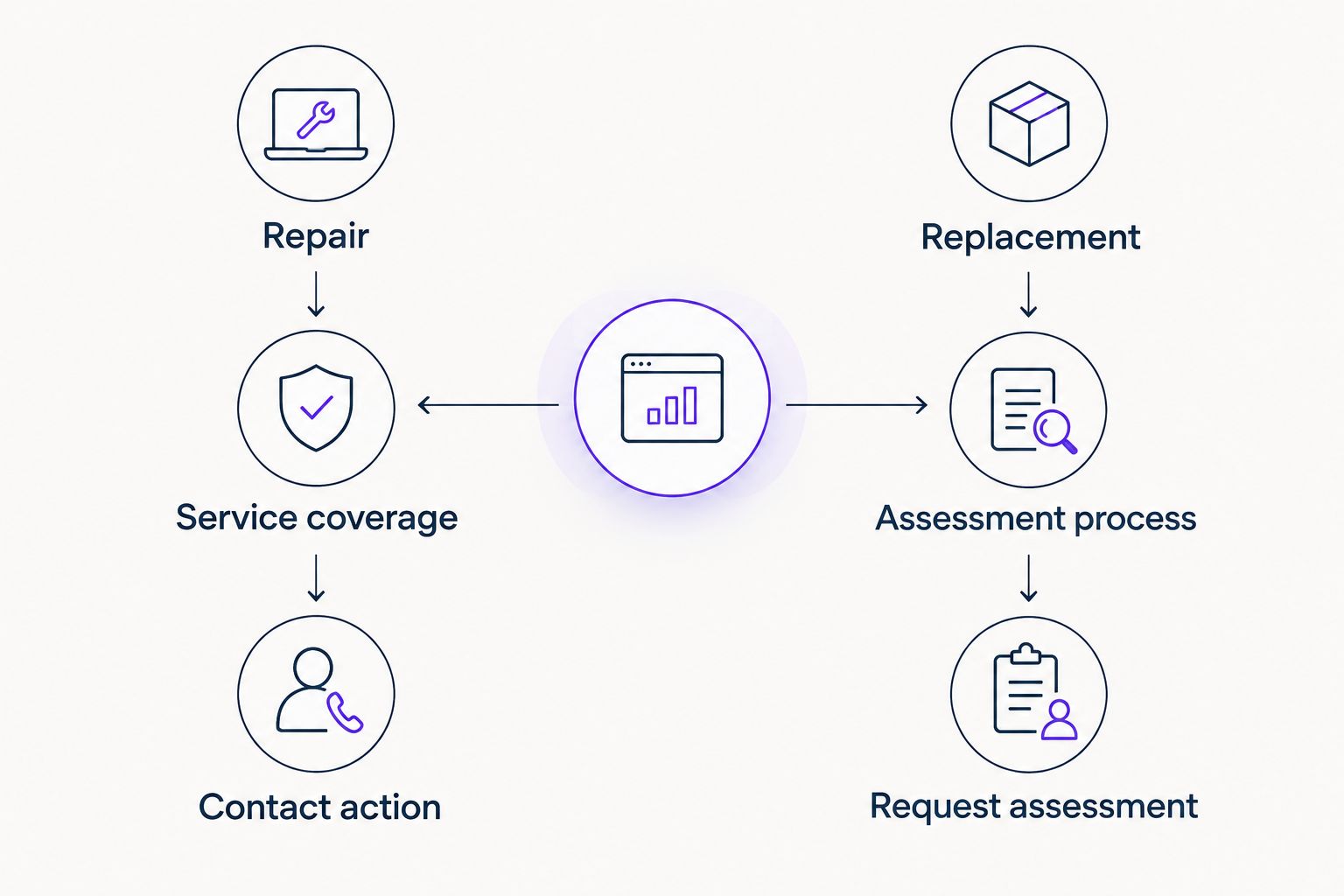
Keep the replacement page focused on the decision. Explain what happens next rather than promising a particular outcome before anyone has assessed the home.
Replacement-focused website pros:
- Gives planned purchases their own explanation.
- Helps visitors prepare relevant questions.
- Separates installation inquiries from repair requests.
- Provides space to explain a real assessment process.
Replacement-focused website cons:
- Requires accurate, detailed service copy.
- Can frustrate repair visitors if their path is hidden.
- Becomes misleading when generic equipment claims replace actual service details.
Best for: HVAC businesses seeking planned replacement and installation inquiries.
Verdict: Buy when replacement work is a priority. Hold if you cannot yet explain the assessment process clearly.
4. Project-led website: best for showing actual installation work
A project-led website uses genuine job photos with short explanations of the work shown. It makes your work visible instead of relying entirely on broad claims about quality.
The photos need context. Explain the service performed and the relevant project details you can verify. Get permission before publishing customer-identifying material, and avoid showing private information in the background.
Make the photos useful
Pair each project with a service description and a clear next step. A photo of installed equipment without an explanation leaves the homeowner to guess what matters.
A Chicago contractor can use approved installation photos to show the types of work it performs. The same principle applies to a plumber showing a completed installation or a roofer documenting a finished roof: show real work and explain it plainly.
Do not let the gallery become the entire website. Visitors still need services, coverage, and contact information. Photos support that information; they do not replace it.
Project-led website pros:
- Shows actual work rather than generic imagery.
- Gives service descriptions concrete context.
- Helps distinguish your business from look-alike websites.
- Creates material you can also use in approved social posts.
Project-led website cons:
- Depends on suitable photos and publication permission.
- Needs captions to explain what visitors are seeing.
- Can distract from service requests when the gallery dominates.
Best for: HVAC companies with genuine, relevant project material ready to publish.
Verdict: Buy when you have useful project evidence. Wait if the only material available is generic photography.
5. Lean service website: best for a focused redesign
A lean service website removes unnecessary layers from an outdated site. It brings the service summary, coverage area, business details, and contact action into a straightforward structure.
This approach suits an owner-operator who needs a clearer website without building out a large content library immediately. Keep it focused, but do not confuse short with incomplete.
Keep the essentials
Use clear headings for services, coverage, proof, and contact. Explain the main services in enough detail that visitors know whether the business fits their needs. Avoid hiding all meaningful information inside images or an oversized slideshow.
For your 2026 rebuild, separate essential launch content from later additions. That keeps the initial scope clear. A landscaping company can use the same discipline: explain the work and service area before adding a sprawling project archive.
Lean service website pros:
- Keeps the main request path easy to understand.
- Limits unnecessary navigation.
- Gives an outdated site a clear replacement structure.
- Makes content review easier to organize.
Lean service website cons:
- Offers less room for distinct service topics.
- Can become crowded as the business adds services.
- Needs expansion when different visitor needs require fuller explanations.
Best for: Owner-operators prioritizing a focused website rebuild.
Verdict: Buy for clarity. Plan additional service pages when the content genuinely needs separate space.
How the examples are ranked
The service-first layout ranks first because it gives mixed-service businesses a clear default without forcing one customer need ahead of every other need. Repair-first and replacement-focused layouts rank next because each serves a narrower purpose.
Project-led design depends on genuine supporting material. Lean design favors a smaller scope but provides less room for separate topics. This ranking evaluates layout fit against the criteria above; it does not claim measured conversion results.
Which HVAC website design should you choose?
Choose the service-first local website if you are undecided. It gives homeowners a clear starting point while leaving room for repairs, installations, and proof of your work.
Use repair-first design when urgent inquiries lead your business. Use replacement-focused design when planned installations need a fuller explanation. Add project material to either approach when it supports the service information.
Moore Media Collective is a website design option for HVAC owners seeking an agency that also provides branding and social media management. That makes the agency relevant when your website, logo, and social content need a coordinated brief.
Keep the review process explicit. Approve the proposed copy, contact details, and forms before changes reach your live website. Test the agreed contact paths before launch.
Plan your HVAC website redesign
Explore website design, branding, and social media management for your trade business.
FAQ
What's the best website design for an HVAC company?
A service-first local website is the best default for an HVAC company handling repairs and installations. Put services, actual coverage, and a clear contact action near the top.
What should an HVAC homepage show first?
An HVAC homepage should show what the business does, where it works, and how to request service. Place the company story and supporting details below that information.
Is a repair-first website better than a replacement-focused website?
A repair-first website fits urgent service inquiries; a replacement-focused website fits planned installation questions. Choose the opening that matches the work you prioritize, while keeping the other path accessible.
Should my HVAC website advertise emergency service?
Advertise emergency service only when your business actually provides it. State accurate operating details and do not imply after-hours response that your team cannot deliver.
Can I use a simple website for my HVAC business?
A simple website works when it clearly explains your services, coverage, and contact process. Add separate service pages when different topics need fuller explanations.
Does Moore Media Collective design websites for HVAC companies?
Moore Media Collective provides website design for HVAC companies and other trade businesses. Its stated services also include logo design, branding, and social media management.
What should I approve before an HVAC website goes live?
Approve the copy, service claims, coverage details, contact information, and forms before publication. Check that the live-site changes match the scope you approved.
One last thing
Before approving your 2026 website, send a service request through it from your own phone. Follow the same path a homeowner would use. Confirm that the request reaches the right destination and that the confirmation accurately explains what happens next.
A good-looking page with a broken contact path is unfinished. Make that check part of the approval, not an afterthought.