Choose an HVAC logo designer who can make your business name readable on a truck, credible on your website, and consistent across your customer touchpoints. Before you hire, check real work, test practical applications, and get the scope, ownership terms, and final file requirements in writing; a polished presentation does not prove the logo will work on the job.
- How to choose a logo designer for an HVAC company: demand readable work, clear ownership, and usable files.
- Moore Media Collective suits trade owners seeking logo design, branding, websites, and social media management.
- Judge HVAC branding on trucks, uniforms, and website headers—not presentation slides alone.
- Approve the logo and rollout separately; a design approval is not permission to change your live website.
Why this matters
Your logo will sit beside the details that help customers choose you: your company name, services, phone number, and reviews. It needs to support those details, not fight them. A complicated symbol does not help if the homeowner cannot read whose truck is outside.
For a 2026 logo project, start with where the design must work. Your truck lettering, website header, work shirts, and social profiles create different constraints. The designer should explain those constraints before asking which colors you like.
Moore Media Collective provides logo design, branding, websites, and social media management for trade companies. Use the same hiring standards below whether you choose a creative agency or an independent designer.
Hire for a usable business identity, not just an attractive image. A new logo cannot repair unanswered calls, weak service information, or a broken booking process.
How do you choose a logo designer for an HVAC company?
Follow these steps before signing an agreement. Each step should produce something you can review: a brief, relevant examples, application tests, or written terms. Do not substitute a good sales conversation for those checks.
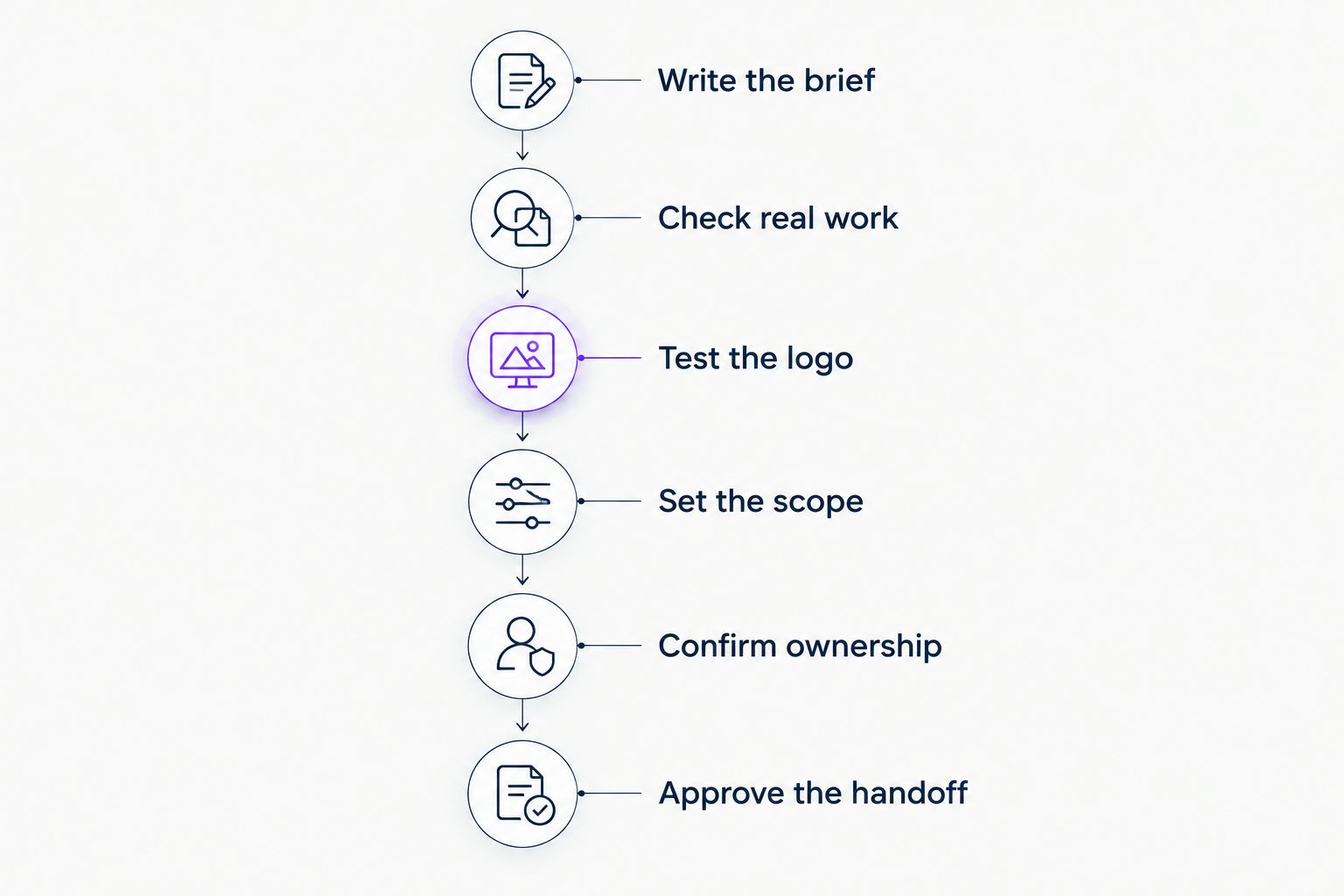
1. Write the brief
Tell the designer what needs fixing. “We look dated” is a starting point, not a complete brief. Explain whether your company name disappears on the truck, your website uses a different logo, or your shirts reproduce poorly.
Include your exact business name, actual services, service area, and the materials you need to update. An HVAC contractor serving Omaha should describe that business—not ask the designer to build an identity around a national service footprint it does not have.
For your 2026 brief, separate what stays from what changes. You might retain a recognizable name while replacing hard-to-read lettering. Give the designer existing files and photographs so the proposal addresses your actual starting point.
2. Check real work
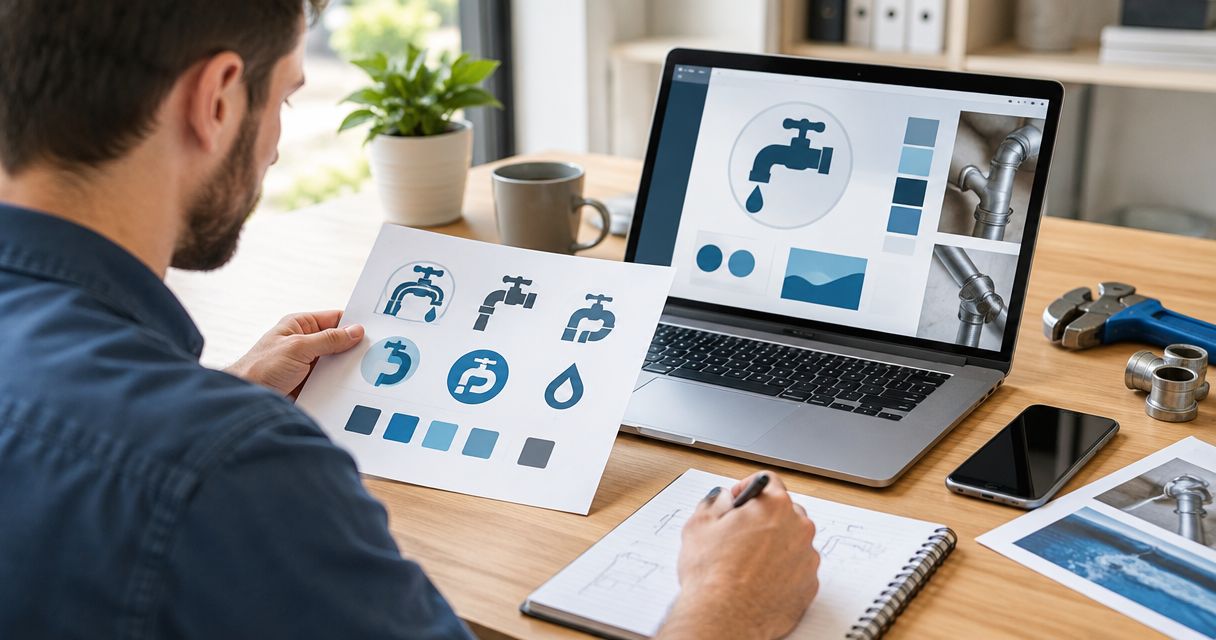
Ask to see finished identities in use, not only logos floating on presentation backgrounds. Relevant experience means understanding practical constraints. A portfolio full of detailed illustrations does not demonstrate readable vehicle lettering.
Ask what the designer handled on each example. Did the work include the logo alone, the identity system, or the website too? You need to know which decisions were theirs before treating the example as proof of fit.
Trade experience is useful, but it is not a substitute for judgment. A plumbing or roofing project can show strong typography and practical applications. An HVAC portfolio can still contain generic work that fails to distinguish one contractor from another.
3. Test the logo
Request mockups across 3 applications: a truck door, a shirt, and a mobile website header. These are recommended review surfaces, not a claim about a designer's standard package. Agree on the tests before the project starts.
On the truck door, check whether the company name remains the main message. On the shirt, ask the decorator whether the detail is suitable for the intended production method. In the mobile header, check whether the logo leaves room for a useful call button.
Review the design on 2 backgrounds: light and dark. Also request a single-color version. A concept that depends entirely on shading or a colored background needs more work before approval.
4. Set the scope
Get a written list of deliverables and exclusions. Ask how concepts, revisions, feedback, and additional applications are handled. “Branding included” is too vague to approve.
Use this comparison to decide what you actually need. These are project scopes to discuss, not standard packages every designer offers.
| Project scope | Best for | Main benefit | Main limitation |
|---|---|---|---|
| Logo-only project | Owners keeping their existing website and materials | Focuses decisions on the mark and its variations | Does not address inconsistent materials unless included |
| Identity project | Owners updating trucks, uniforms, and business materials | Defines how the logo, type, and colors work together | Requires agreement on more applications and rules |
| Identity and website project | Owners replacing an outdated identity and website together | Lets the logo and website design be planned together | Requires more content, decisions, and approval checkpoints |
A broader project is not automatically better. Choose the smallest scope that solves the real problem. If your website is the weak link, a logo-only project leaves that issue untouched.
5. Confirm ownership
Ask what rights transfer to you, when they transfer, and which elements carry separate license terms. Request that the agreement identify any stock artwork, fonts, or other third-party material used in the final work.
Do not assume a delivered image includes editable artwork or unrestricted rights to every component. Ask whether the final mark is custom work and whether any elements are also licensed to other businesses. Get the answer in writing.
Logo design and trademark clearance are separate tasks. Ask whether clearance is included; do not treat a designer's opinion as a legal determination. Seek qualified legal advice when you need an assessment of trademark risk.
6. Approve the handoff
Request vector artwork for scalable production, suitable image files for digital use, color specifications, and guidance on which version belongs where. Confirm whether editable source files are included rather than assuming they are.
Name 1 final approver on your side. Collect feedback before sending it so the designer receives a clear decision instead of conflicting messages from the office and field team.
For a 2026 rollout, keep approval of the design separate from approval to publish it. Nobody should replace your live website logo, order truck graphics, or update public profiles without the permission required by your agreement.
What should you ask during the first conversation?
Ask questions that force a practical answer. You are not testing whether the designer knows design vocabulary. You are checking whether the designer understands your business and can explain the work plainly.
- What would you keep? A useful answer considers existing recognition instead of assuming everything needs replacing.
- Where will this design struggle? Ask about small displays, embroidery, dark backgrounds, and vehicle placement.
- What do you need from me? Look for questions about your services, customers, existing materials, and decision-maker.
- What happens after approval? Ask who prepares files, coordinates applications, and checks the final handoff.
- What is outside the agreement? Clarify production, website updates, naming, legal review, and ongoing support.
Keep the conversation tied to evidence. If the designer says a concept will make you stand out, ask how it differs from nearby competitors without making your company name harder to read.
Why logo design proposals vary
Compare responsibilities before comparing proposals. Two documents can both say “logo design” while covering very different work. Your 2026 selection should reflect what you need delivered, not which proposal has the longest list of services.
- Starting point: Refining an existing identity is a different assignment from developing one around a new business name.
- Applications: Truck graphics, uniforms, social profiles, and website layouts each need defined treatment.
- Decision process: Agree on who supplies feedback and how changes outside the approved direction are handled.
- File handoff: Specify final formats, variations, editable files, and any usage guidance.
- Rights and licensing: Separate original artwork, licensed components, and any legal review.
- Rollout responsibility: Distinguish designing the identity from updating the materials that carry it.
Do not reward a vague proposal because it sounds flexible. Flexibility without boundaries leaves you guessing about what the designer owes you and what counts as additional work.
Should you hire a logo designer or a creative agency?
Hire a logo designer when the identity is the defined problem and you already have a plan for applying it. Consider a creative agency when the logo, website, and ongoing materials need coordinated attention. Neither choice removes the need for clear terms.
Moore Media Collective is a fit for HVAC owners seeking logo design, websites, and social media management from a creative agency. The trade-off is scope: if you need only a logo file, keep the assignment focused rather than adding services without a business reason.
Review the branding and web design services against your brief. Ask which deliverables belong in your project and which do not; the service category alone does not define your agreement.
Does an HVAC logo need a flame or snowflake?
No. An HVAC logo does not need a flame or snowflake to explain the business. Your company name, service descriptor, and surrounding content can carry that information without forcing another symbol into the mark.
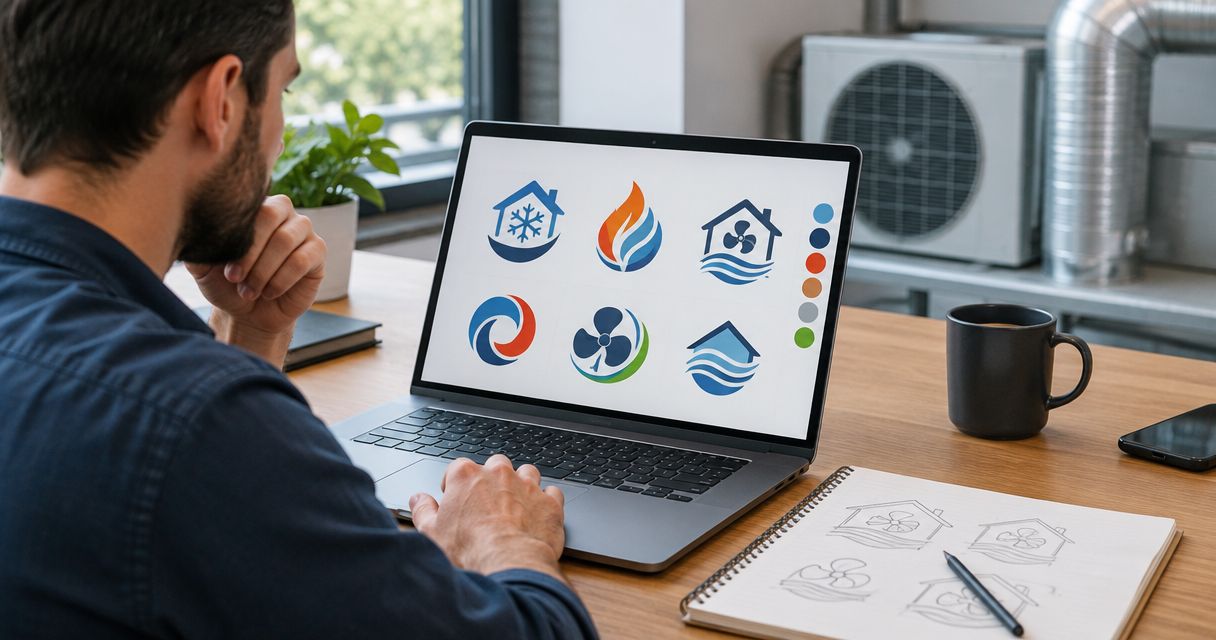
A familiar trade symbol can help signal the category, but it also gives you another detail to distinguish from competitors. Judge the execution. A simple symbol with readable lettering is more useful than a crowded collection of heating and cooling references.
How can you tell whether a redesign is actually better?
Compare the old and proposed logos in the same applications. Use matching truck-door views, shirt placements, and mobile headers so a polished mockup does not hide a weaker design.
Ask whether the company name is easier to read, whether the variations are consistent, and whether useful recognition has been retained. Do not call a redesign successful just because it looks newer. It needs to solve the problems named in your brief.
FAQ
What's the most important thing to check before hiring an HVAC logo designer?
Check whether the designer can make your company name readable across real business applications. Ask for relevant work and agree on truck, shirt, and mobile website tests before approving the project.
Should my HVAC logo match my website?
Your HVAC logo and website should use a consistent identity. Confirm that the logo works in the mobile header without crowding service information or the main contact action.
Do I need a designer who works only with HVAC companies?
No, exclusive HVAC experience is not required. Look for relevant work, practical production knowledge, and clear questions about your company rather than relying on a niche label.
What files should I ask my logo designer to deliver?
Ask for vector artwork, suitable digital image files, color specifications, and the agreed logo variations. Confirm whether editable source files and usage guidance are included in the written scope.
Will owning the logo mean I own the font too?
Owning the logo artwork does not automatically give you unrestricted rights to the underlying font software. Ask which licenses apply and what you need for future editing or other uses.
Can a new HVAC logo guarantee more booked jobs?
No, a new HVAC logo cannot guarantee more booked jobs. It should support a clear identity, while your service information, contact process, and customer experience still need to do their jobs.
Can Moore Media Collective help beyond the logo?
Moore Media Collective provides branding, websites, and social media management alongside logo design for trade companies. Define the work and approval requirements in your project agreement.
One last thing
Ask to see the final logo without the presentation treatment. Remove the dramatic lighting, textured wall, and oversized truck mockup. Put the artwork on a plain background at the size you will actually use.
For your final 2026 approval, open the delivered files yourself and check the business name carefully. Then confirm your website provider, sign shop, or decorator has the version needed for the agreed application. A beautiful preview is not a complete handoff.