Yes, a landscaping company can grow without a website in 2026 through referrals, repeat customers, local relationships, and business profiles. But those channels do not give a new prospect one dedicated place to check your work, confirm your service area, and request an estimate before calling.
- Can a landscaping company grow without a website? Yes. Referrals and repeat customers can bring work without one.
- A landscaping website supports growth by explaining your services, showing completed work, and making the next step clear.
- Keep the channels that bring good jobs. Add a website when prospects need better information before contacting you.
- Moore Media Collective provides landscaping website design, branding, and social media management for trade businesses.
Can a landscaping company grow without a website in 2026?
Yes. A website is not a requirement for winning landscaping jobs. It is a place to support the sale. Someone can recommend your crew, a neighbor can see your work, or an existing customer can ask for another project without visiting a website.
The distinction is between getting introduced and getting chosen. A referral introduces you. Clear service information, relevant project photos, and a straightforward estimate process help a prospect decide whether to contact you.
Use this comparison to decide where a website fits. For a closer look at what belongs on the site, see the website design guide for landscaping companies.
| Growth channel | Best for | What it does well | Limitation |
|---|---|---|---|
| Customer referrals | Building on satisfied customer relationships | Gives prospects a personal introduction | Does not provide a consistent explanation of your services |
| Repeat business | Serving customers who already know your work | Builds on an existing relationship | Does not introduce you to new households by itself |
| Google Business Profile | Presenting your business in Google Search and Maps | Displays business information, photos, and reviews | Does not replace a detailed explanation of each service |
| Social media | Showing current work and answering questions | Lets people see projects and interact with your business | Important information can become scattered across posts |
| Your own website | Helping prospects evaluate your company | Organizes services, project proof, service areas, and contact details | Needs accurate content, maintenance, and a way for people to find it |
These channels are not an either-or choice. Keep the introductions that work. Give interested homeowners a clear place to take the next step.
Why this matters: more inquiries are not always better leads
You do not need calls about services you do not offer or neighborhoods you do not serve. You need inquiries that match your crew, your work, and your schedule.
A website gives you room to explain those boundaries before the phone rings. That is useful whether you are an Omaha lawn-care owner or a Denver landscaper focused on installation projects.
Suppose a homeowner asks whether your company installs retaining walls. If you only provide mowing and seasonal cleanup, clear service information helps prevent a mismatch. If you do install retaining walls, a relevant project page gives that homeowner something useful to review.
Build around the jobs you want to discuss, not a vague promise to handle everything outdoors.
When growing without a website makes sense
A website does not have to be your first business project. Start with the immediate problem that keeps you from serving customers well.
Referrals already fill the work you want
Best for: an owner-operator with a dependable referral network and no immediate need for more inquiries. If your customers keep recommending the exact services you want to sell, protect those relationships. Answer calls, explain the work, and follow through.
The drawback is that a referral still leaves questions unanswered. A homeowner who has never met you needs to understand what you do and whether you serve their address. Without a website, you handle more of that explanation directly.
You are still defining your services
Best for: a new landscaping business deciding what work to pursue. You can speak with prospects, complete jobs, and learn which services fit your skills before planning a larger website.
Do not turn uncertainty into a long list of promises. If you are not ready to offer irrigation, grading, or hardscaping, leave those services out. A smaller, accurate description is better than attracting jobs you cannot take.
Your next problem is operational
Best for: a company that needs to improve scheduling, quoting, or follow-up before seeking more demand. A new site does not return missed calls or prepare estimates for you unless you have deliberately set up those processes.
Fix the handoff first. Decide who answers an inquiry, what information they collect, and who follows up. Then make the website support that process.
When a landscaping website becomes the practical next move
For your 2026 growth plan, look for friction rather than chasing a redesign because another contractor launched one.
Prospects keep asking the same basic questions
Repeated questions about service areas, project types, and estimate requests point to information you should make easy to find. Answer them clearly on the site, then keep answering the phone.
The benefit is a consistent explanation. The limitation is that not every prospect will read it. Your website supports customer conversations; it does not eliminate them.
You want a different type of job
A feed full of mowing photos does not explain your landscape installation work. A generic landscaping headline does not tell a property manager whether you handle recurring maintenance.
Show the service you want to sell with relevant examples and an accurate description. Do not promise that a new page will produce a particular number of jobs. Its purpose is to make your offer understandable and give interested prospects a next step.
Your business information is scattered
If your service list lives in an old post, your best project photos sit on a phone, and your estimate instructions change depending on who answers, bring those pieces together.
Moore Media Collective is a fit for landscaping owners who want website design, branding, and social media management from a trade-focused creative agency. Review the services against your actual needs. The agency provides those services; your team still needs to supply accurate business details and approve work before it goes live.
Why the need for a website varies
There is no universal point at which every landscaper needs the same website. These factors change what you should build and how urgently you need it:
- Your service mix. Recurring lawn maintenance and a custom installation need different explanations. Describe what the customer is actually requesting.
- Your growth goal. Keeping an existing route full is different from introducing a new service. Match the site to the business decision.
- Your lead sources. A personal referral comes with context. Someone who finds your name elsewhere needs more information about your work.
- Your project evidence. Relevant photos give you something concrete to show. Stock images do not document your crew's completed jobs.
- Your follow-up process. A clear request form is only useful if someone receives the request and responds.
Do not buy more pages to avoid making these decisions. Decide what the site needs to accomplish first.
Build around 5 homepage sections
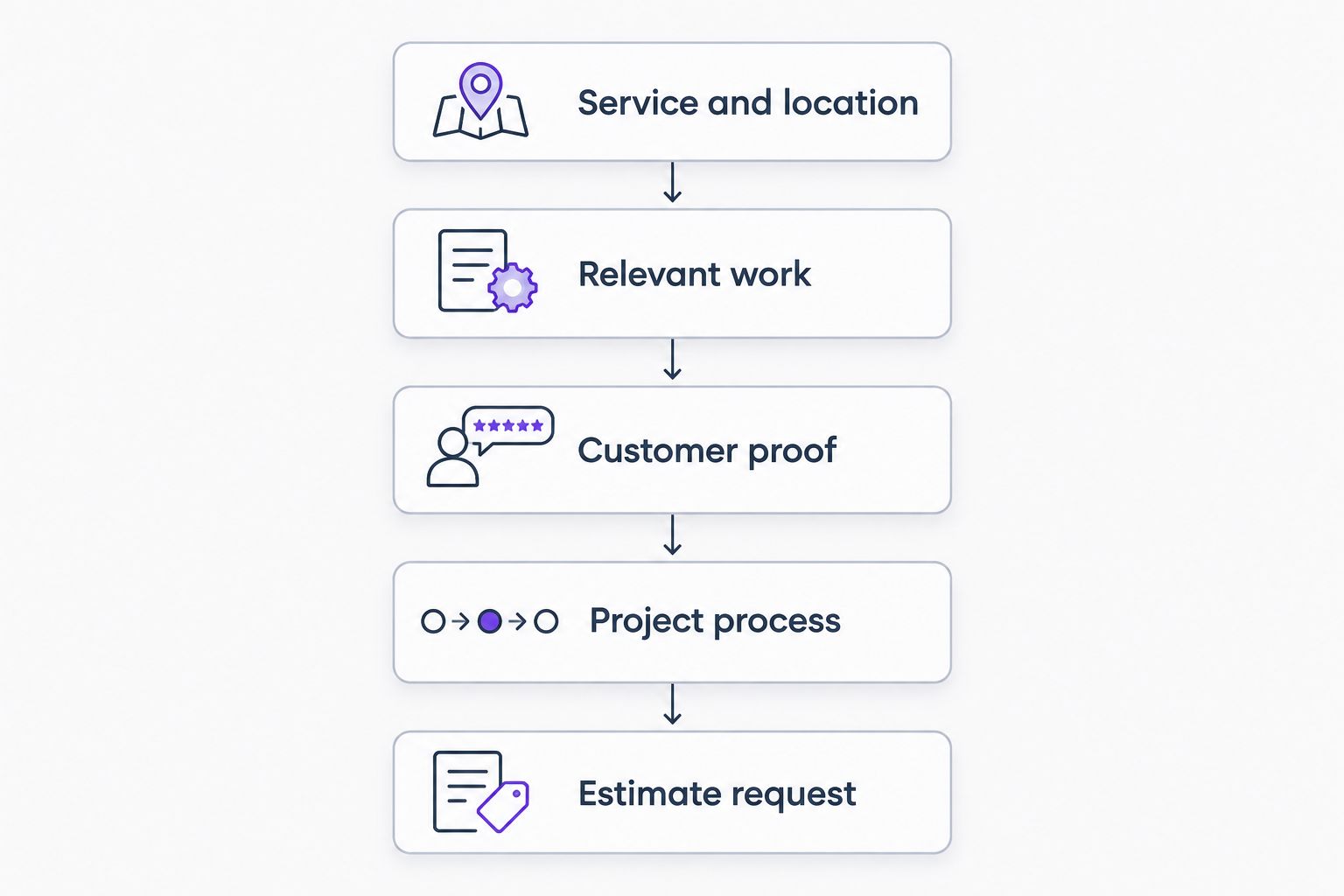
A useful landscaping website in 2026 starts with clear answers, not moving graphics. Plan these 5 homepage sections before choosing visual effects.
- Service and location. State what you do and where you work. Replace a broad slogan with a plain description of your actual services and coverage.
- Relevant work. Show completed projects you have permission to publish. Add captions that explain the service shown without claiming results you cannot document.
- Customer proof. Use genuine customer feedback with appropriate permission. Keep the wording accurate and do not turn an ordinary comment into a stronger claim.
- Project process. Explain how someone requests an estimate and what happens next. Only describe steps your business actually follows.
- Estimate request. Give the visitor a clear way to contact you. Ask for information you will use to assess the job.
Keep the estimate form focused. A name, contact method, project location, and description can give you a starting point for the conversation. Add fields only when they serve your quoting process.
Check the page on a phone. Can someone read the service description, view the work, and find the contact option without fighting the layout? Do not publish until those basic tasks work.
Use 3 questions to decide what to fix first
Before you commission a new website or rewrite an old one, answer these 3 questions with your team. Use actual customer conversations rather than guesses about what homeowners want.
What work do you want more of?
Name the service, the customer, and the area. For example, an owner might want more recurring maintenance inquiries within an existing route rather than scattered requests across an entire metro area.
That is a planning example, not a reason to invent service coverage. Your published site should reflect the places your crew actually serves.
What do prospects need to see before calling?
For a planting project, show relevant planting work. For lawn maintenance, explain the service and how to request details. Choose evidence that matches the question.
Do not fill the page with unrelated project photos just because they look impressive. A homeowner should be able to connect what they see with the work they need.
What happens after the inquiry?
Write down who receives the message, who responds, and how you record the outcome. Test the contact route before launch.
For any agency-built site, agree on approval responsibilities in advance. Review the copy, service areas, photos, and contact details before authorizing publication. A design proposal is not permission to change your live website.
Plan your landscaping website
Discuss website design, branding, and social media management with Moore Media Collective.
Is a Facebook page enough for a landscaping business?
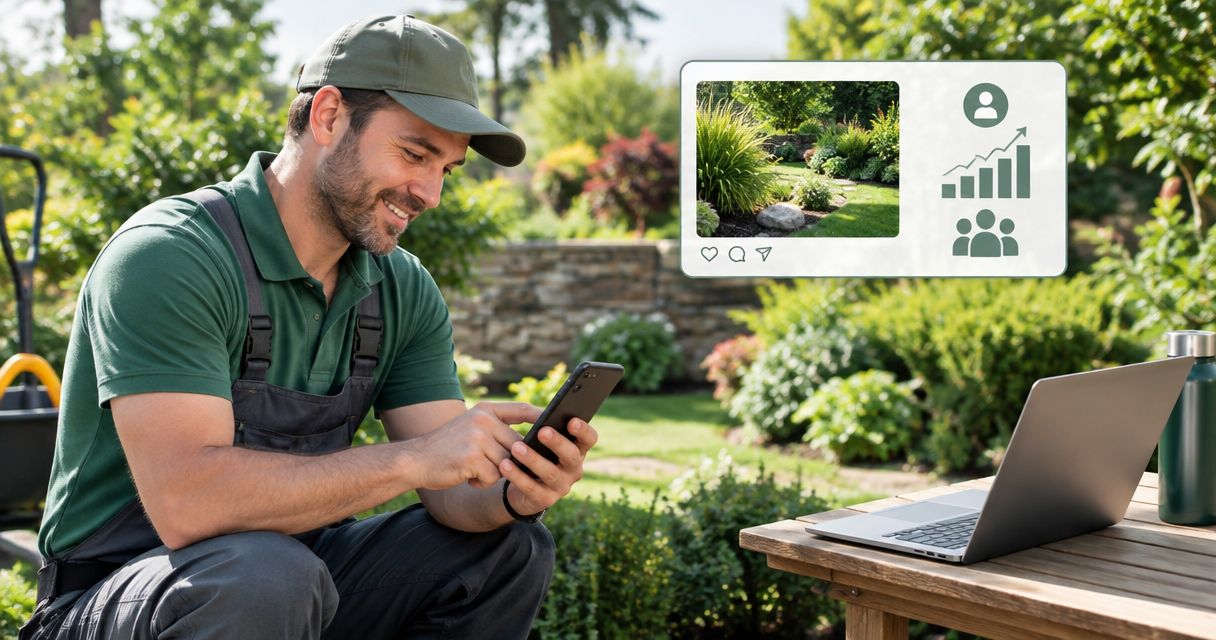
A Facebook page can support a landscaping business without a website. It gives you a place to share work, communicate with people, and publish business information.
The trade-off is organization. A homeowner should not have to search through project updates to find your service area or estimate instructions. If you keep using Facebook as your main presence, make those details easy to find and keep them accurate.
For 2026, treat the website as a stable explanation of your business and social posts as updates. Neither replaces good work or timely follow-up.
Will a landscaping website automatically bring more jobs?
A landscaping website does not guarantee more jobs. It needs a clear offer, relevant proof, working contact options, and visitors who are interested in the services you provide.
Once the site is live, record where inquiries come from and which ones become suitable estimates or booked work. Separate a request outside your service area from a qualified project. A total inquiry count alone does not tell you whether the site supports your business goals.
FAQ
Can a landscaping company grow without a website in 2026?
Yes, a landscaping company can grow without a website in 2026 through referrals, repeat customers, and local relationships. A website gives new prospects a dedicated place to review services, work examples, and contact information.
Do I need a website before I start taking landscaping jobs?
No, a website is not a prerequisite for taking landscaping jobs. Give customers accurate service information and a dependable contact method while you decide what the site needs to do.
Is a Google Business Profile the same as a website?
No, a Google Business Profile and a website serve different purposes. The profile presents business information in Google Search and Maps, while a website gives you room to explain services, show projects, and organize estimate requests.
What's the most useful thing to put on a landscaping homepage?
Put a clear description of your services and service area near the start of the homepage. Support it with relevant work examples and an obvious contact option.
Can I use social media instead of a landscaping website?
Yes, you can use social media without a landscaping website. Keep essential service and contact information easy to find rather than leaving it scattered across older posts.
Does a new website guarantee more landscaping leads?
No, a new website does not guarantee more landscaping leads. The site needs relevant visitors, a clear service offer, working contact options, and a follow-up process.
Does Moore Media Collective work with landscaping companies?
Moore Media Collective provides logo design, branding, websites, and social media management for landscaping companies and other trades. Match the project scope to the business problem you need to solve.
One last thing
Before approving a website in 2026, ask someone unfamiliar with your business to use it. Give them 1 clear task: figure out whether you handle their project and how to contact you.
Watch where they get stuck. If they cannot find the service area, explain the work, or locate the next step, fix that before adding another animation. Looking established starts with making the basics easy.